Jefferson County Cameras
Towns in Jefferson County Nebraska
County Seat: Fairbury
Founded: 1856
Named For: Thomas Jefferson, third President of the United States
License Plate Prefix: 33
Population: 7,240 (2020 census)
Area: 576 sq mi
History
Jefferson County was established in 1856 and named after Thomas Jefferson. Early settlement centered on the Little Blue River and the Oregon Trail, which passed directly through the region and brought thousands of emigrants westward. Fairbury, founded in 1869, became the county seat and grew rapidly as a major railroad hub for the Rock Island Line. Towns such as Plymouth, Daykin, Diller, Endicott, and Reynolds developed as agricultural and rail‑supported communities, each contributing to the county’s rural identity.
The county’s history reflects pioneer migration, trail travel, railroad expansion, and the growth of small towns that supported farming, milling, and early transportation networks across southern Nebraska.
Geography
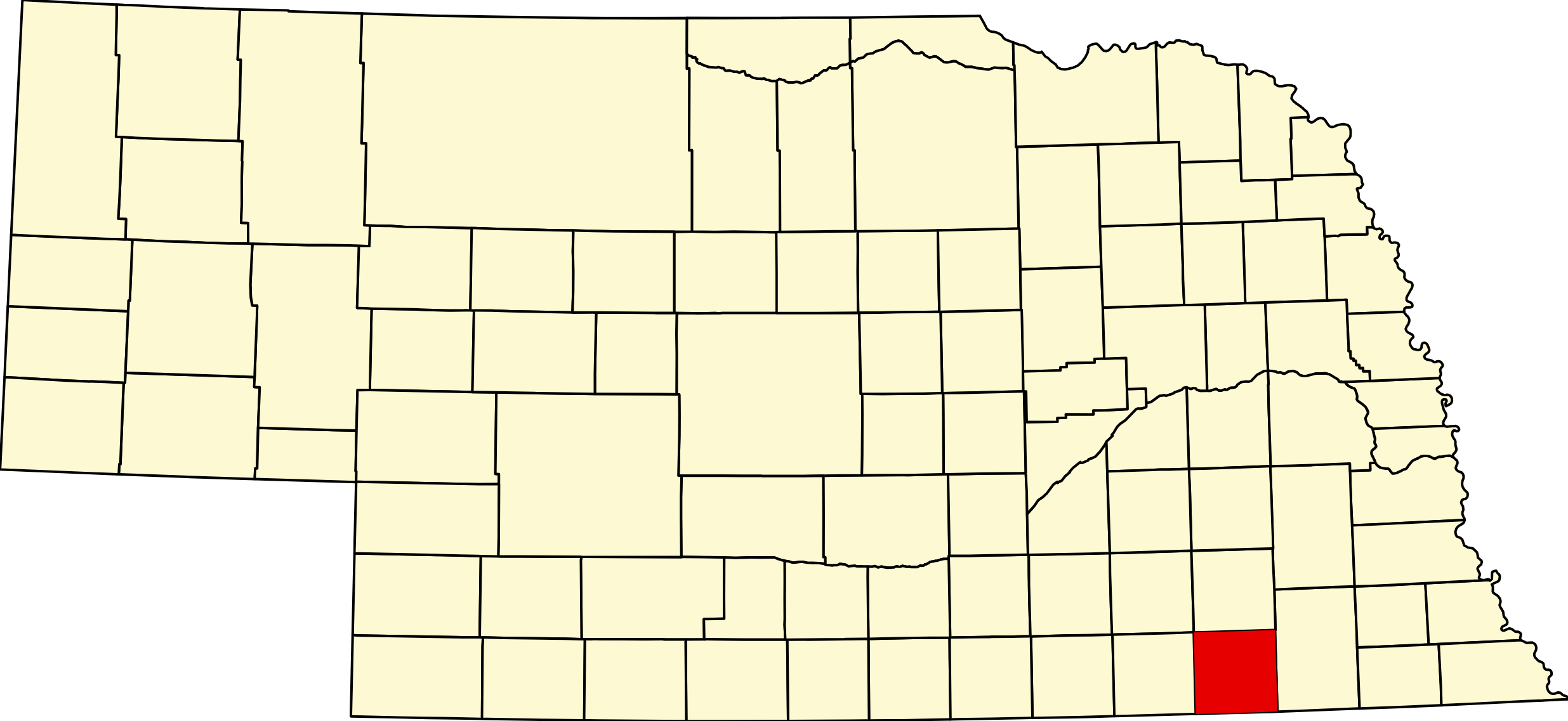
Location: Southern Nebraska along the Kansas border
Landscape: Rolling prairie, fertile farmland, wooded creek valleys, and historic trail corridors
Adjacent Counties:
- Gage County (east)
- Saline County (north)
- Thayer County (west)
- Washington County, Kansas (south)
Culture & Landmarks
- Rock Creek Station State Historical Park – A major Oregon Trail and Pony Express site with preserved structures and interpretive exhibits.
- Fairbury Downtown Historic District – Architecture and landmarks reflecting the county’s railroad heritage.
- Little Blue River Valley – Scenic landscapes with wildlife, trails, and historic significance.
Notable Communities
- Fairbury – County seat and regional commercial center.
- Plymouth – Community with strong agricultural roots.
- Diller – Small town with deep farming traditions.
- Daykin – Village with close‑knit rural identity.
- Endicott, Reynolds, Harbine, Jansen – Small towns and villages with strong community ties.
Events & Attractions
- Jefferson County Fair – Livestock shows, rodeo events, and agricultural exhibits.
- Fairbury’s Rock Island Railroad Festivals – Celebrations honoring the county’s railroading legacy.
- Outdoor Recreation – Fishing, hiking, birdwatching, and scenic drives along the Little Blue River.
Living in Jefferson County
Jefferson County blends trail history, agricultural strength, and small‑town life. Fairbury anchors county services and commerce, while Plymouth, Diller, Daykin, and rural areas maintain long‑standing farming traditions. Residents value the area’s heritage, open landscapes, and strong community identity.
Jefferson County at a Glance
Jefferson County, Nebraska — and the name has moved. On 26 January 1856 the territorial legislature laid out two counties side by side: Jefferson to the west and Jones to the east. In 1867 Jones was enlarged, renamed Jefferson, and the old Jefferson ground attached to it; in 1871 the legislature split the oversized county again, and the western half became Thayer. So today’s Jefferson County is the former Jones County, and today’s Thayer County is the original Jefferson — a tangle almost every source gets wrong. Named for Thomas Jefferson. County seat Fairbury, which took the records from Meridian in 1868 and kept them in 1871; when the railroad bypassed Meridian in 1872 its people picked up and moved to Alexandria. Population peaked at 16,852 in 1910 and stands near 7,200. 188 listings across 11 towns.
Getting there: US-136 and NE-15 cross in Fairbury, with NE-4, 8 and 103 filling in; Interstate 80 is 44 miles north. The Little Blue River runs southeast through the county past Fairbury, joined by Rock Creek, Cub Creek, Rose Creek and Buckley Creek in their own valleys. The county borders Washington and Republic counties, Kansas. Union Pacific serves it today. Central Time.
Rock Creek Station, six miles southeast of Fairbury, is the county’s headline site — two road ranches on either side of a ford on the Oregon–California Trail, working from 1857 to 1867, and after 1860 leased by Russell, Majors & Waddell as a Pony Express and stage station. On 12 July 1861 a stock tender named James Butler Hickok shot David McCanles in a quarrel over money the company owed him; two other men, James Woods and James Gordon, died as well, and Hickok and two station hands were acquitted on a plea of self-defence — the McCanles boy who witnessed it was barred from testifying because of his age. An Harper’s account in 1867 recast the whole thing as one man against a gang, and that article, rather than the event, is what made “Wild Bill”. The park today runs to 350 acres with an adjacent 40-acre recreation area, reconstructed cabins, bunkhouse, barn and toll bridge, a visitor center open April through October, six miles of hiking and equestrian trail, and some of the best visible Oregon Trail wagon ruts in eastern Nebraska.
Four Pony Express stations stood in Jefferson County — Big Sandy, Whiskey Run, Rock Creek and Otoe — according to the Jefferson County Historical Association’s marker at the courthouse. Riders carried on west into Thayer County and toward Oak Grove and Liberty Farm beyond it. North of Fairbury lies the grave of George Winslow, twenty-five, of Newton Upper Falls, Massachusetts, who died of cholera on the trail on 8 June 1849 bound for the California goldfields; his original headstone is set into a granite monument dedicated in 1912, with trail ruts visible at the site.
Bricks and pipelines. Endicott Clay Products, south of Endicott, sits on the Dakota clay deposit and has made iron-spot brick shipped worldwide for roughly a century — its brick is in Memorial Stadium — and its historic beehive kilns can be visited. And Steele City, a village of 47 people, is where the Keystone pipeline from Hardisty, Alberta comes to ground and splits east toward Illinois and south toward the Gulf: a continental oil junction in a place with one street. Daykin got into Ripley’s Believe It or Not in the 1930s for having more windmills per head than anywhere in Nebraska, and its founder, John Daykin, was the conductor on the train that carried Abraham Lincoln’s body back to Springfield.
For visitors: the Fairbury Commercial Historic District, ten blocks of downtown around the courthouse square; the hand-cut limestone Jefferson County Courthouse by J. C. Holland, Romanesque Revival with a four-faced clock tower, on the National Register since 1972; the Rock Island Depot Railroad Museum, built in 1914 and one of only two intact Rock Island depots in Nebraska — Fairbury was the road’s Western Division headquarters from 1886 to 1965; the Fairbury City Museum; and the Smith Lime Kiln on River Road, an 1870s limestone house with exhibits on the county’s lime-burning industry. Crystal Springs, a 73-acre city park on spring-fed lakes, and the Little Blue NRD’s Buckley Creek near Reynolds round out the outdoor side.
Born here. Irene Worth (Fairbury, 1916), born Harriett Abrams to Mennonite parents and later one of the most decorated stage actresses of her generation. Lulu Grace Graves (Fairbury, 1874), the first president of the American Dietetic Association. Lieutenant General Lowell E. English (Fairbury, 1915) of the Marine Corps. And Doyle Lade (Fairbury, 1921), who pitched for the Chicago Cubs.
Vehicles registered in Jefferson County carry license plate number 33. See what every Nebraska county number means.
Jefferson County Businesses & Places
188 listings in Jefferson County.
Click a category to see the businesses.
Eat & Drink (8)
- McDonald's - Fairbury (1429 K St) — McDonald's, Fairbury
- Pizza Hut — Pizza Restaurant, Fairbury
- Rowdy's Steakhouse — American Restaurant, Fairbury
- Runza Fairbury — Runza, Fairbury
- Runza Restaurant — Diner / Family Restaurant, Fairbury
- Side Trek Bar & Grill — Bar & Grill, Harbine
- Subway – 1413 K St, Fairbury — Subway, Fairbury
- Ziggi's Coffee — Cafe / Coffee Shop, Fairbury
Stay (2)
- Capri Motel Inc — Motel, Fairbury
- Edgewood Hotel and Suites — Hotel, Fairbury
Outdoors & Recreation (10)
- Alexandria WMA — Public Hunting Areas & WMAs, Nebraska
- Buckley Creek Recreation Area — Campgrounds & RV Parks, Nebraska
- Crystal Springs Campground — Campgrounds & RV Parks, Fairbury
- Cub Creek Recreation Area — Campgrounds & RV Parks, Nebraska
- Diller Campground — Campgrounds & RV Parks, Diller
- Fairbury Country Club — Country Club, Fairbury
- Flathead WMA — Public Hunting Areas & WMAs, Nebraska
- Historic Steele City Campground — Campgrounds & RV Parks, Nebraska
- Rock Glen WMA — Public Hunting Areas & WMAs, Nebraska
- Rose Creek WMA — Public Hunting Areas & WMAs, Nebraska
Places to Visit (5)
- Fairbury City Museum — Specialty Museums, Fairbury
- George Winslow Grave (1849 Gold Rush) — Historic Marker, Fairbury
- Jefferson County Historical Society - Fairbury Rock Island Depot Museum - Diller Museum — History & Heritage Museums, Fairbury
- Rock Creek Station State Historical Park and Recreation Area — RV Camping, Fairbury
- Rock Island Railroad Museum — History & Heritage Museums, Fairbury
Events & Venues (3)
- Jefferson County Fair — County Fair, Fairbury
- Jefferson County Fairgrounds — Fairground, Fairbury
- Rock Creek Trail Days — Festivals & Celebrations, Fairbury
Health & Emergency (8)
- Countryside Veterinary Clinic - Fairbury — Veterinarian, Fairbury
- Fairbury Dental — Dentist & Dental Office, Fairbury
- Globe Rexall Pharmacy — Pharmacy, Fairbury
- GrandView Eyecare — Optometrist, Fairbury
- Husker Rehabilitation and Wellness Center — Physical Therapy, Fairbury
- Jefferson Community Health & Life — Hospital, Fairbury
- Jefferson Community Health & Life Fairbury Clinic — Medical Clinic, Fairbury
- Tatro Chiropractic — Chiropractor, Fairbury
Shopping & Gifts (2)
- Larkins Ace Hardware — Hardware Store, Fairbury
- Ray's Applemarket — Grocery, Fairbury
Community & Faith (56)
- Amateur Radio Repeaters - Jefferson County (via RepeaterBook.com) — Amateur Radio Repeater, Nebraska
- American Lutheran Church — Lutheran Church, Fairbury
- Bartel Cemetery — Jansen — Cemeteries, Jansen
- Believe Assembly of God — Pentecostal, Jansen
- Bower Cemetery — Jansen — Cemeteries, Jansen
- Cornerstone Community Church — Evangelical Free Church, Fairbury
- Cub Creek Cemetery — Jansen — Cemeteries, Jansen
- Emmanuel Cemetery — Plymouth — Cemeteries, Nebraska
- Eureka Cemetery — Daykin — Cemeteries, Daykin
- Fairbury Cemetery — Fairbury — Cemeteries, Fairbury
- Fairbury Seventh-day Adventist Church — Seventh-day Adventist Church, Fairbury
- Fairbury, First United Presbyterian Church — Presbyterian Church, Fairbury
- First Baptist Church - Fairbury — Baptist Church, Fairbury
- Friendship Cemetery — Plymouth — Cemeteries, Nebraska
- Grace Lutheran Cemetery — Fairbury — Cemeteries, Fairbury
- Grace Lutheran Church — Lutheran Church, Fairbury
- Grandy Cemetery — Jansen — Cemeteries, Jansen
- Harbine Cemetery — Harbine — Cemeteries, Harbine
- Helvey Cemetery — Reynolds — Cemeteries, Nebraska
- Hildebrandt Cemetery — Jansen — Cemeteries, Jansen
- Hope Church Cemetery — Harbine — Cemeteries, Harbine
- Huber Cemetery — Fairbury — Cemeteries, Fairbury
- Immanuel Lutheran Cemetery — Plymouth — Cemeteries, Nebraska
- Immanuel Lutheran Church — Lutheran Church, Daykin
- Immanuel Lutheran Church Cemetery — Daykin — Cemeteries, Daykin
- Jansen Cemetery — Jansen — Cemeteries, Jansen
- McCord Boothill Cemetery — Fairbury — Cemeteries, Fairbury
- Megli-Yost Cemetery — Plymouth — Cemeteries, Nebraska
- Meridian Presbyterian Cemetery — Fairbury — Cemeteries, Fairbury
- Moles Cemetery — Fairbury — Cemeteries, Fairbury
- Old Plymouth Cemetery — Plymouth — Cemeteries, Nebraska
- Peace Lutheran Cemetery — Plymouth — Cemeteries, Nebraska
- Peace Lutheran Church — Lutheran Church, Nebraska
- Pleasant Hill Cemetery — Diller — Cemeteries, Diller
- Pleasant View Cemetery — Daykin — Cemeteries, Daykin
- Plymouth Peace UMC — Methodist Church, Nebraska
- Powell Cemetery — Fairbury — Cemeteries, Fairbury
- Prairie Home Cemetery — Diller — Cemeteries, Diller
- Richland Center Cemetery — Fairbury — Cemeteries, Fairbury
- Rose Creek Cemetery — Reynolds — Cemeteries, Nebraska
- Rose Hill Cemetery — Endicott — Cemeteries, Endicott
- Saint Paul UCC — Jansen — Congregational Church, Jansen
- Silver Creek Cemetery — Endicott — Cemeteries, Endicott
- St. John Lutheran Church — Lutheran Church, Daykin
- St. John’s Evangelical Lutheran Cemetery — Daykin — Cemeteries, Daykin
- St. Michael Catholic Church Fairbury — Catholic Church, Fairbury
- St. Paul's Lutheran Church — Lutheran Church, Diller
- St. Paul’s Evangelical Lutheran Cemetery — Plymouth — Cemeteries, Nebraska
- Steele City Cemetery — Steele City — Cemeteries, Nebraska
- Steele City Presbyterian Church — Presbyterian Church, Nebraska
- Swan Creek Cemetery — Daykin — Cemeteries, Daykin
- Thiessen Cemetery — Jansen — Cemeteries, Jansen
- Woodlawn Cemetery — Plymouth — Cemeteries, Nebraska
- Zion Lutheran Cemetery — Harbine — Cemeteries, Harbine
- Zion Lutheran Church (Harbine) — Lutheran Church, Jansen
- Zion United Church of Christ Cemetery — Fairbury — Cemeteries, Fairbury
Government & Resources (35)
- ACCESSNebraska Office - Fairbury — Developmental & Social Services, Fairbury
- Cedarwood Assisted Living — Assisted Living, Fairbury
- Daykin Post Office — Post Office, Daykin
- Daykin Public Library — Libraries, Daykin
- Daykin Village Office — City Hall, Daykin
- Diller Post Office — Post Office, Diller
- Diller Village Office — City Hall, Diller
- Endicott Village Office — City Hall, Endicott
- Fairbury Chamber of Commerce — Chamber of Commerce, Fairbury
- Fairbury City Hall — City Hall, Fairbury
- Fairbury Fire Department — Fire Station, Fairbury
- Fairbury Housing Authority — Housing Authority, Fairbury
- Fairbury Police Department — Police Station, Fairbury
- Fairbury Post Office — Post Office, Fairbury
- Fairbury Public Library — Libraries, Fairbury
- Fairbury Senior Center/ Community Building — Senior Citizen Center, Fairbury
- Fairbury USDA Service Center — USDA Service Center (FSA/NRCS), Fairbury
- Harbine Village Office — City Hall, Harbine
- Jansen Village Office — City Hall, Jansen
- Jefferson County Assessor — County Assessor, Fairbury
- Jefferson County Attorney's Office — County Attorney, Fairbury
- Jefferson County Clerk — County Clerk, Fairbury
- Jefferson County Court — County Court, Fairbury
- Jefferson County Courthouse — Court House, Fairbury
- Jefferson County Driver License Office — County Driver License, Fairbury
- Jefferson County Emergency Management — Emergency Management, Fairbury
- Jefferson County Sheriff — County Sheriff, Fairbury
- Jefferson County Treasurer — County Treasurer, Fairbury
- Jefferson County Veterans Service Office — Veterans Office, Fairbury
- Jefferson County Weed Superintendent — County Weed Control, Fairbury
- Plymouth Meal Program — Senior Citizen Center, Nebraska
- Plymouth Police Department — Police Station, Nebraska
- Plymouth Public Library — Libraries, Nebraska
- Reynolds Village Office — City Hall, Nebraska
- Steele City Village Office — City Hall, Nebraska
Utilities (15)
- City of Fairbury — Water Utility / District, Fairbury
- Diller Telephone Company — Telephone & Internet Provider, Diller
- Diode Communications — Telephone & Internet Provider, Diller
- Endicott Municipal Utilities — Electric Power Provider, Endicott
- Fairbury Municipal Utilities — Electric Power Provider, Fairbury
- Little Blue NRD RWD 1 — Water Utility / District, Fairbury
- Reynolds Municipal Utilities — Electric Power Provider, Nebraska
- Village of Daykin — Water Utility / District, Daykin
- Village of Diller — Water Utility / District, Diller
- Village of Endicott — Water Utility / District, Fairbury
- Village of Harbine — Water Utility / District, Diller
- Village of Jansen — Water Utility / District, Jansen
- Village of Plymouth — Water Utility / District, Nebraska
- Village of Reynolds — Water Utility / District, Nebraska
- Village of Steele City — Water Utility / District, Nebraska
Automotive (12)
- Are Autos — Used Car Dealer, Fairbury
- Auto Repair Plus — Auto Repair, Nebraska
- Big Jers Toys — Motor Sports, Fairbury
- Casey's General Store - Fairbury — Casey's, Fairbury
- Cub Creek Autos — Used Car Dealer, Jansen
- Garbers Honda — Motor Sports, Fairbury
- Lewis Auto Sales — Used Car Dealer, Fairbury
- M&D Auto Service — Auto Repair, Fairbury
- Painter Paul Ltd Used Cars — Used Car Dealer, Fairbury
- Riverside Chevrolet — Franchised New Car Dealer, Fairbury
- Total Auto Service — Auto Repair, Fairbury
- Twin Rivers Ford — Franchised New Car Dealer, Fairbury
Professional Services (10)
- American National Bank — Banking, Fairbury
- Blobaum and Busboom, P.C. — Attorney, Fairbury
- Farm Bureau Financial Services - Fairbury — Insurance, Fairbury
- Heartland Bank — Banking, Fairbury
- Kettelhut Real Estate — Real Estate Agency, Fairbury
- Kratz Law Office LLC — Attorney, Fairbury
- Nebraska Title Company - Fairbury — Title & Escrow Company, Fairbury
- Shelter Insurance — Insurance, Fairbury
- Starr Buckow Insurance — Insurance, Fairbury
- Union Bank and Trust Company — Banking, Fairbury
Education (9)
- Central Elementary School — Elementary & Middle School, Fairbury
- Diller-Odell Elem School — Elementary & Middle School, Diller
- Fairbury Jr-Sr High School — High School, Fairbury
- Fairbury Public Schools — School District (K-12 / General), Fairbury
- Jefferson County Extension — County Extension Office, Fairbury
- Jefferson Intermediate School — Elementary & Middle School, Fairbury
- Meridian Elementary School — Elementary & Middle School, Daykin
- Meridian High School — High School, Daykin
- Meridian Public Schools — School District (K-12 / General), Daykin
Agriculture & Farm (5)
- Chance Siebrandt - Farrier — Farrier, Fairbury
- Countryside Veterinary Clinic - Fairbury — Equine Veterinarian, Fairbury
- Diller Locker Company — Custom Meat Locker / Processing, Diller
- Fairbury Steaks — Custom Meat Locker / Processing, Fairbury
- Wells Implement — Equipment Dealers, Nebraska
Transportation (3)
- Blue Rivers Area Agency on Aging - Fairbury — Public Transportation, Fairbury
- Blue Rivers Transportation System (Fairbury) — Public Transportation, Fairbury
- Fairbury Municipal Airport — Municipal / General Aviation Airport, Fairbury
Media (3)
- Fairbury Journal-News — News Paper, Fairbury
- KGMT 1310 AM - Fairbury — Radio Station, Fairbury
- KUTT 99.5 FM - Fairbury — Radio Station, Fairbury
Land & Property Services (1)
- Bluestem Habitat Consultancy LLC — Land Clearing & Brush Removal, Fairbury
Personal Services (1)
- Gerdes-Meyer Funeral Home — Funeral Home, Fairbury
Manufacturing & Industrial (1)
- Westin Packaged Meats – Fairbury — Food & Beverage Manufacturing, Fairbury