
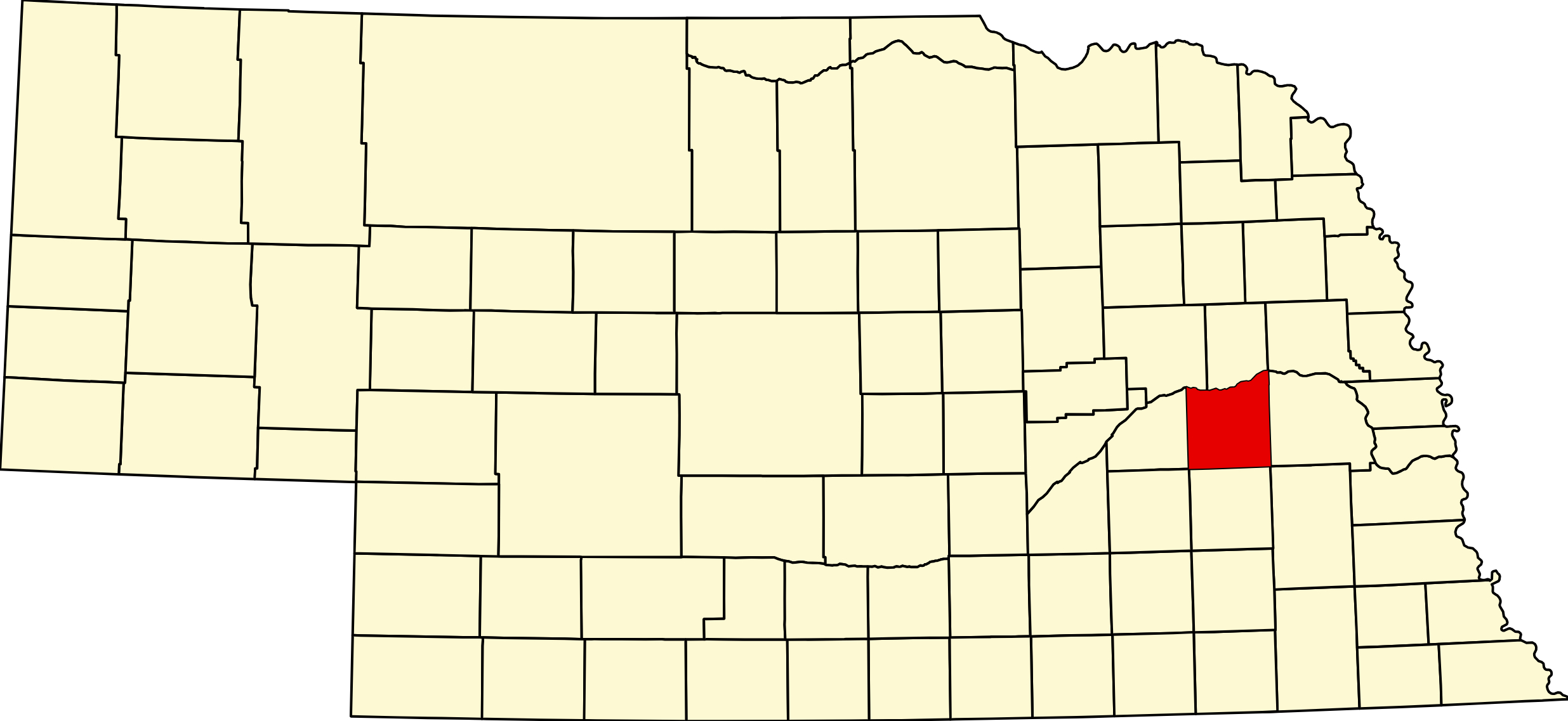
Towns in Butler County Nebraska
Explore Butler County
Butler County, Nebraska
County Seat: David City
Founded: 1856 (organized 1868)
Named For: William Orlando Butler, U.S. congressman and Mexican–American War general
License Plate Prefix: 25
Population: 8,369 (2020 census)
Area: 591 sq mi
History
Butler County was created in 1856 and organized in 1868. It was named after William Orlando Butler, a U.S. congressman and general in the Mexican–American War. Early settlement was shaped by Czech, German, and Irish immigrants, who established farms, churches, and schools across the fertile Platte River valley. David City, founded in 1873, became the county seat and remains the cultural and economic hub. The county’s history is preserved by the Butler County Historical Society and the Depot Museum in David City.
Geography
- Location: East‑central Nebraska
- Landscape: Platte River valley, rolling farmland, and prairie
- Major Highways: U.S. 92, Nebraska Highways 15, 64, 66
- Adjacent Counties: Platte (N), Colfax (NE), Saunders (E), Seward (S), Polk (W)
Culture & Landmarks
- Bone Creek Museum of Agrarian Art (David City) – The nation’s only museum dedicated to agrarian art.
- Thorpe Opera House (David City) – Historic opera house hosting performances and community events.
- Depot Museum (David City) – Preserves county history, rail heritage, and pioneer life.
- National Register Sites – Includes archeological sites, historic bridges, and early schools.
Notable Communities
- David City – County seat, home to museums, schools, and cultural institutions.
- Brainard – Known for Oak Creek Sporting and Czech heritage.
- Bellwood – Historic community near the Platte River.
- Dwight, Abie, Linwood, Rising City, Surprise, Ulysses – Small towns with strong immigrant traditions.
Events & Attractions
- Butler County Fair – Livestock shows, rodeo, and community celebrations.
- Swedish & Czech Festivals – Celebrating the county’s immigrant heritage with food, music, and parades.
- Bone Creek Museum Exhibits – Rotating art and cultural displays.
- Oak Creek Sporting (Brainard) – Hunting, shooting sports, and outdoor recreation.
Living in Butler County
Butler County blends agricultural heritage with cultural richness. With David City as a regional hub, residents enjoy museums, schools, and community events while still surrounded by the quiet beauty of the Platte River valley. Strong immigrant traditions, small‑town pride, and a welcoming spirit define life in Butler County.
Butler County at a Glance
Butler County, Nebraska — created 26 January 1856 and organized 21 October 1868, once the population passed the two-hundred-resident threshold. Named for William Orlando Butler, the Kentucky congressman and Mexican-American War general who turned down Franklin Pierce’s offer to govern Nebraska Territory in 1854. It is not named for David Butler, Nebraska’s first governor — a common claim, but the county was named eleven years before he took office. County seat David City, which won the job by 39 votes in 1873 after four elections in four years, and built a courthouse for $1,470. The original seat, Savannah, on the Platte at the county’s northern edge, is a ghost town. Population peaked at 15,703 in 1900 and stands at about 8,500 — and Butler is one of the rare rural Nebraska counties that has gained since 2020. 207 listings across 17 towns.
Getting there: NE-15 runs north and south through David City and NE-92 crosses east and west. The Platte River forms the county’s northern boundary. Butler still carries 78 miles of railroad main line — the Fremont, Elkhorn & Missouri Valley came through Dwight, Octavia and Linwood in 1887, the Chicago & North Western reached Abie the same year, Brainard came with the rails in 1878 and Bellwood in 1890. Central Time.
Nebraska’s center of population in 2020 fell in Butler County, near the village of Garrison — the demographic middle of the whole state. Eighty-six percent of the county is farmland, corn and soybeans on rolling loess uplands cut by the valleys the first settlers took for shelter.
A Czech and German county. Recent ancestry counts run 30 percent German and 23 percent Czech, and the evidence is concrete rather than folkloric: Bruno was founded in 1887 by Moravians and named for Brno; Abie’s Czech families arrived from Spillville, Iowa in July 1869, and its Ted Sokol Hall, built in 1924, taught gymnastics and Czech tradition until it closed in 2017; Dwight is the Catholic center, where St. Mary of the Assumption Church, School and Grottoes is on the National Register. Butler sits inside the Saunders–Butler–Colfax Czech belt without ever having claimed a capital.
For visitors: the Bone Creek Museum of Agrarian Art in David City is the only museum in the United States devoted to agrarian art. Thorpe’s Opera House (1888) and the David City Park and Municipal Auditorium are both National Register listings, as is the Surprise Opera House at Surprise, which put on its last show in 1954. The Gustav Rohrich Sod House stands at Bellwood. Out of doors, Timber Point near Brainard is a 160-acre Lower Platte South NRD area around a 29-acre lake — three camping pads, a vault toilet, a no-wake ramp, largemouth bass under a 21-inch minimum, and no entry permit. The Oak Creek Trail, a crushed-limestone rail-trail railbanked in 1993 and opened in 1996, runs from Valparaiso in Saunders County through Loma to Brainard, with horseback riding allowed the whole way. There is no state park or state recreation area in the county. Wagon ruts of the Ox Bow Trail’s Woodbury Cutoff survive near Brainard, National Register-listed since 1992.
Born here — a startling list for a county of eight thousand. J. C. Hall (David City, 1891), founder of Hallmark Cards. Clifton Hillegass (Rising City, 1918), who started CliffsNotes in 1958. Ruth Etting (David City, 1896), the Ziegfeld Follies star of “Ten Cents a Dance.” Roman Hruska (David City, 1904), United States Senator 1954–76, one of eleven children of Czech immigrants. Dale Nichols (David City, 1904), the regionalist painter who became art editor of the Encyclopædia Britannica. And Otto Otopalik (David City, 1890), Iowa State’s wrestling coach for three decades and the 1932 U.S. Olympic wrestling coach.
Vehicles registered in Butler County carry license plate number 25. See what every Nebraska county number means.
Butler County Businesses & Places
207 listings in Butler County.
Click a category to see the businesses.
Eat & Drink (13)
- Abie's Place — Diner / Family Restaurant, Abie
- Cy's Café — Cafe / Coffee Shop, Dwight
- District 10 — Bar, Linwood
- Duerings 5th St Pub & Grill — Bar & Grill, David City
- El Centenario — Mexican Restaurant, David City
- Frommy's Pizza, Grill and Pub — Bar & Grill, Bellwood
- Loma Tavern — Restaurant, Dwight
- No Where Special — American Restaurant, Linwood
- Nowhere Special Steakhouse & Saloon — Bar, Linwood
- Runza David City — Runza, David City
- Subway – 404 E Street, David City — Subway, David City
- The Brainard Bar — Bar, Brainard
- The Hideout Bar & Grill — Bar & Grill, Nebraska
Stay (1)
- Rose Motel — Motel, David City
Outdoors & Recreation (4)
- Butler County Fairgrounds — Campgrounds & RV Parks, David City
- David City Park Campground — Campgrounds & RV Parks, David City
- Moses Merrill Camp and Conference Center — Campgrounds & RV Parks, Linwood
- Redtail WMA — Public Hunting Areas & WMAs, Nebraska
Places to Visit (4)
- Bone Creek Museum of Agrarian Art — Specialty Museums, David City
- Butler County Museum — History & Heritage Museums, David City
- Dwight Assumption Parish, Chapel and Grottoes — Specialty Museums, Dwight
- Thorpe Opera House Foundation — Specialty Museums, David City
Events & Venues (3)
- Butler County Fair — County Fair, David City
- Butler County Fairgrounds — Fairground, David City
- Moses Merrill Camp and Conference Center — Camp & Retreat Center, Linwood
Health & Emergency (2)
- E Street Discount Pharmacy — Pharmacy, David City
- Witter Family Medicine — Medical Clinic, David City
Shopping & Gifts (5)
- AbBee's Honey & Andy's Nuts — Specialty Foods, Dwight
- AMT Water Softeners — Retail, Dwight
- Bunches of Stitches — Fabric & Quilt Shop, Dwight
- David City Ace Hardware — Hardware Store, David City
- Smart Dollars Salvage Grocery — Grocery, David City
Community & Faith (70)
- Amateur Radio Repeaters - Butler County (via RepeaterBook.com) — Amateur Radio Repeater, Nebraska
- Assumption Catholic Church Dwight — Catholic Church, Dwight
- Assumption of Blessed Virgin Mary Cemetery — Appleton — Cemeteries, Appleton
- Bellwood Cemetery — Bellwood — Cemeteries, Bellwood
- Bellwood UMC — Methodist Church, Bellwood
- Blue Valley Cemetery — Surprise — Cemeteries, Nebraska
- Bohemian National Cemetery — Abie — Cemeteries, Abie
- Bohemian National Cemetery — Brainard — Cemeteries, Brainard
- Bohemian National Cemetery — Bruno — Cemeteries, Bruno
- Brainard IOOF Cemetery — Brainard — Cemeteries, Brainard
- Brainard UMC — Methodist Church, Brainard
- Brooks Cemetery — Brainard — Cemeteries, Brainard
- Butler Center Cemetery — David City — Cemeteries, David City
- Catholic Cemetery of Presentation Church and Saint Mary — Bellwood — Cemeteries, Bellwood
- Circle Mound Cemetery — Rising City — Cemeteries, Nebraska
- Crocker Cemetery — David City — Cemeteries, David City
- David City Cemetery — David City — Cemeteries, David City
- David City St Luke's UMC — Methodist Church, David City
- Dawson Cemetery — Linwood — Cemeteries, Linwood
- Edholm Valley Cemetery — Edholm — Cemeteries, Edholm
- Fairview Cemetery — Rising City — Cemeteries, Nebraska
- Faith Evangelical Lutheran Cemetery East — Garrison — Cemeteries, Garrison
- Faith Evangelical Lutheran Cemetery West — Surprise — Cemeteries, Nebraska
- First English Lutheran Church — Lutheran Church, Nebraska
- Fricke Cemetery — Bruno — Cemeteries, Bruno
- Garrison Cemetery — Garrison — Cemeteries, Garrison
- Good Hope Cemetery — Dwight — Cemeteries, Dwight
- Grim Cemetery — Ulysses — Cemeteries, Nebraska
- Holy Trinity Catholic Church Brainard — Catholic Church, Brainard
- Holy Trinity Cemetery — Brainard — Cemeteries, Brainard
- Immaculate Conception Ulysses — Catholic Church, Nebraska
- Immanuel Lutheran Cemetery — Rising City — Cemeteries, Nebraska
- Immanuel Lutheran Church (Rising City) — Lutheran Church, David City
- Knauber Cemetery — Ulysses — Cemeteries, Nebraska
- Linwood Hill Cemetery — Linwood — Cemeteries, Linwood
- McDonald Cemetery — Bellwood — Cemeteries, Bellwood
- McNally Cemetery — Bellwood — Cemeteries, Bellwood
- Nimburg Cemetery — Abie — Cemeteries, Abie
- Oak Creek Cemetery — Brainard — Cemeteries, Brainard
- Old Catholic Cemetery — Brainard — Cemeteries, Brainard
- Old David City Cemetery — David City — Cemeteries, David City
- Old Saint Joseph Cemetery — Bellwood — Cemeteries, Bellwood
- Pleasant Hill Cemetery — Rising City — Cemeteries, Nebraska
- Pleasant View Cemetery — Bellwood — Cemeteries, Bellwood
- Presentation Bellwood — Catholic Church, Bellwood
- Redeemer Lutheran Church — Lutheran Church, David City
- Rising City UMC — Methodist Church, Nebraska
- Rising Sun Cemetery — Rising City — Cemeteries, Nebraska
- Saint Anthony Catholic Cemetery — Bruno — Cemeteries, Bruno
- Saint Francis Catholic Cemetery — David City — Cemeteries, David City
- Saint Josephs Catholic New Cemetery — Bellwood — Cemeteries, Bellwood
- Saint Lukes Cemetery — Loma — Cemeteries, Loma
- Saint Marys Cemetery — David City — Cemeteries, David City
- Saint Marys Cemetery — Linwood — Cemeteries, Linwood
- Saint Marys Cemetery — Ulysses — Cemeteries, Nebraska
- Saint Peters Evangelical Lutheran Cemetery — Surprise — Cemeteries, Nebraska
- Saints Peter and Paul Cemetery — Abie — Cemeteries, Abie
- Savannah Cemetery — Bellwood — Cemeteries, Bellwood
- St. Anthony Bruno — Catholic Church, Bruno
- St. Francis Catholic Church David City — Catholic Church, David City
Government & Resources (45)
- Abie Fire Department — Fire Station, Abie
- Abie Post Office — Post Office, Abie
- Abie Village Office — City Hall, Abie
- Bellwood Fire Hall — Fire Station, Bellwood
- Bellwood Post Office — Post Office, Bellwood
- Bellwood Village Office — City Hall, Bellwood
- Brainard Post Office — Post Office, Brainard
- Bruno Village Office — City Hall, Bruno
- Butler County Assessor — County Assessor, David City
- Butler County Attorney's Office — County Attorney, David City
- Butler County Chamber of Commerce — Chamber of Commerce, Nebraska
- Butler County Chamber of Commerce — Chamber of Commerce, David City
- Butler County Clerk — County Clerk, David City
- Butler County Court — County Court, David City
- Butler County Courthouse — Court House, David City
- Butler County Driver License Office — County Driver License, David City
- Butler County Emergency Management — Emergency Management, David City
- Butler County Senior Services/ David City Senior Center — Senior Citizen Center, David City
- Butler County Sheriff — County Sheriff, David City
- Butler County Treasurer — County Treasurer, David City
- Butler County Veterans Service Office — Veterans Office, David City
- Butler County Weed Superintendent — County Weed Control, David City
- David City City Hall — City Hall, David City
- David City Housing Authority — Housing Authority, David City
- David City Police Department — Police Station, David City
- David City Post Office — Post Office, David City
- David City USDA Service Center — USDA Service Center (FSA/NRCS), David City
- Dwight Community Library — Libraries, Dwight
- Dwight Fire Hall — Fire Station, Dwight
- Dwight Post Office — Post Office, Dwight
- Dwight Village Office — City Hall, Dwight
- Garrison Village Office — City Hall, Garrison
- Hruska Memorial Public Library - David City — Libraries, David City
- Linwood Fire Department — Fire Station, Linwood
- Linwood Post Office — Post Office, Linwood
- Linwood Village Office — City Hall, Linwood
- Octavia Village Office — City Hall, Nebraska
- Rising City Community Library — Libraries, Nebraska
- Rising City Fire Department — Fire Station, Nebraska
- Rising City Post Office — Post Office, Nebraska
- Rising City Village Office — City Hall, Nebraska
- Surprise Village Office — City Hall, Nebraska
- Ulysses Post Office — Post Office, Nebraska
- Ulysses Township Library — Libraries, Nebraska
- Ulysses Village Office — City Hall, Nebraska
Automotive (13)
- 5 Star Automotive — Used Car Dealer, David City
- Beringer Radiator Repair — Auto Repair, Nebraska
- Bongers Auto — Used Car Dealer, David City
- CTF Service — Auto Repair, Brainard
- D & D Truck Sales — Truck Dealership, Dwight
- Johnston Auto Sales — Used Car Dealer, Nebraska
- Kobza Motors — Auto Repair, David City
- Lincoln Auto Sales — Used Car Dealer, Brainard
- LJ Auto Sales — Used Car Dealer, Bruno
- Northside Inc — Auto Repair, David City
- Raskey Motor Company — Used Car Dealer, Brainard
- Schmid & Sons — Auto Repair, David City
- Varela Auto Sales — Used Car Dealer, Nebraska
Utilities (12)
- Brainard Municipal Utilities — Electric Power Provider, Brainard
- Butler Public Power District — Electric Power Provider, David City
- City of David City — Water Utility / District, David City
- David City Municipal Utilities — Electric Power Provider, David City
- Mid-Nebraska Communications, Inc. — Telephone & Internet Provider, Bellwood
- Village of Abie — Water Utility / District, Abie
- Village of Bellwood — Water Utility / District, Bellwood
- Village of Brainard — Water Utility / District, Brainard
- Village of Bruno — Water Utility / District, Bruno
- Village of Dwight — Water Utility / District, Dwight
- Village of Rising City — Water Utility / District, Nebraska
- Village of Ulysses — Water Utility / District, Nebraska
Education (11)
- Aquinas Catholic Elementary School David City — Faith-Based School, David City
- Aquinas Middle High School David City — Faith-Based School, David City
- Bellwood Elementary School — Elementary & Middle School, Bellwood
- Butler County Extension — County Extension Office, David City
- David City Elementary School — Elementary & Middle School, David City
- David City Public Schools — School District (K-12 / General), David City
- David City Secondary School — Elementary & Middle School, David City
- East Butler Public Schools — School District (K-12 / General), Brainard
- Elementary School at Brainard — Elementary & Middle School, Brainard
- Elementary School at Dwight — Elementary & Middle School, Dwight
- High School at Brainard — High School, Brainard
Agriculture & Farm (8)
- AKRS Equipment Solutions - David City — Equipment Dealers, David City
- Benes Service Co. — Equipment Dealers, David City
- Central Valley Ag – Rising City — Farm Coop, Nebraska
- Critser Performance Horses — Horse Trainer, Bellwood
- Frontier Cooperative - Bellwood — Farm Coop, Bellwood
- Frontier Cooperative - Brainard — Farm Coop, Brainard
- Mark Edmister - Farrier — Farrier, Brainard
- Mighty and Meek Farrier Service — Farrier, Bruno
Professional Services (7)
- Cornerstone Bank - Rising City — Banking, Nebraska
- Eberle Insurance — Insurance, David City
- First National Bank of Omaha - David City — Banking, David City
- FNIC – David City — Insurance, David City
- INSight Partners Insurance — Insurance, David City
- Jones Group – David City — Insurance, David City
- Nebraska Title Company - David City — David City
Personal Services (4)
- Kracl Funeral Home — Funeral Home, David City
- Renner Photography — Photographer, Bellwood
- Roberts Funeral Home — Funeral Home, David City
- Shear Appearances — Beauty Salon, Bellwood
Transportation (3)
- Butler County Rural Service — Public Transportation, David City
- Butler County Senior Services Transportation — Public Transportation, David City
- David City Municipal Airport — Municipal / General Aviation Airport, David City
Media (1)
- David City Banner-Press — News Paper, David City
Manufacturing & Industrial (1)
- Ellison & Graves — General / Custom Manufacturing, Nebraska
Trades & Construction (1)
- Odell Concrete & Construction — Concrete and Flatwork Contractor, Nebraska
Land & Property Services (1)
- Standing C Excavating — Excavating Contractor, Linwood