Dawson County, Nebraska
County seat: Lexington · Created: January 11, 1860; organized 1871 · Named for: John L. Dawson, Pennsylvania congressman (long credited to Jacob Dawson, first postmaster of Lancaster, now Lincoln) · License plates: prefix 18 · Population: 24,111 (2020 census); peak census count 24,365 in 2000 · Area: 1,019 sq mi · Time zone: Central
About Dawson County
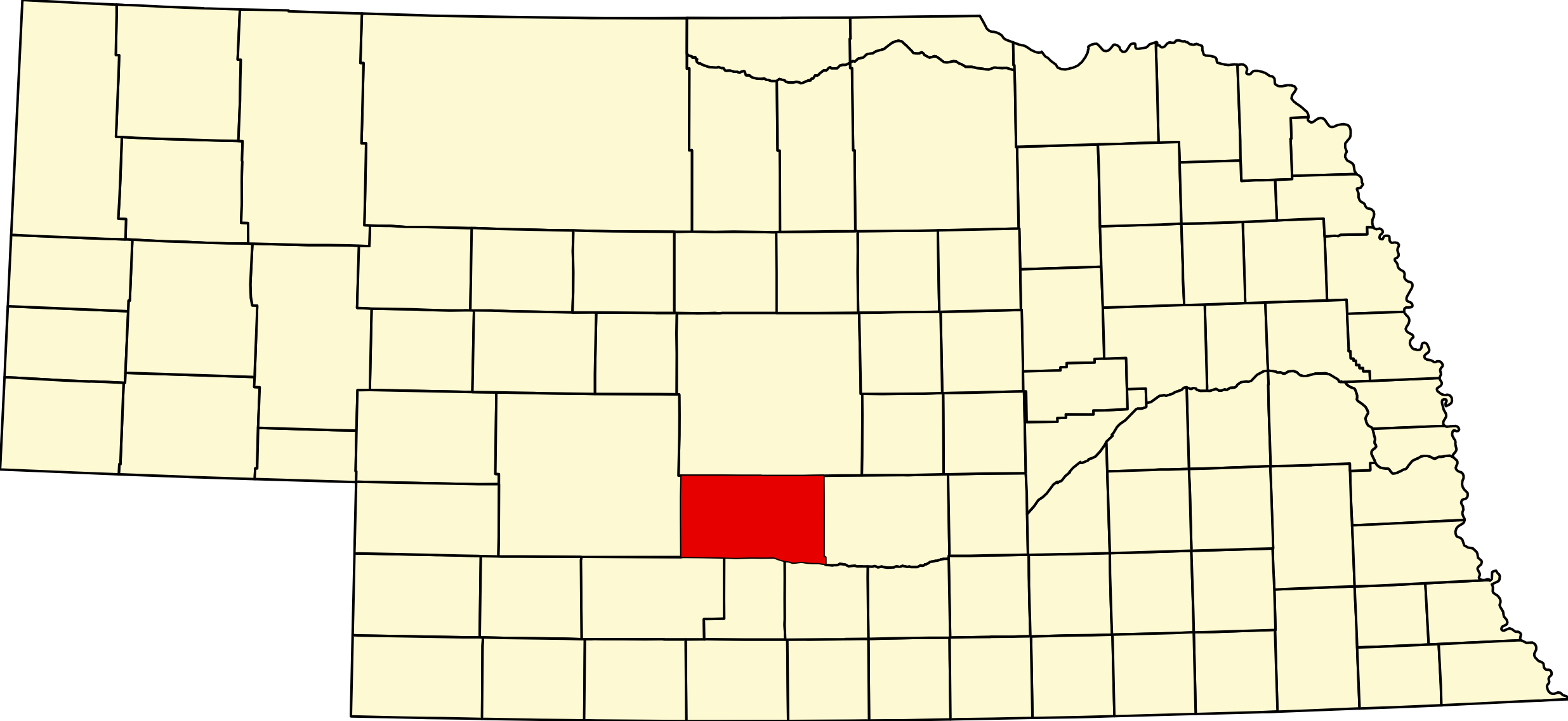
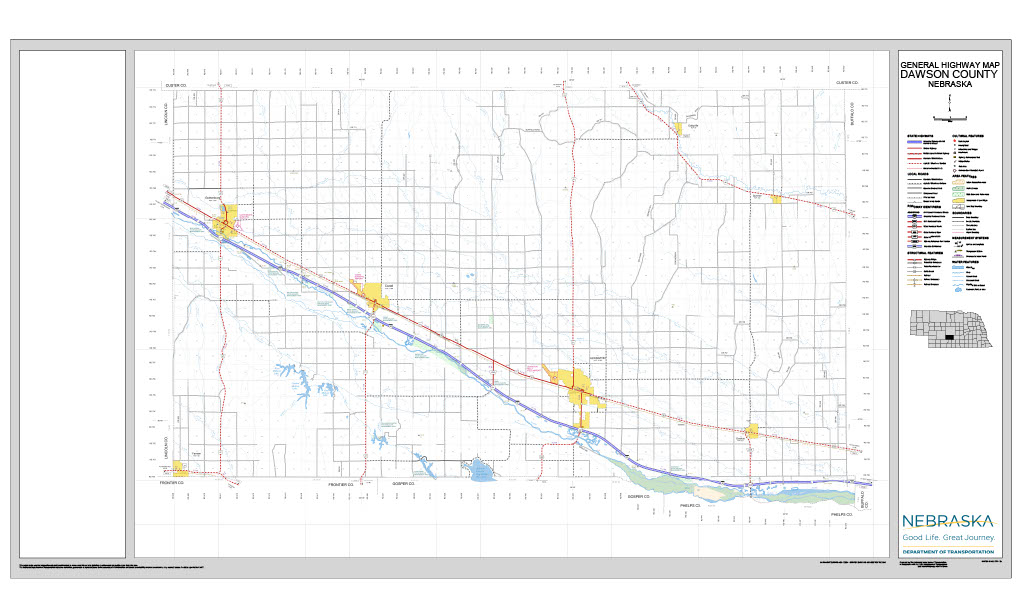
Dawson County lies in the Platte valley of south-central Nebraska, where I-80, US 30 and the Union Pacific main line run side by side across the county. Its cities are Lexington, the county seat, Cozad and Gothenburg; its villages are Overton on the river road and Sumner, Eddyville and Farnam to the north and southwest. Willow Island is an unincorporated community between Cozad and Gothenburg. The county borders Custer County on the north, Buffalo on the east, Phelps on the southeast, Gosper on the south, Frontier on the southwest and Lincoln on the west.
The territorial Legislature created the county on January 11, 1860, and it was organized in 1871 by proclamation of acting Governor William H. James, with Plum Creek, renamed Lexington in 1889, as the seat. An 1860 newspaper report found by History Nebraska says the name honors Pennsylvania congressman John L. Dawson; the county has long credited Jacob Dawson, Lancaster’s first postmaster. The Plum Creek Massacre of August 1864 took place south of the river, in what is now Phelps County, and Cheyenne derailed a Union Pacific train west of Lexington on August 7, 1867. The county has ten National Register listings, among them the 1913–14 courthouse, the Hendee Hotel and Allen’s Opera House in Cozad and the Midway Stage Station near Gothenburg. The Tyson beef plant in Lexington, opened by IBP in 1990, closed in January 2026.
Towns of Dawson County
Cities and villages
Lexington
Dawson County seat of 10,348 on US 30 and the Union Pacific, 3 miles north of I-80, with the Heartland Museum of Military Vehicles; Johnson Lake is about 9 miles southwest.
Cozad
City of 3,988 on the 100th meridian, US 30 and I-80, founded in 1873 by John J. Cozad; boyhood home of the painter Robert Henri.
Gothenburg
City of 3,478 on US 30 and I-80, founded by Swedish settlers in 1882, with a Pony Express station in Ehmen Park and the Midway Stage Station south of town.
Overton
Village of 607 on US 30 and the Union Pacific in eastern Dawson County, settled in 1873; Lexington is about 11 miles west.
Sumner
Village of 252 in the Wood River valley of northeastern Dawson County, an "instant town" of 1890 on the Kearney & Black Hills railroad and home of the S-E-M schools.
Eddyville
Village of 88 in the Wood River valley of northern Dawson County, a Kearney & Black Hills railway stop of 1890 once called Congdon.
Farnam
Village of 182 on NE 23 near the Frontier County line, a Burlington town of 1886–87, home of the Three Brothers Vineyard and Winery.
Former towns and post office communities
Willow Island
Unincorporated community of 25 on US 30 between Cozad and Gothenburg, named for a long island in the Platte; post office 1874 to 1991.
Buffalo
Former rural community on Buffalo Creek in northern Dawson County, about 9 miles west of Eddyville, with a post office from 1896 to 1957.
Josselyn
Former railroad point in southeastern Dawson County near Overton, named for railroad official S. T. Josselyn; post office 1898 to 1900.
Darr
Abandoned town site on US 30 between Cozad and Lexington, platted in 1902 and named for George B. Darr.
Travel Corridors
I-80 crosses the county with exits at Gothenburg (211), Cozad (222) and Lexington (237). I-80 Corridor → US 30, the old Lincoln Highway, follows the Union Pacific through Gothenburg, Willow Island, Cozad, Lexington and Overton. US 30 Corridor → US 283 runs south from Lexington past Johnson Lake to Elwood, and NE 21 runs north from Cozad toward Broken Bow.
Cameras: View Dawson County cameras → · Road conditions: Nebraska 511
Things to See
In Lexington: the Heartland Museum of Military Vehicles, the Dawson County Historical Society Museum and the courthouse. In Cozad: the 100th Meridian marker, the Robert Henri Museum, the 100th Meridian Museum and the Willow Island Pony Express Station. In Gothenburg: the Pony Express Station in Ehmen Park, the Sod House Museum and the Swedish Crosses Cemetery; the Midway Stage Station is on private land south of town.
Parks and Outdoors
The north half of Johnson Lake, about 9 miles southwest of Lexington, is in Dawson County; the state recreation area is on the Gosper County side. Midway Canyon and Gallagher Canyon state recreation areas are canal lakes south of Cozad. Game and Parks wildlife management areas along the Platte include Darr Strip (about 980 acres), Dogwood (407), Cozad, Willow Island, Bittern’s Call and Blue Heron. Golf: Wild Horse at Gothenburg, Cozad Country Club and Overton Golf Club.
Dawson County Business Directory
Businesses within 20 miles of: Lexington · Cozad · Gothenburg · All listings →
Adjacent Counties
Custer County (north) · Buffalo County (east) · Phelps County (southeast) · Gosper County (south) · Frontier County (southwest) · Lincoln County (west).
Events
The Dawson County Fair is held at the fairgrounds in Lexington in mid-July (July 15–19 in 2026). Gothenburg has the Pony Express Rodeo around the Fourth of July and the Harvest Festival in September; Cozad Hay Days follows Labor Day.
Events in Dawson County
- Cozad Hay Days (Cozad)
Cozad Hay Days is held in Cozad, Nebraska, from the Thursday to the Sunday after Labor Day. - Dawson County Fair (Lexington)
Dawson County Fair, a county fair in Lexington, Nebraska. - Gothenburg Harvest Festival (Gothenburg)
Gothenburg's fall festival in mid-September, run by the chamber of commerce. - Gothenburg Pony Express Rodeo (Gothenburg)
Rodeo in Gothenburg around the Fourth of July, run by the Gothenburg Roping & Riding Club.
Know of another event in the county? Tell us about it.
Dawson County at a Glance
Dawson County, Nebraska — created by the territorial Legislature on January 11, 1860, and organized in 1871 by proclamation of acting Governor William H. James (sources give both June and July for the day). The namesake has two candidates. The county’s own account credits Jacob Dawson, the first postmaster of Lancaster, the village that became Lincoln; History Nebraska found a January 1860 Council Bluffs Bugle report that the county was named for John L. Dawson of Fayette County, Pennsylvania, a congressman who wrote an early homestead bill. County seat Lexington, which has never moved, though it was called Plum Creek until residents voted in 1889 to rename it for the Revolutionary War battle. 507 listings across 11 towns.
Getting there: I-80 with exits at Gothenburg, Cozad and Lexington, plus US 30, which follows the Union Pacific’s Overland Route main line, and US 283 south from Lexington. Central Time.
A hard year. Tyson Foods announced on November 21, 2025, that it would close the Lexington beef plant, with 3,212 positions; it stopped operating on January 20, 2026, and the last of the closing crew left on July 24, 2026. The plant had opened on November 8, 1990, when IBP converted the closed Sperry-New Holland combine plant, and Tyson owned it from 2001. The University of Nebraska’s Center for Agricultural Profitability put the statewide effect at 7,003 jobs and $3.28 billion a year. That plant is why Lexington grew almost 52 percent in the 1990s and passed ten thousand people for the first time, and why the city is about 65 percent Hispanic or Latino today. History Nebraska calls it the first of a series of large packing plants in small Nebraska cities.
For visitors: Cozad sits on the 100th meridian, the traditional line between humid and arid America, marked by a 1933 monument on US 30. Gothenburg was founded in 1882 by Olof Bergström, a Swedish immigrant who recruited settlers on trips home; its Pony Express station in Ehmen Park and the Midway Stage Station south of town, on the National Register since 1969, recall the 1860–61 mail route. The Robert Henri Museum occupies the 1879 Hendee Hotel at Cozad. The Plum Creek station of 1864 stood south of the river, in today’s Phelps County. From 1879, African Canadian families from Elgin, Ontario, homesteaded near Overton, many later moving on to the DeWitty settlement in the Sandhills.
Born here: Mick Tingelhoff, born at Lexington in 1940, the Minnesota Vikings center who started 240 straight regular-season games and entered the Pro Football Hall of Fame in 2015. Ben Kuroki, born at Gothenburg in 1917 and raised at Hershey, flew 30 missions over Europe and 28 over Japan as a World War II gunner; his story is the documentary Most Honorable Son. Robert Henri grew up in Cozad, the town his father founded, but was born in Cincinnati.
Vehicles registered in Dawson County carry license plate number 18. See what every Nebraska county number means.
Dawson County Businesses & Places
507 listings in Dawson County.
Click a category to see the businesses.
Eat & Drink (61)
- Bested Knuckle Saloon — Bar & Grill, Eddyville
- Brew'd Awakening — Cafe / Coffee Shop, Cozad
- Burger King - Cozad (409 S Meridian Ave) — Burger King, Cozad
- Burger King – Lexington — Burger King, Lexington
- Cafe-Restaurant — American Restaurant, Gothenburg
- China Cafe — Chinese Restaurant, Gothenburg
- Coffee Cottage — Cafe / Coffee Shop, Lexington
- Country Blues — Bar & Grill, Farnam
- Cozad Elk's Lodge-2250 — Bar & Grill, Cozad
- Crossroads Cafe at Gothenburg Health — Diner / Family Restaurant, Gothenburg
- Dairy Queen Lexington — Dairy Queen, Lexington
- Deb's Diner — Restaurant, Gothenburg
- El Paraiso — Mexican Restaurant, Cozad
- El Rancho Viejo – Lexington — Mexican Restaurant, Lexington
- El Sazon Taquizas — Mexican Restaurant, Lexington
- Fat Dogs – Lexington — American Restaurant, Lexington
- Godfather's Pizza Express — Pizza Restaurant, Gothenburg
- Godfathers Pizza & Chester's Chicken at Cubby's — Godfather's Pizza, Gothenburg
- Good Life Gothenburg — Restaurant, Gothenburg
- Green Apple Cafe & Spirits — Diner / Family Restaurant, Nebraska
- Hardee's Lexington — Hardee's, Lexington
- Jill's Fika Cafe — Cafe / Coffee Shop, Gothenburg
- Jimmy John's – Lexington — Jimmy John's, Lexington
- Kelley's Fish and Seafood — Seafood Restaurant, Nebraska
- Kirk's Nebraskaland Restaurant — Diner / Family Restaurant, Lexington
- Lasso Espresso — Cafe / Coffee Shop, Gothenburg
- Lexington Greyhound Station — American Restaurant, Lexington
- Lisa's Kitchen — Diner / Family Restaurant, Gothenburg
- Mac's Creek Winery & Brewery — Winery & Vineyard, Lexington
- Madeline's Cafe & Bakery — Bakery, Lexington
- Madeline's Cafe and Bakery — Bakery, Lexington
- McDonald's - Gothenburg (320 S Lake Ave) — McDonald's, Gothenburg
- McDonald's - Lexington (2706 Plum Creek Pkwy) — McDonald's, Lexington
- Meridian Tap House — Bar & Grill, Cozad
- Mi Ranchito Restaurant — Mexican Restaurant, Gothenburg
- MiRanchito — Mexican Restaurant, Gothenburg
- Nebraska Barn & Grill — American Restaurant, Gothenburg
- Pizza Hut — Pizza Restaurant, Cozad
- Pizza Hut — Pizza Restaurant, Gothenburg
- Pizza Hut Lexington — Pizza Hut, Lexington
- Ruddy's BBQ — American Restaurant, Gothenburg
- Runza Cozad — Runza, Cozad
- Runza Gothenburg — Runza, Gothenburg
- Runza Lexington — Runza, Lexington
- Scooter's Coffee – Cozad — Cafe / Coffee Shop, Cozad
- Stories – Gothenburg — American Restaurant, Gothenburg
- Studio 6 Bistro — American Restaurant, Cozad
- Subway – 114 Meridian, Cozad — Subway, Cozad
- Subway – 200 Frontier St, Lexington — Subway, Lexington
- Subway – 507 W Pacific, Lexington — Subway, Lexington
- T.Walkers on Main Street — American Restaurant, Gothenburg
- Taco Bell Lexington — Mexican Restaurant, Lexington
- Taqueria El Paisa — Mexican Restaurant, Lexington
- Taqueria Rosario's Foods — Mexican Restaurant, Lexington
- The Frontier Frau — American Restaurant, Cozad
- The Nautical Rose & Lakeshore Marina — Bar & Grill, Lexington
- Three 21 Tavern — Bar & Grill, Lexington
- Three Brothers Vineyard and Winery — Winery & Vineyard, Farnam
- Toro Tom's Sports Bar & Grill — Bar & Grill, Lexington
- Tub's Pub — Bar & Grill, Nebraska
Stay (12)
- Circle S Motel — Motel, Cozad
- Cobblestone Hotel & Suites — Cozad — Hotel, Cozad
- Comfort Inn – Lexington — Hotel, Lexington
- Comfort Suites – Gothenburg — Hotel, Gothenburg
- Creekside Cottages at Mac's Creek — Cabin, Lexington
- Days Inn by Wyndham Lexington NE — Motel, Lexington
- Econo Lodge – Lexington — Motel, Lexington
- Holiday Inn Express & Suites – Lexington — Hotel, Lexington
- Howard Johnson by Wyndham Gothenburg — Motel, Gothenburg
- Mid Rest Inn — Motel, Lexington
- Super 8 by Wyndham Cozad — Motel, Cozad
- Surestay Hotel by Best Western – Lexington — Hotel, Lexington
Outdoors & Recreation (23)
- Bittern's Call WMA — Public Hunting Areas & WMAs, Lexington
- Blue Heron Campground — Campgrounds & RV Parks, Gothenburg
- Blue Heron WMA — Public Hunting Areas & WMAs, Gothenburg
- Cozad Country Club — Country Club, Cozad
- Cozad WMA — Public Hunting Areas & WMAs, Cozad
- Darr Strip WMA — Public Hunting Areas & WMAs, Cozad
- Darr WMA — Public Hunting Areas & WMAs, Nebraska
- Dogwood WMA — Public Hunting Areas & WMAs, Nebraska
- East Cozad WMA — Public Hunting Areas & WMAs, Nebraska
- East Gothenburg WMA — Public Hunting Areas & WMAs, Gothenburg
- East Willow Island WMA — Public Hunting Areas & WMAs, Cozad
- Gallagher Canyon State Recreation Area — Campgrounds & RV Parks, Cozad
- Gothenburg Disc Golf Course — Disc Golf Course, Gothenburg
- Grandma's RV Park — Campgrounds & RV Parks, Lexington
- Lafayette Park Campground — Campgrounds & RV Parks, Gothenburg
- Muny Park — Campgrounds & RV Parks, Cozad
- Muny Park Disc Golf Course — Disc Golf Course, Cozad
- Overton Golf Club — Golf Course, Nebraska
- Plum Creek Disc Golf Course – Lexington — Disc Golf Course, Lexington
- The Nautical Rose & Lakeshore Marina — Boat Ramps & Marinas, Lexington
- West Cozad WMA — Public Hunting Areas & WMAs, Cozad
- Wild Horse Golf Club — Golf Course, Gothenburg
- Willow Island WMA — Public Hunting Areas & WMAs, Cozad
Places to Visit (14)
- 100th Meridian Marker (Cozad) — Historic Marker, Cozad
- 100th Meridian Museum — Specialty Museums, Cozad
- Cozad Creates Palette Icons — Specialty Museums, Cozad
- Dawson County Historical Society and Museum — History & Heritage Museums, Lexington
- Gallagher Canyon State Recreation Area — RV Camping, Cozad
- Gothenburg Historical Museum — History & Heritage Museums, Gothenburg
- Heartland Museum of Military Vehicles — Military Museums, Lexington
- Midway Canyon State Recreation Area — State Recreation Areas, Cozad
- Midway Pony Express Station — Historic Marker, Gothenburg
- Plum Creek Railroad Attack Marker — Historic Marker, Lexington
- Pony Express Museum — Specialty Museums, Gothenburg
- Robert Henri Museum and Art Gallery — Art Museums, Cozad
- Sod House Museum — Specialty Museums, Gothenburg
- Willow Island Pony Express Station — Historic Marker, Cozad
Events & Venues (9)
- Comeca: Camp & Retreat Center — Camp & Retreat Center, Cozad
- Cozad Community Wellness Center — Gym, Cozad
- Cozad Hay Days — Festivals & Celebrations, Cozad
- Dawson County Fair — County Fair, Lexington
- Dawson County Fairgrounds — Fairground, Lexington
- Gothenburg Harvest Festival — Festivals & Celebrations, Gothenburg
- Gothenburg Pony Express Rodeo — Festivals & Celebrations, Gothenburg
- Strike & Spare Bowl & Sports Bar — Bowling Alley, Lexington
- YMCA at Gothenburg Health — Gym, Gothenburg
Health & Emergency (50)
- Balanced Body Chiropractic & Acupuncture — Chiropractor, Cozad
- Brill Family Chiropractic — Chiropractor, Cozad
- Central Plains Home Health & Hospice — Home Health Agency, Cozad
- Cozad Community Health System — Hospital, Cozad
- Cozad Community Physical Therapy — Physical Therapy, Cozad
- Cozad Medical Clinic — Medical Clinic, Cozad
- Cozad Veterinary Clinic — Veterinarian, Cozad
- Cozad Vision Clinic — Optometrist, Cozad
- Daniel McClenahan DDS — Dentist & Dental Office, Nebraska
- Davis Family Dental — Dentist & Dental Office, Cozad
- Eastside Animal Center — Veterinarian, Gothenburg
- Fairview Veterinary Clinic — Veterinarian, Lexington
- Family Physical Therapy – Lexington — Physical Therapy, Lexington
- Family Physical Therapy & Sports Center — Physical Therapy, Lexington
- Gothenburg Dental — Dentist & Dental Office, Gothenburg
- Gothenburg Discount Pharmacy — Pharmacy, Gothenburg
- Gothenburg Eyecare & Optical — Optometrist, Gothenburg
- Gothenburg Health — Hospital, Gothenburg
- Great Plains Clinic of Chiropractic — Chiropractor, Lexington
- Heartland Family Chiropractic — Chiropractor, Lexington
- Hecox Dentistry — Dentist & Dental Office, Gothenburg
- Hicken Chiropractic — Chiropractor, Gothenburg
- Hiebner Chiropractic Clinic — Chiropractor, Gothenburg
- Ide Family Dental — Dentist & Dental Office, Cozad
- Jerrold A. Remmenga, DDS — Dentist & Dental Office, Lexington
- Jerrold A. Remmenga, DDS, PC — Dentist & Dental Office, Lexington
- Lake Avenue Eye Care — Optometrist, Gothenburg
- Lexington Animal Clinic — Veterinarian, Lexington
- Lexington Family Chiropractic P.C. — Chiropractor, Lexington
- Lexington Family Dentistry — Dentist & Dental Office, Lexington
- Lexington Family Eyecare — Optometrist, Lexington
- Lexington Regional Health Center — Hospital, Lexington
- Lexington Regional Health Center d/b/a Family Medicine Specialists — Medical Clinic, Lexington
- Michael Mandelko, DDS — Dentist & Dental Office, Lexington
- Mike Mandelko, D.D.S. — Dentist & Dental Office, Lexington
- Miracle-Ear Hearing Aid Center — Hearing Aids, Gothenburg
- Miracle-Ear Hearing Aid Center Lexington — Hearing Aids, Lexington
- Overton Veterinary Services — Veterinarian, Lexington
- Plum Creek Dentistry — Dentist & Dental Office, Lexington
- Plum Creek Medical Group — Medical Clinic, Lexington
- Pony Express Family Dentistry — Dentist & Dental Office, Gothenburg
- Precision Dental Services – Farnam — Dentist & Dental Office, Farnam
- Scott Kugler, DDS — Dentist & Dental Office, Cozad
- Service Drug Store — Pharmacy, Cozad
- Sheen Family Chiropractic – Lexington — Chiropractor, Lexington
- Stock-Aid Veterinary Clinic — Large Animal / Livestock, Farnam
- TEAM Physical Therapy – Gothenburg — Physical Therapy, Gothenburg
- The Medical Clinic at Gothenburg Health — Medical Clinic, Gothenburg
- The Remedy Clinic — Chiropractor, Gothenburg
- The Well Haus — Massage, Cozad
Travel Services (2)
- Cozad Rest Area Eastbound — Rest Areas & Travel Plazas, Cozad
- Cozad Rest Area Westbound — Rest Areas & Travel Plazas, Cozad
Shopping & Gifts (25)
- 222 Hardware — Hardware Store, Cozad
- 237 Hardware — Hardware Store, Lexington
- Ace Hardware – Gothenburg — Hardware Store, Gothenburg
- Cork & Cap Liquor — Liquor Store, Cozad
- DawsonHome/Flowers — Florist, Cozad
- Dee's Floral and Gifts — Florist, Gothenburg
- Eddyville Pit Stop — Grocery, Eddyville
- Fresh Seasons Market — Hardware & Supply, Gothenburg
- Gothenburg Ampride – Country Partners — Convenience store, Gothenburg
- Lexington Dollar Fresh Hy-Vee — Grocery, Lexington
- Lexington Station – Country Partners — Convenience store, Lexington
- Mid State Lumber and Supply — Hardware Store, Nebraska
- Mission Avenue Thrift – Lexington — Thrift & Consignment Store, Lexington
- Nelson's Furniture & Floor Covering — Furniture, Lexington
- Pink Ribbon Threads & Gifts — Gift shop, Gothenburg
- Plum Creek Market Place — Grocery, Lexington
- Prairie Point Junction — Fabric & Quilt Shop, Cozad
- Presence Candles Co. — Gift shop, Cozad
- Rustic & Red — Boutique, Cozad
- Sander Furniture — Furniture, Gothenburg
- Sonny's Super Foods — Cozad — Grocery, Cozad
- Sumner Market — Grocery, Nebraska
- The Old TownSquare — Gift shop, Gothenburg
- Viaero Wireless – Lexington — Cell Phone Store, Lexington
- Wal-Mart – Lexington — Department store, Lexington
Community & Faith (74)
- Amateur Radio Repeaters - Dawson County (via RepeaterBook.com) — Amateur Radio Repeater, Nebraska
- American Lutheran Church — Lutheran Church, Gothenburg
- American Lutheran Church — Lutheran Church, Cozad
- Asambleas de Dios Filadelfia — Pentecostal, Lexington
- Block Cemetery — Cozad — Cemeteries, Cozad
- Buffalo Cemetery — Buffalo — Cemeteries, Nebraska
- Buffalo Grove Cemetery — Buffalo — Cemeteries, Nebraska
- Buffalo Grove Presbyterian Church — Presbyterian Church, Lexington
- Calvary Assembly of God — Pentecostal, Lexington
- Camino de Vida EFC — Evangelical Free Church, Lexington
- Christ Lutheran Cemetery — Gothenburg — Cemeteries, Gothenburg
- Christ the King Catholic Church Cozad — Catholic Church, Cozad
- Church of Jesus Christ of Latter-day Saints — Lexington — Latter-day Saints / Community of Christ, Lexington
- Cottonwood Cemetery — Cozad — Cemeteries, Cozad
- Cozad Cemetery — Cozad — Cemeteries, Cozad
- Cozad Church of the Nazarene — Other Denomination, Cozad
- Cozad United UMC — Methodist Church, Cozad
- Cozad, First Presbyterian Church — Presbyterian Church, Cozad
- Eddyville Grace UMC — Methodist Church, Eddyville
- Evergreen Cemetery — Lexington — Cemeteries, Lexington
- Fairview Cemetery — Cozad — Cemeteries, Cozad
- Farnam Cemetery — Farnam — Cemeteries, Farnam
- First Buffalo Lutheran Cemetery — Buffalo — Cemeteries, Nebraska
- First Lutheran Church — Lutheran Church, Lexington
- First Trinity Lutheran Cemetery — Lexington — Cemeteries, Lexington
- Gothenburg Cemetery — Gothenburg — Cemeteries, Gothenburg
- Gothenburg First UMC — Methodist Church, Gothenburg
- Gothenburg Seventh-day Adventist Church — Seventh-day Adventist Church, Gothenburg
- Gothenburg, First Presbyterian Church — Presbyterian Church, Gothenburg
- Grace Cemetery — Cozad — Cemeteries, Cozad
- Grace Lutheran Church — Lutheran Church, Lexington
- Grand View Cemetery — Gothenburg — Cemeteries, Gothenburg
- Greenwood Cemetery — Lexington — Cemeteries, Lexington
- HARA ARES Net — Heartland Amateur Radio Association — Amateur Radio Event, Lexington
- HARA Flea Market — Heartland Amateur Radio Association — Amateur Radio Event, Lexington
- Heartland Amateur Radio Association — Amateur Radio Club, Lexington
- Hermann Sohne Cemetery — Lexington — Cemeteries, Lexington
- Hewitt Cemetery — Lexington — Cemeteries, Lexington
- Holy Rosary Overton — Catholic Church, Nebraska
- Jewell Cemetery — Sumner — Cemeteries, Nebraska
- Lexington Evangelical Free Church — Evangelical Free Church, Lexington
- Lexington First UMC — Methodist Church, Lexington
- Lexington Hispanic Seventh-day Adventist Company — Seventh-day Adventist Church, Lexington
- Lexington, First Presbyterian Church — Presbyterian Church, Lexington
- Living Hope Assembly of God — Pentecostal, Cozad
- Lonestar Cowboy Church — Other Denomination, Farnam
- Mount Hope Cemetery — Lexington — Cemeteries, Lexington
- Our Lady of Good Counsel Catholic Church Gothenburg — Catholic Church, Gothenburg
- Overton Cemetery — Overton — Cemeteries, Nebraska
- Overton UMC — Methodist Church, Nebraska
- Park Valley Cemetery — Sumner — Cemeteries, Nebraska
- Peckham Cemetery — Gothenburg — Cemeteries, Gothenburg
- Platte Valley Cemetery — Overton — Cemeteries, Nebraska
- Pleasant View Cemetery — Gothenburg — Cemeteries, Gothenburg
- Rose Hill Cemetery — Lexington — Cemeteries, Lexington
- Salem Cemetery — Gothenburg — Cemeteries, Gothenburg
- St. Ann Catholic Church Lexington — Catholic Church, Lexington
- St. Ann’s Cemetery — Lexington — Cemeteries, Lexington
- St. John Cemetery — Cozad — Cemeteries, Cozad
- St. John's Lutheran Church — Lutheran Church, Cozad
Government & Resources (54)
- ACCESSNebraska Office - Lexington — Developmental & Social Services, Lexington
- Cozad Area Chamber of Commerce — Chamber of Commerce, Cozad
- Cozad City Hall — City Hall, Cozad
- Cozad Fire Station — Fire Station, Cozad
- Cozad Food Pantry — Food Pantry, Cozad
- Cozad Grand Generation Center — Senior Citizen Center, Cozad
- Cozad Haymaker Food Pantry — Food Pantry, Cozad
- Cozad Housing Authority — Housing Authority, Cozad
- Cozad Police Department — Police Station, Cozad
- Cozad Post Office — Post Office, Cozad
- Crossroads Mission Avenue-Lexington — Food Pantry, Lexington
- Dawson County Assessor — County Assessor, Lexington
- Dawson County Attorney's Office — County Attorney, Lexington
- Dawson County Clerk — County Clerk, Lexington
- Dawson County Court — County Court, Lexington
- Dawson County Courthouse — Court House, Lexington
- Dawson County Driver License Office — County Driver License, Lexington
- Dawson County Emergency Management — Emergency Management, Lexington
- Dawson County Sheriff — County Sheriff, Lexington
- Dawson County Treasurer — County Treasurer, Lexington
- Dawson County Weed Superintendent — County Weed Control, Lexington
- Dawson-Frontier Veterans Service Office — Veterans Office, Lexington
- Eddyville Fire Department — Fire Station, Eddyville
- Eddyville Post Office — Post Office, Eddyville
- Eddyville Village Office — City Hall, Eddyville
- Farnam Post Office — Post Office, Farnam
- Farnam Public Library — Libraries, Farnam
- Farnam Senior Center — Senior Citizen Center, Farnam
- Gothenburg Chamber of Commerce — Chamber of Commerce, Gothenburg
- Gothenburg Fire Department — Fire Station, Gothenburg
- Gothenburg Housing Authority — Housing Authority, Gothenburg
- Gothenburg Police Department — Police Station, Gothenburg
- Gothenburg Post Office — Post Office, Gothenburg
- Gothenburg Public Library — Libraries, Gothenburg
- Gothenburg Senior Center — Senior Citizen Center, Gothenburg
- Grand Generation Center - Lexington — Senior Citizen Center, Lexington
- Lexington Area Chamber of Commerce — Chamber of Commerce, Lexington
- Lexington City Hall — City Hall, Lexington
- Lexington Fire Station — Fire Station, Lexington
- Lexington Food Pantry — Food Pantry, Lexington
- Lexington Housing Authority — Housing Authority, Lexington
- Lexington Mobile Food Distribution — Mobile & Pop-Up Food Distribution, Lexington
- Lexington Police Department — Police Station, Lexington
- Lexington Post Office — Post Office, Lexington
- Lexington Public Library — Libraries, Lexington
- Lexington USDA Service Center — USDA Service Center (FSA/NRCS), Lexington
- Overton Community Library — Libraries, Nebraska
- Overton Police Department — Police Station, Nebraska
- Overton Post Office — Post Office, Nebraska
- Ridgeway Senior Living — Assisted Living, Lexington
- South Central Developmental Services — Developmental & Social Services, Cozad
- Sumner Post Office — Post Office, Nebraska
- Sumner Village Office — City Hall, Nebraska
- Wilson Public Library - Cozad — Libraries, Cozad
Automotive (41)
- Barron Auto Sales — Used Car Dealer, Cozad
- Bills Volume Sales Lexington — Used Car Dealer, Lexington
- Bonifas Auto Sales — Used Car Dealer, Gothenburg
- Bridge Street Auto Lexington — Used Car Dealer, Lexington
- Casey's General Store - Cozad — Casey's, Cozad
- Collins Automotive — Auto Repair, Cozad
- Cozad Auto Supply — Auto Parts, Cozad
- Dan's Frame & Body — Auto Body Repair, Nebraska
- Dawson Motor Company — Used Car Dealer, Lexington
- Earl's AutoGlass — Auto Glass Repair, Cozad
- English Motors — Used Car Dealer, Nebraska
- Eustis Body Shop — Auto Body Repair, Cozad
- Eye Kandy Auto Center — Used Car Dealer, Cozad
- Gator Road Repair — Auto Repair, Gothenburg
- Godfathers Pizza & Chester's Chicken at Cubby's — Cubby's, Gothenburg
- Gothenburg Ampride – Country Partners — Fuel & Gas Station, Gothenburg
- H&H Auto Parts/Jet Powertrain — Auto Parts, Cozad
- Heartland Chevrolet — Franchised New Car Dealer, Lexington
- Jay Bros Travel Center — Fuel & Gas Station, Nebraska
- Knoedler Automotive — Auto Repair, Gothenburg
- Lex Car Sales — Used Car Dealer, Lexington
- Lexington Station – Country Partners — Fuel & Gas Station, Lexington
- NAPA Auto Parts (S & W) — Auto Parts, Lexington
- Nava Auto Sales — Used Car Dealer, Lexington
- Nebraskaland Tire — Tire Shop, Lexington
- Pacific Auto Sales — Used Car Dealer, Lexington
- Paulsen Inc — Auto Repair, Cozad
- Pine Crest Auto Sales — Used Car Dealer, Cozad
- Platte Valley Auto — Franchised New Car Dealer, Lexington
- Pony Express Chevrolet Buick — Franchised New Car Dealer, Gothenburg
- Pump & Pantry - Cozad — Pump & Pantry, Cozad
- Pump & Pantry - Lexington — Pump & Pantry, Lexington
- Randys Body Shop — Auto Body Repair, Lexington
- Shively Repair — Auto Repair, Nebraska
- Sumner Car Care – Country Partners — Auto Repair, Nebraska
- T.O. Haas Tire – Lexington — Tire Shop, Lexington
- Ted's Truck & Auto — Auto Repair, Cozad
- The Station – Great Plains Tire and Service — Tire Shop, Farnam
- Top Notch Auto — Used Car Dealer, Gothenburg
- Troy's Tire & Auto — Tire Shop, Cozad
- Zamora Motors — Used Car Dealer, Lexington
Professional Services (34)
- Arnold Insurance Agency – Cozad — Insurance, Cozad
- Barney Insurance — Insurance, Lexington
- Berreckman & Bazata, PC, LLO — Attorney, Cozad
- Contryman Associates, PC — Accountant, Lexington
- Davis Law LLC — Attorney, Cozad
- Dayspring Bank — Gothenburg — Banking, Gothenburg
- Eddyville Co-Op Credit Union — Banking, Eddyville
- Edgewater Insurance & Real Estate — Insurance, Lexington
- Edward Jones - Dan Clark — Financial Consultant, Lexington
- Edward Jones - Garth Mins & Keenan Kremke — Financial Consultant, Lexington
- Edward Jones - Hunter Royal — Financial Consultant, Cozad
- Farm Bureau Financial Services – Lexington — Insurance, Lexington
- First Interstate Bank — Lexington — Banking, Lexington
- First State Bank — Farnam — Banking, Farnam
- Five Points Bank — Sumner — Banking, Nebraska
- FNIC – Gothenburg — Insurance, Gothenburg
- Hart, Huyser, & Miller P.C., LLO — Attorney, Cozad
- Heldt, McKeone & Copley — Attorney, Lexington
- Home Federal Bank – Lexington — Banking, Lexington
- Homestead Bank – Cozad — Banking, Cozad
- Homestead Bank – Lexington — Banking, Lexington
- Lexington Self Storage — Self-Storage Facility, Lexington
- Linear Accounting — Accountant, Cozad
- McChesney, Martin and Sagehorn, P.C. – Lexington — Attorney, Lexington
- Nebraska Title Company - Lexington — Lexington
- Old Town Storage - Lexington Adams St — Self-Storage Facility, Lexington
- Pathway Bank – Lexington — Banking, Lexington
- Pinnacle Bank – Lexington — Banking, Lexington
- Security First Bank – Cozad — Banking, Cozad
- Security First Bank — Overton — Banking, Nebraska
- Security First Insurance – Cozad — Insurance, Cozad
- Trius Federal Credit Union — Banking, Lexington
- Valley Promo — Marketing, Design & Photography Services, Gothenburg
- Waypoint Bank — Cozad — Banking, Cozad
Agriculture & Farm (30)
- Ag West Feed & Supply — Animal Feed Store, Nebraska
- ApacheAg, LLC — General Farm & Ranch Supply Store, Nebraska
- Bomgaars – Gothenburg — Bomgaars, Gothenburg
- Bomgaars – Lexington — Bomgaars, Lexington
- Central Valley Irrigation – Lexington — Valley Irrigation Dealer, Lexington
- Country Partners Cooperative – Administrative Office — Farm Coop, Gothenburg
- Country Partners Cooperative – Cozad — Farm Coop, Cozad
- Country Partners Cooperative – Cozad Energy — Farm Coop, Cozad
- Country Partners Cooperative – Farnam — Farm Coop, Farnam
- Country Partners Cooperative – Gothenburg Agronomy — Farm Coop, Gothenburg
- Country Partners Cooperative – Gothenburg Energy — Farm Coop, Gothenburg
- Country Partners Cooperative – Gothenburg Grain — Farm Coop, Gothenburg
- Country Partners Cooperative – Lexington — Farm Coop, Lexington
- Eastside Animal Center — Equine Veterinarian, Gothenburg
- Elizabeth Sidebottom - Farrier — Farrier, Farnam
- Gothenburg Ampride – Country Partners — Farm Coop, Gothenburg
- Hi-Gain Feedlot — Feed Yard, Farnam
- Holdrege Irrigation – Gothenburg — Reinke Dealer, Gothenburg
- Holdrege Irrigation – Lexington — Reinke Dealer, Lexington
- Horses by Jake — Boarding Stable, Lexington
- LandMark Implement - Lexington — Equipment Dealers, Lexington
- LandMark Implement – Gothenburg — Equipment Dealers, Gothenburg
- Lexington Station – Country Partners — Farm Coop, Lexington
- Overton Veterinary Services — Equine Veterinarian, Lexington
- Plum Creek Feeds — Animal Feed Store, Farnam
- Precision Dental Services — Equine Dentistry, Farnam
- Stars and Stripes Stables — Boarding Stable, Cozad
- Sumner Car Care – Country Partners — Farm Coop, Nebraska
- Titan Machinery - Lexington — Equipment Dealers, Lexington
- Tyson Fresh Meats – Lexington — Packing House, Lexington
Education (25)
- Bryan Elementary School — Elementary & Middle School, Lexington
- Central Community College – Lexington Center — Community College, Lexington
- Cozad Community Schools — School District (K-12 / General), Cozad
- Cozad Early Education Center — Elementary & Middle School, Cozad
- Cozad Elementary School — Elementary & Middle School, Cozad
- Cozad High School — High School, Cozad
- Cozad Middle School — Elementary & Middle School, Cozad
- Dawson County Extension — County Extension Office, Lexington
- Dudley Elementary School — Elementary & Middle School, Gothenburg
- Early Intervention/Homebound — Elementary & Middle School, Lexington
- Early Learning Academy — Elementary & Middle School, Lexington
- Elementary School at Sumner — Elementary & Middle School, Nebraska
- Gothenburg Public Schools — School District (K-12 / General), Gothenburg
- Gothenburg Secondary School — Elementary & Middle School, Gothenburg
- Junior-Senior High at Sumner — High School, Nebraska
- Lexington High School — High School, Lexington
- Lexington Middle School — Elementary & Middle School, Lexington
- Lexington Public Schools — School District (K-12 / General), Lexington
- Morton Elementary School — Elementary & Middle School, Lexington
- Overton Elementary School — Elementary & Middle School, Nebraska
- Overton High School — High School, Nebraska
- Overton Public Schools — School District (K-12 / General), Nebraska
- Pershing Elementary School — Elementary & Middle School, Lexington
- Sandoz Elementary School — Elementary & Middle School, Lexington
- Sumner-Eddyville-Miller Schools — School District (K-12 / General), Nebraska
Trades & Construction (21)
- Big Red Supply & Rental — Equipment Rental, Cozad
- Cozad Services Inc. — Plumbing & Heating, Cozad
- Demoret Plumbing & Roto-Rooting — General Plumbing, Gothenburg
- Double L Embroidery — Screen Printing Shop, Cozad
- Double MW Sheds — Lexington — Portable Buildings and Sheds, Lexington
- Handyman Plumbing Service — General Plumbing, Lexington
- Hicken Lumber & Home Store — Lumber, Gothenburg
- Jones Plumbing & Heating — Plumbing & Heating, Lexington
- Jones Plumbing & Heating, Inc. — Plumbing & Heating, Lexington
- Larry Malcom Plumbing & Heating — Plumbing & Heating, Cozad
- Linden's Plumbing & Septic Service — General Plumbing, Lexington
- Martin Electric Company — Electrical, Lexington
- Mead Lumber Co. Inc. — Lumber, Lexington
- Overton Sand & Gravel – Lexington — Sand, Gravel and Aggregate, Lexington
- Overton Sand & Gravel Co. — Sand, Gravel and Aggregate, Nebraska
- Paulsen — Ready Mix Concrete Supplier, Cozad
- Paulsen – Gothenburg — Ready Mix Concrete Supplier, Gothenburg
- Paulsen – Lexington — Ready Mix Concrete Supplier, Lexington
- R J Hock Construction — Concrete and Flatwork Contractor, Cozad
- Russman Welding and Fabrication — Welding & Fabrication, Farnam
- Summit Contracting — General Contractor, Farnam
Utilities (13)
- Buffalo Bill Mobile Home Park — Water Utility / District, Lexington
- City of Cozad — Water Utility / District, Cozad
- City of Gothenburg — Water Utility / District, Gothenburg
- City of Lexington — Water Utility / District, Lexington
- Cozad Municipal Utilities — Electric Power Provider, Cozad
- Dawson Public Power District — Electric Power Provider, Lexington
- Gothenburg Municipal Utilities — Electric Power Provider, Gothenburg
- Hitch N Rail Mobile Home Court — Water Utility / District, Lexington
- Lexington Municipal Utilities — Electric Power Provider, Lexington
- Rich Mobile Home Court — Water Utility / District, Lexington
- Village of Farnam — Water Utility / District, Farnam
- Village of Overton — Water Utility / District, Nebraska
- Village of Sumner — Water Utility / District, Nebraska
Media (13)
- Gothenburg Leader — News Paper, Gothenburg
- Gothenburg Times — News Paper, Gothenburg
- K24HG-D Channel 11 - Cozad — TV Translator, Cozad
- K28GC-D Channel 11 - Gothenburg — TV Translator, Gothenburg
- KAMI 1580 AM - Cozad — Radio Station, Cozad
- KCVN 104.5 FM - Cozad — Radio Station, Cozad
- KLNE-TV Channel 3 - Lexington — TV Station, Lexington
- KRVN 880 AM and 93.1 FM - Lexington — Radio Station, Lexington
- KXNG 91.3 FM - Lexington — Radio Station, Lexington
- Lexington Clipper-Herald — News Paper, Lexington
- My Bridge Radio 99.3 FM - Overton — My Bridge Radio, Nebraska
- Nebraska Public Media Radio 88.7 FM - Lexington — Nebraska Public Media, Lexington
- Tri-City Tribune — News Paper, Cozad
Personal Services (5)
- Barb's Beauty Shop — Beauty Salon, Eddyville
- Express Laundry — Laundromat, Lexington
- Nancy's New Wave Salon — Beauty Salon, Farnam
- Reynolds-Love Funeral Home — Funeral Home, Lexington
- Ruby Salon & Boutique — Beauty Salon, Gothenburg
Land & Property Services (4)
- Alberts Tree Cutting — General Tree Service, Gothenburg
- B&L Fencing — Farm & Ranch Fencing, Lexington
- LT Land Clearing Services — Land Clearing & Brush Removal, Lexington
- Stairstep Enterprises LLC — Land Clearing & Brush Removal, Lexington
Transportation (4)
- Cozad Municipal Airport — Municipal / General Aviation Airport, Cozad
- Gothenburg Municipal Airport (Quinn Field) — Municipal / General Aviation Airport, Gothenburg
- Jim Kelly Field — Lexington — Municipal / General Aviation Airport, Lexington
- RYDE Transit – Dawson County — Public Transportation, Lexington
Home Improvement & Repair (4)
- Five Star Flooring – Lexington — Flooring, Lexington
- Five Star Inc. — Flooring, Gothenburg
- Nelson's Furniture & Floor Covering — Flooring, Lexington
- Weathercraft Roofing Co. — Roofing, Lexington