
Visitor & Travel Categories
Business & Economic Categories
Phelps County, Nebraska
A corridor of irrigation, innovation, and prairie towns.
Phelps County anchors south-central Nebraska with fertile farmland, historic communities, and a legacy of agricultural leadership. From Holdrege’s courthouse square to the quiet charm of Funk and Atlanta, every town and trail reflects the state’s rural ingenuity and civic pride.
County Seat: Holdrege
Founded: 1873
Named For: William Phelps, railroad official
License Plate Prefix: 37
Population: 9,034 (2020 census)
Area: 541 sq mi
History
Phelps County was established in 1873 and named after William Phelps, a railroad executive. The region grew with the expansion of the Burlington Railroad and the development of irrigation systems. Holdrege became the county seat and remains a hub of civic life and agricultural services.
Geography
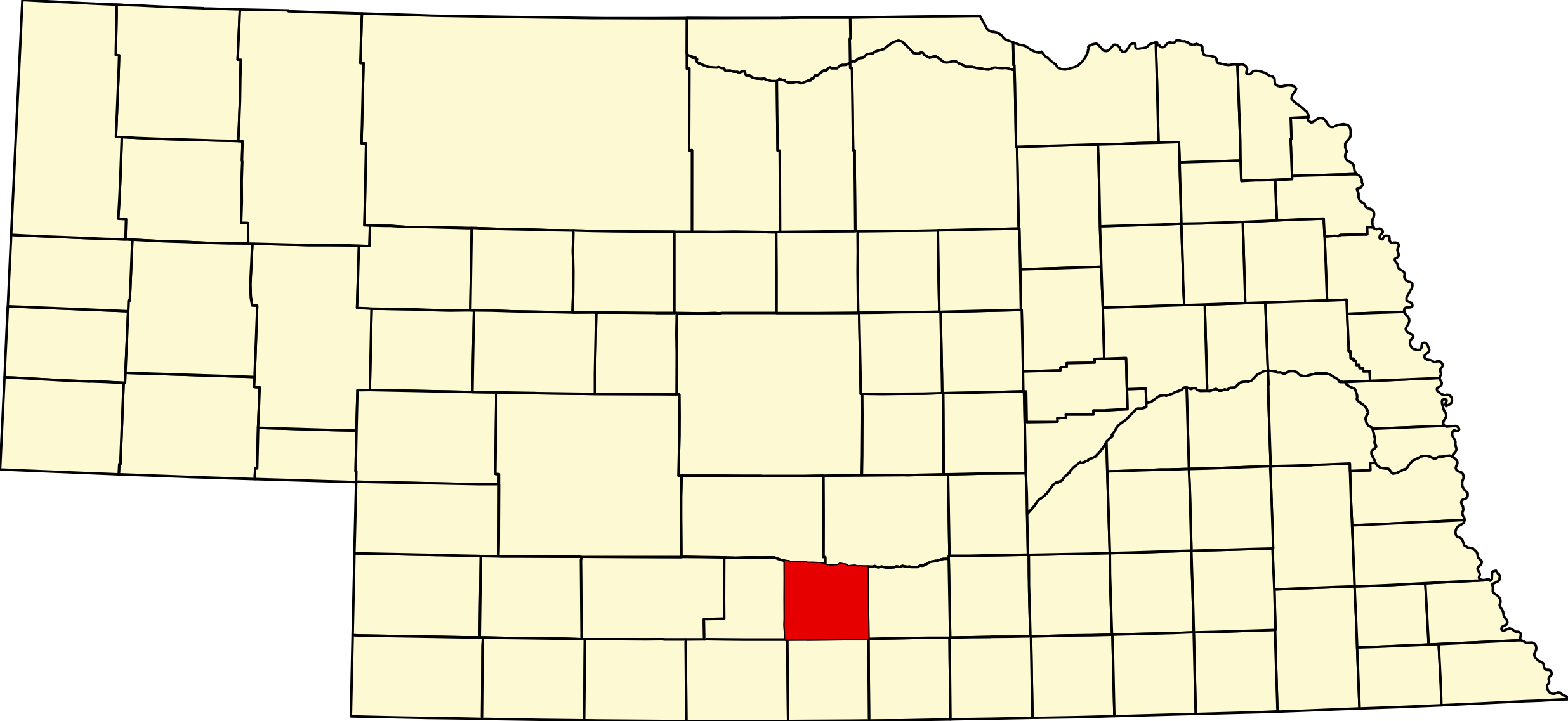
Location: South-central Nebraska
Landscape: Platte River Valley, farmland, and prairie
Major Highways: U.S. 6, U.S. 183, Nebraska Highway 23
Adjacent Counties:
Buffalo (N),
Kearney (E),
Harlan (S),
Gosper (W)
Culture & Landmarks
- Phelps County Courthouse (Holdrege) – Historic courthouse built in 1910.
- Nebraska Prairie Museum – Local history, agriculture, and military exhibits.
- Holdrege Sun Theatre – Restored 1920s movie house and community venue.
Notable Communities
- Holdrege – County seat and largest town, known for its civic pride and agricultural leadership.
- Funk, Bertrand, Atlanta – Small towns with deep farming roots and community spirit.
- Loomis – Village promoted as the "Undiscovered Gem of Phelps County."
- Sacramento – Historic unincorporated community that predates Holdrege.
Events & Festivals
- Holdrege Swedish Days – Celebrates local heritage with food, music, and parades.
- Phelps County Fair – Livestock shows, exhibits, and entertainment.
Natural Attractions & Recreation
- Platte River Trails – Walking, birdwatching, and scenic drives.
- Community Parks – Picnic areas and playgrounds in Holdrege and surrounding towns.
- Wildlife Viewing – Deer, pheasants, and prairie species across the county.
Living in Phelps County
Phelps County offers a peaceful rural lifestyle with strong community ties and a proud farming tradition. Holdrege anchors the county with services and events, while towns like Funk and Bertrand preserve the region’s agricultural legacy. With its festivals, open skies, and welcoming spirit, Phelps County is a proud part of Nebraska’s south-central corridor.
Phelps County at a Glance
Phelps County, Nebraska — organised in 1873 and named for Captain William Phelps, a steamboat captain (sources disagree over whether the Mississippi or the Missouri, and over whether he ever settled here). County seat Holdrege. Population peaked at 10,772 in 1900 and stands at 8,968 — and that number is the story. 142 listings across 6 towns.
Phelps County did not collapse, and its neighbours did. It has held between 8,400 and 9,800 people continuously since 1930, and sits only about seventeen percent below its all-time peak — against sixty-five percent for Fillmore and seventy-two for Franklin. Irrigation is why. The Swedish families who settled here in the 1880s expected to find groundwater at 110 feet and found it at thirty. The Central Nebraska Public Power and Irrigation District began operating in 1941, the centre-pivot boom followed the war, and the county gained population through the 1950s and again in the 1980s while every county around it emptied.
The railroad did not influence the county-seat fight — it built the winner. Williamsburg was the first seat in 1873, and the more central Phelps Center took it in 1879. Then the Burlington deliberately created the town of Holdrege in order to bypass Phelps Center, because the site suited its operations better. The first train came in on 10 December 1883, the town incorporated on 14 February 1884, and the county seat followed. Phelps Center lost the courthouse because the railroad refused to come to it. Holdrege is named for George Ward Holdrege, the Burlington’s general manager, who never lived there.
Getting there: US-6, US-34 and US-183 cross the county, with NE-23. The Platte River forms the northern boundary; otherwise this is flat, high loess tableland — the Divide — between the Platte and Republican valleys, under centre pivots nearly everywhere, and part of the Rainwater Basin. Holdrege sits at 2,326 feet, the highest county seat in this tier. BNSF runs the old Burlington line through town, and the 1911 Holdrege depot is on the National Register. Central Time.
Camp Atlanta held three thousand German prisoners of war. It started as a request from Holdrege’s New Industries Committee for a conscientious-objector camp to ease the wartime farm labour shortage — a prisoner-of-war camp was built instead. Planning began in June 1943 and by November there were about seventy buildings and seven miles of concrete road across three compounds, with 600 military and 130 civilian staff. The prisoners were German soldiers taken in North Africa and Italy, and they became a valuable source of farm labour until the camp was wound up in 1945–46. One prisoner is said to have escaped — and come back on his own. When the camp was dismantled, its material went into postwar lumber and into concrete rip-rap for the Tri-County irrigation ditches: the camp was recycled into the irrigation system that saved the county.
For visitors: the Nebraska Prairie Museum a mile north of Holdrege on US-183 — period rooms, quilts, arrowheads, antique machinery, a Lutheran church, a one-room school, an early farmhouse, a windmill and a POW guard tower, plus a WWII Interpretive Center with a scale replica of Camp Atlanta and interviews with guards, former prisoners and the farm families who hired them. It is the home of the National Sod House Society, and admission is free. Also here: the Plum Creek Massacre Site near Bertrand, where twelve wagons were attacked at dawn on 8 August 1864, eleven men killed and Mrs. Thomas Morton and nine-year-old Danny Marble carried off — the site is regularly misfiled under Dawson County because the town of Plum Creek became Lexington, but the massacre ground is south of the Platte, in Phelps County. For lighter fare, Bertrand has a combined barbershop and fishing tackle store, and the Sacramento Speakeasy has been frying chicken since 1974.
Outdoors: no state park and no state recreation area — this is Rainwater Basin country. Sacramento–Wilcox WMA southeast of Holdrege runs to more than 2,300 acres of wetland, prairie and woodland, was a Giant Canada Goose breeding facility from 1967 to 1997 producing goslings for release into the Sandhills and along the North Platte, and now carries restored wetland, ten water control structures and a handicapped-accessible hunting blind. Funk Lagoon, a federal waterfowl production area, is one of the premier birding sites in the whole basin — endangered whooping cranes turn up there in spring. Johnson Lake and Elwood Reservoir, which travellers attach to Holdrege because it is the nearest town of size, are both in Gosper County.
Born here. General Harry Schmidt (Holdrege, 25 September 1886), United States Marine Corps — commanding general of the 4th Marine Division and then of the V Amphibious Corps, who led Marine forces at Kwajalein, Saipan, Tinian and Iwo Jima. And Ralph D. Cornell (Holdrege, 1890), the landscape architect who shaped modern Los Angeles — Torrey Pines, the La Brea Tar Pits, the Los Angeles Civic Center grounds, and the campuses of Pomona, UCLA and the University of Hawaii. A boy from a Nebraska farm county landscaped southern California.
Vehicles registered in Phelps County carry license plate number 37. See what every Nebraska county number means.