
Harlan County Cameras
Harlan County, Nebraska
County seat: Alma · Created: June 3, 1871, from part of Lincoln County · Named for: Thomas Harlan, president of the Cheyenne Colony (some accounts say Sen. James Harlan of Iowa) · License plates: prefix 51 · Population: 3,073 (2020 census); peak 9,578 in 1910 · Area: 574 sq mi, 553 of it land
About Harlan County
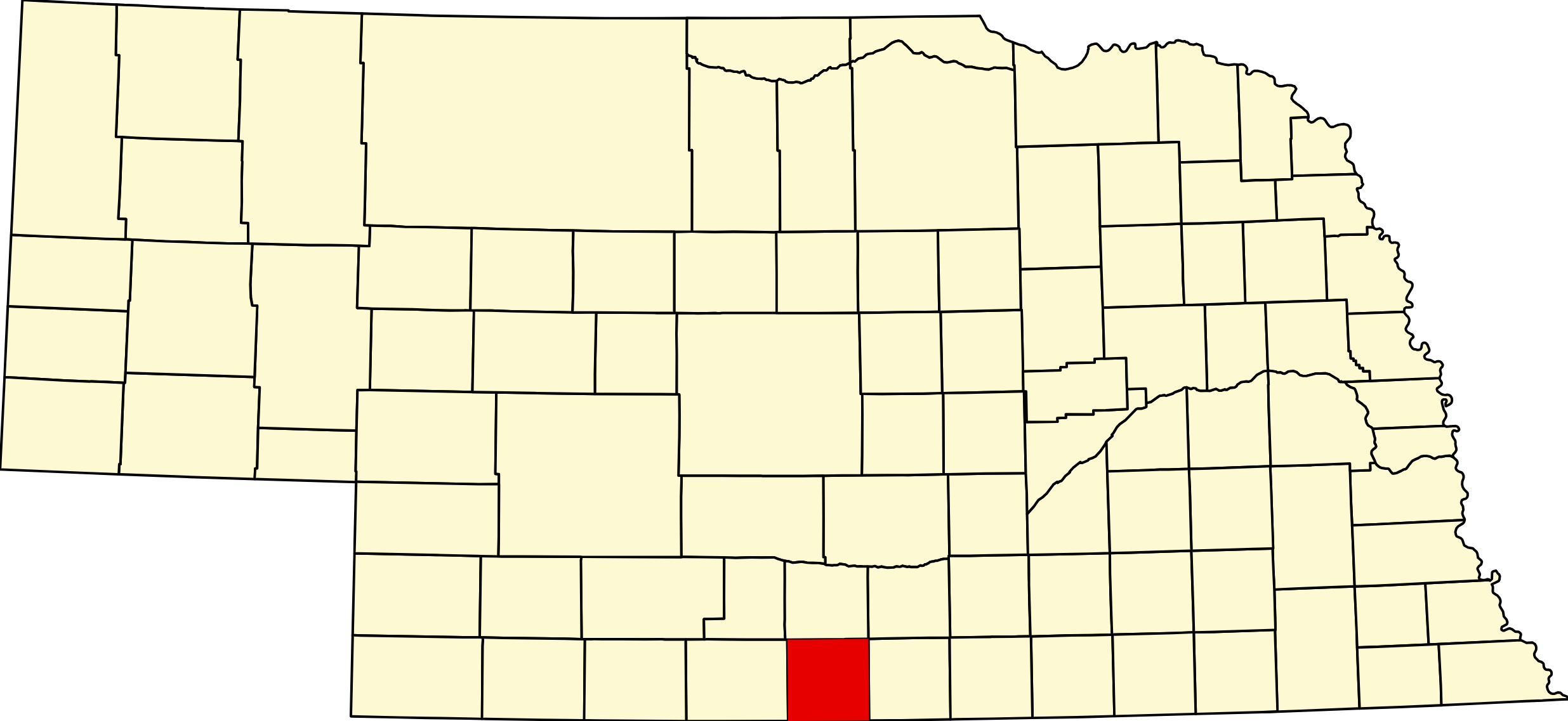
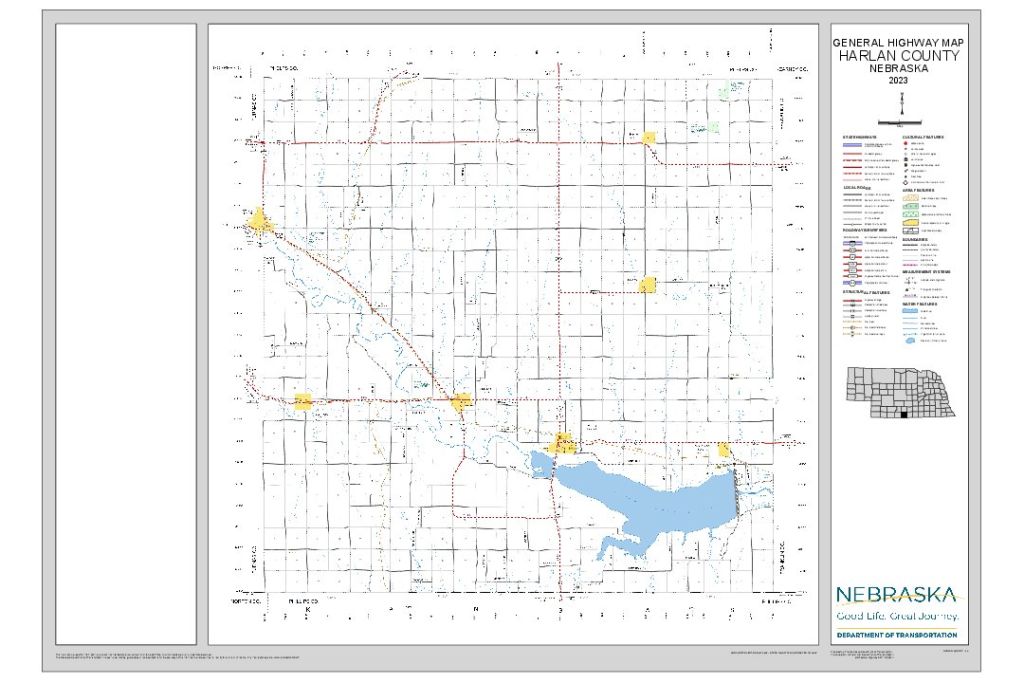
Harlan County lies on the Kansas line in south-central Nebraska. The Republican River crosses it from west to east, fed by Sappa and Prairie Dog creeks from the south and Spring and Turkey creeks from the north, and since 1952 most of the valley from Alma to Republican City has been Harlan County Lake, the state's second-largest lake. A party of 40 men camped near present Orleans on August 31, 1870, and J. W. Foster built the county's first house that September; F. A. Bieyon's group wintered in a stockade at Melrose. In February 1871 the Cheyenne Colony, led by Thomas Harlan and organized in Cheyenne, Wyoming Territory, sent settlers who founded Alma, and the Legislature created the county by special act on June 3, 1871. The earliest county history says it was named for Thomas Harlan; other accounts credit Sen. James Harlan of Iowa or a nephew of his.
The county seat was fought over for a dozen years. Alma won the first vote on July 3, 1871, 37 to 5 over the paper town of Napoleon. Melrose won a second election in 1872 and held the records until Judge Daniel Gantt ruled in 1873 that the 1871 vote stood. Orleans challenged Alma after a disputed election in 1881 and built its own courthouse, but the courts confirmed Alma. The present courthouse in Alma was built in 1964–65.
The Burlington & Missouri River Railroad built up the valley through Republican City, Alma and Orleans in 1879–80, then branches up Prairie Dog Creek to Oberlin, Kansas, and up the Sappa through Stamford; the Kansas City & Omaha (later the Union Pacific's Alma branch) founded Huntley and Ragan in 1886–87. The flood of May 31, 1935, killed 21 people at Orleans and one at Alma, about 25 in the county and nearly 100 along the river, and led to Harlan County Dam, built by the Corps of Engineers in 1946–52; Republican City moved uphill out of the reservoir. Ashton C. Shallenberger of Alma was governor of Nebraska from 1909 to 1911.
Towns of Harlan County
Cities and villages
Alma
The Harlan County seat, 1,043 people at the west end of Harlan County Lake, where US 136 meets US 183. Founded by the Cheyenne Colony in 1871; the 1923 auditorium and sale barn, the Parrot Theatre, Methodist Cove and lakeside RV park.
Orleans
Village of 341 on the Republican River where US 136 meets NE 89, laid out for the Burlington in 1872. Home of the Harlan County Fair and Museum, the 1929–30 Hotel Orleans and the Preston library, both on the National Register, and Applefest in October.
Stamford
Village of 158 on Sappa Creek and NE 89 in southwestern Harlan County, laid out on the Burlington in 1887 and probably named for Stamford, Connecticut. Still on an active rail line; the 1916 Sappa Creek Bridge is 2 mi east.
Republican City
Village of 134 on the bluffs above Harlan County Dam, moved uphill in 1951–52 when the lake flooded the old town on the river bottom. The Corps of Engineers office, Hunter and Gremlin coves, two marinas and the Cedar Run ATV Trail.
Huntley
Village of 33 on the upland north of Harlan County Lake, a Kansas City & Omaha railroad town of 1887 that grew beside the Bainbridge settlement of 1873. Reached by the S-42A spur from US 183.
Ragan
Harlan County's smallest village, 22 people on NE 4 near the Phelps County line, platted on a Union Pacific branch in 1886 and named for a railroad lawyer. The 1899 Turkey Creek Bridge and the Sacramento WMAs are nearby.
Former towns and post office communities
Melrose
Site of the first store and stockade in Harlan County, about 2 mi west of Orleans. Won the county seat in 1872, lost it to Alma in 1873, and faded as its businesses moved to Orleans; the townsite was vacated in 1881.
Mascot
Burlington station in northwestern Harlan County, first called Rouse, about 5 mi east of Oxford. Post office 1886–1892; the Mascot school graduated high-school classes from 1923 to 1958.
Travel Corridors
US 136 — the Heritage Highway, east–west along the north side of the valley from Oxford through Orleans, Alma and Republican City. US 136 Corridor →
US 183 — north–south from Phillipsburg, Kansas, across Harlan County Lake into Alma, sharing about 2 mi with US 136, then north past the Huntley spur to Holdrege and I-80. US 183 Corridor →
NE 4 — begins at US 6/34 in the county's northwest corner and runs east through Ragan. NE 4 Corridor →
State highways — NE 89 from Beaver City through Stamford and Orleans to US 183 south of Alma; NE 46, which begins at NE 89 west of Stamford and runs north along the Furnas County line to Oxford; the S-42A spur to Huntley; and US 6/34, which clip the northwest corner.
Cameras: View Harlan County cameras (US 136 north of Alma) → · Road conditions: Nebraska 511
Things to See
In Alma, the City Auditorium and Sale Barn (1922–23), the Carnegie library (1911) and the Parrot Theatre; in Orleans, the Hotel Orleans (1929–30), the Preston library (1917) and the Harlan County Museum; and three steel truss bridges on county roads: Prairie Dog Creek (1913) south of Orleans, Sappa Creek (1916) east of Stamford, scheduled for replacement, and Turkey Creek (1899) near Ragan. All seven are on the National Register. The Pioneer Crossing historical marker stands on NE 4 west of Ragan.
Outdoors
Harlan County Lake covers about 13,000 acres with about 75 miles of shoreline and reaches into Kansas; the Corps of Engineers manages it from its office at Republican City (308-799-2105). Its campgrounds are Methodist Cove near Alma and Hunter Cove near Republican City (Recreation.gov, May–September), with Gremlin Cove, the outlet parks below the dam, the Cedar Run ATV Trail, the North Shore and Patterson Harbor marinas, the city-run Alma RV Park and a seaplane base. Walleye, white bass, wipers, catfish and crappie draw anglers, more than 300 bird species have been recorded, and bald eagles winter near Alma; more than 17,000 acres of Corps land are open to hunting. In October 2026 the lake stood about 13 ft below normal and several ramps were closed, so check with the Corps. Alma has the Pheasant Ridge Trail, the Peckerneck horse trail, a pool and a nine-hole golf course; Game and Parks manages the South Sacramento and Southeast Sacramento WMAs near Ragan.
Harlan County Business Directory
Businesses within 20 miles of: Alma · Orleans · Stamford · Republican City · Ragan · All listings →
Adjacent Counties
Phelps County (north) · Franklin County (east) · Furnas County (west) · Phillips County, Kansas (south); Kearney County (northeast) and Norton County, Kansas (southwest) touch only at the corners. Oxford, mostly in Furnas County, reaches into Harlan County at its east edge.
Events
2026 dates: Alma's Fourth of July (July 4), with the "Best Race by a Dam Site" 10K, a parade and fireworks over the lake; the Harlan County Fair at the fairgrounds in Orleans (July 27–31); and Orleans Applefest (October 3; next on October 2, 2027).
Events in Harlan County
- Harlan County Fair (Orleans)
The Harlan County Fair at the fairgrounds in Orleans, held in late July; 4-H livestock shows and the Junior Fair Livestock Auction. - Orleans Applefest (Orleans)
Orleans Applefest is held in Orleans, Nebraska, on the first Saturday of October.
Know of another event in the county? Tell us about it.
Harlan County at a Glance
Harlan County, Nebraska — on the Kansas line along the Republican River, home of Harlan County Lake, the state's second-largest. County seat Alma, with five villages.
Getting there: US 183 from I-80 at Kearney (41 mi to the dam), US 136 along the valley, NE 4 across the north and NE 89 in the southwest.
For visitors: the lake's campgrounds, marinas and trails; Alma's auditorium, Parrot Theatre and lakeside RV park; Orleans' historic hotel and county museum; three National Register truss bridges. Hospital: Harlan County Health System in Alma.
Vehicles registered in Harlan County carry license plate number 51. See what every Nebraska county number means.
Harlan County Businesses & Places
135 listings in Harlan County.
Click a category to see the businesses.
Eat & Drink (4)
- Dairy Barn Alma — Ice Cream & Dairy Bar, Alma
- KJ's Cafe — Cafe / Coffee Shop, Alma
- Subway – 516 Hwy 183, Alma — Subway, Alma
- The Office Bar & Grill — Bar & Grill, Alma
Stay (2)
- Hotel Orleans — Hotel, Nebraska
- Super 8 Motel Alma — Hotel, Alma
Outdoors & Recreation (14)
- Alma Municipal Golf Course — Golf Course, Alma
- Alma RV Park — Campgrounds & RV Parks, Alma
- Fisherman's Corner — Bait & Tackle, Alma
- Gremlin Cove Park — Campgrounds & RV Parks, Nebraska
- Hunter Cove Park — Campgrounds & RV Parks, Nebraska
- Methodist Cove Campground — Campgrounds & RV Parks, Alma
- North and South Outlet Parks — Campgrounds & RV Parks, Nebraska
- North Shore Campground — Campgrounds & RV Parks, Nebraska
- On the Hunt Outdoors LLC — Guides & Outfitters, Alma
- Orleans RV Park — Campgrounds & RV Parks, Nebraska
- Patterson Harbor — Campgrounds & RV Parks, Nebraska
- Running For Ryan Disc Golf Course — Disc Golf Course, Alma
- South Sacramento WMA — Public Hunting Areas & WMAs, Nebraska
- Southeast Sacramento WMA — Public Hunting Areas & WMAs, Nebraska
Places to Visit (10)
- Alma Carnegie Library — Attraction, Alma
- Cedar Run ATV Trail — Attraction, Nebraska
- Harlan County Dam and Lake (Corps of Engineers) — Attraction, Nebraska
- Harlan County Museum — History & Heritage Museums, Nebraska
- Lighthouse Museum — Specialty Museums, Nebraska
- Peckerneck Horseback Riding Trail — Attraction, Alma
- Pheasant Ridge Trail — Attraction, Alma
- Prairie Dog Creek Bridge — Attraction, Nebraska
- Sappa Creek Bridge — Attraction, Nebraska
- Turkey Creek Bridge — Attraction, Nebraska
Events & Venues (6)
- Alma City Auditorium and Sale Barn — Event Venue / Banquet Hall, Alma
- Alma Swimming Pool — Swimming Pool, Alma
- Harlan County Fair — County Fair, Nebraska
- Harlan County Fairgrounds — Fairground, Nebraska
- Orleans Applefest — Festivals & Celebrations, Nebraska
- Parrot Theatre — Movie Theater, Alma
Health & Emergency (7)
- Alma Chiropractic Center — Chiropractor, Alma
- Alma Family Dentistry — Dentist & Dental Office, Alma
- Harlan County Health System — Hospital, Alma
- Hays Pharmacy — Pharmacy, Alma
- Heartland Family Medicine — Medical Clinic, Alma
- Lakeside Family Vision — Optometrist, Alma
- Republican Valley Animal Center — Veterinarian, Alma
Shopping & Gifts (3)
- Refind at the Lake — Boutique, Nebraska
- Simply You Boutique — Boutique, Alma
- Trustworthy Hardware - Alma — Hardware Store, Alma
Community & Faith (29)
- Alma Cemetery — Alma — Cemeteries, Alma
- Alma, NE UMC — Methodist Church, Alma
- Amateur Radio Repeaters - Harlan County (via RepeaterBook.com) — Amateur Radio Repeater, Nebraska
- Annie Frisbie Burial Site — Alma — Cemeteries, Alma
- Antelope Cemetery — Ragan — Cemeteries, Nebraska
- Bainbridge Cemetery — Huntley — Cemeteries, Huntley
- Calvary Cemetery — Orleans — Cemeteries, Nebraska
- Carter Cemetery — Orleans — Cemeteries, Nebraska
- Delimont Cemetery — Stamford — Cemeteries, Nebraska
- Freewater Cemetery — Ragan — Cemeteries, Nebraska
- German Lutheran Cemetery — Stamford — Cemeteries, Nebraska
- Hoyt Cemetery — Orleans — Cemeteries, Nebraska
- Huntley Zion Cemetery — Huntley — Cemeteries, Huntley
- Immanuel Lutheran Cemetery — Ragan — Cemeteries, Nebraska
- Lakeside Fellowship — Evangelical Free Church, Alma
- Lennemann Cemetery — Orleans — Cemeteries, Nebraska
- Mount Zion Cemetery — Alma — Cemeteries, Alma
- Orleans Cemetery — Orleans — Cemeteries, Nebraska
- Pleasant Hill Cemetery — Stamford — Cemeteries, Nebraska
- Ragan UMC — Methodist Church, Nebraska
- Republican City Cemetery — Republican City — Cemeteries, Nebraska
- Republican City UMC — Methodist Church, Nebraska
- Spring Grove Cemetery — Alma — Cemeteries, Alma
- St. Joseph Catholic Cemetery — Alma — Cemeteries, Alma
- St. Joseph Catholic Church Alma — Catholic Church, Alma
- St. Mary Catholic Church Orleans — Catholic Church, Nebraska
- St. Paul’s Lutheran Cemetery — Republican City — Cemeteries, Nebraska
- Stamford Cemetery — Stamford — Cemeteries, Nebraska
- Trinity Lutheran Church — Lutheran Church, Nebraska
Government & Resources (28)
- Alma Chamber of Commerce — Chamber of Commerce, Alma
- Alma Housing Authority — Housing Authority, Alma
- Alma Post Office — Post Office, Alma
- Alma USDA Service Center — USDA Service Center (FSA/NRCS), Alma
- Cordelia B Preston Memorial Library - Orleans — Libraries, Nebraska
- Harlan County Assessor — County Assessor, Alma
- Harlan County Attorney's Office — County Attorney, Alma
- Harlan County Caring Cupboard, Inc. — Food Pantry, Alma
- Harlan County Clerk — County Clerk, Alma
- Harlan County Court — County Court, Alma
- Harlan County Courthouse — Court House, Alma
- Harlan County Driver License Office — County Driver License, Alma
- Harlan County Emergency Management — Emergency Management, Alma
- Harlan County Senior Center — Senior Citizen Center, Alma
- Harlan County Sheriff — County Sheriff, Alma
- Harlan County Treasurer — County Treasurer, Alma
- Harlan County Veterans Service Office — Veterans Office, Alma
- Harlan County Weed Superintendent — County Weed Control, Alma
- Hoesch Memorial Public Library - Alma — Libraries, Alma
- Huntley Village Office — City Hall, Huntley
- Lower Republican Natural Resources District — Natural Resources District (NRD), Alma
- Orleans Chamber of Commerce — Chamber of Commerce, Nebraska
- Orleans Post Office — Post Office, Nebraska
- Ragan Village Office — City Hall, Nebraska
- Republican City Post Office — Post Office, Nebraska
- Republican City Village Office — City Hall, Nebraska
- Stamford Chamber of Commerce — Chamber of Commerce, Nebraska
- Stamford Village Office — City Hall, Nebraska
Utilities (7)
- Alma Municipal Gas — Natural Gas Provider, Alma
- City of Alma — Water Utility / District, Alma
- Lower Republican RWD 1 — Water Utility / District, Alma
- Village of Orleans — Water Utility / District, Nebraska
- Village of Ragan — Water Utility / District, Nebraska
- Village of Republican City — Water Utility / District, Nebraska
- Village of Stamford — Water Utility / District, Nebraska
Professional Services (6)
- Community Bank Alma — Banking, Alma
- First State Bank Alma — Banking, Alma
- FNIC – Alma — Insurance, Alma
- Knutson Insurance — Insurance, Alma
- Person & McQuay Law Offices — Attorney, Alma
- Waggoner Insurance — Insurance, Alma
Automotive (5)
- Alma Auto Parts - Carquest — Auto Parts, Alma
- Pump & Pantry - Alma — Pump & Pantry, Alma
- Rudy's Tires — Tire Shop, Alma
- Short Stop — Fuel & Gas Station, Alma
- Tripe Motor Company — Franchised New Car Dealer, Alma
Education (4)
- Alma Elementary at Alma — Elementary & Middle School, Alma
- Alma High School — High School, Alma
- Alma Public Schools — School District (K-12 / General), Alma
- Harlan County Extension — County Extension Office, Alma
Transportation (4)
- Alma Municipal Airport — Municipal / General Aviation Airport, Alma
- Harlan County Lake Seaplane Base — Municipal / General Aviation Airport, Alma
- Harlan County Public Transportation — Public Transportation, Alma
- Nebraskaland Aviation — General Aviation Airport, Alma
Personal Services (4)
- Artistic Hair & Nails — Beauty Salon, Alma
- Guys & Gals Haircare — Beauty Salon, Alma
- Oasis Hair Salon — Beauty Salon, Alma
- The Hairport — Beauty Salon, Alma
Media (1)
- Harlan County Journal — News Paper, Alma
Trades & Construction (1)
- Metzger Plumbing Heating & Repair — Plumbing & Heating, Alma
Agriculture & Farm (1)
- Republican Valley Animal Center — Equine Veterinarian, Alma