
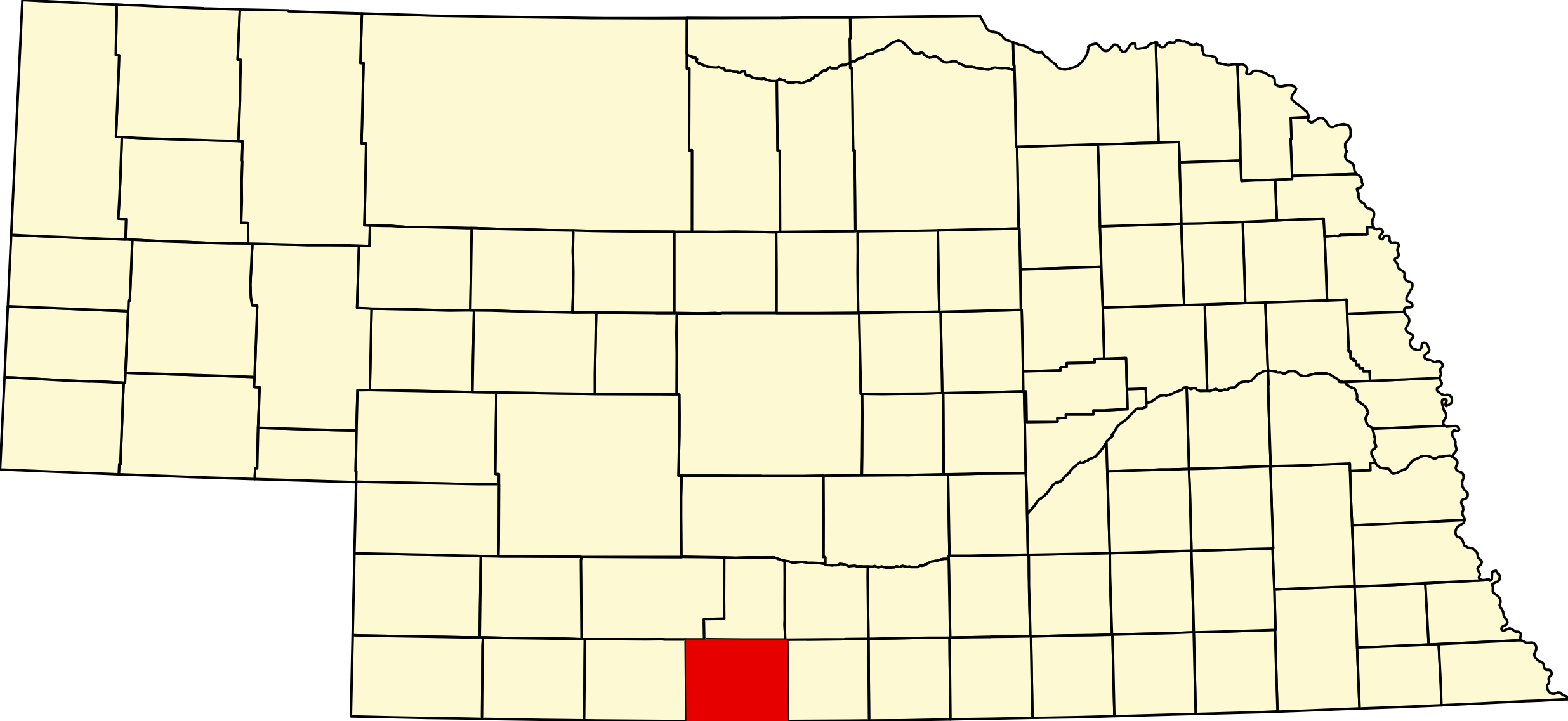
Furnas County, Nebraska (Plate 38)
Furnas County Cameras
Towns in Furnas County Nebraska
Visitor & Travel Categories
Business & Economic Categories
Furnas County, Nebraska
County Seat: Beaver City
Founded: 1873
Named For: Robert W. Furnas, Nebraska’s second governor
License Plate Prefix: 38
Population: 4,636 (2020 census)
Area: 721 sq mi
History
Furnas County was established in 1873 and named after Governor Robert W. Furnas, a key figure in early Nebraska agriculture and state development. Settlement expanded along the Republican River and its tributaries, where fertile bottomlands supported farming, milling, and frontier communities. Beaver City, founded in the 1870s, became the county seat and developed into a regional hub for trade, education, and civic life. Arapahoe, Cambridge, Holbrook, and Wilsonville grew as agricultural and rail‑supported towns, each contributing to the county’s rural identity.
The county’s history reflects pioneer migration, river‑valley development, and the growth of small towns that supported farming, livestock, and early transportation routes across southwestern Nebraska.
Geography
Location: Southwestern Nebraska near the Kansas border
Landscape: Rolling prairie, Republican River valleys, fertile farmland, and rural communities
Adjacent Counties:
- Harlan County (east)
- Phelps County (northeast)
- Gosper County (north)
- Red Willow County (west)
- Phillips County, Kansas (south)
Culture & Landmarks
- Cambridge Museum – Exhibits highlighting pioneer life, agriculture, and local heritage.
- Republican River Valley – Scenic landscapes with wildlife, trails, and historic significance.
- Beaver City Historic District – Architecture and landmarks reflecting 19th‑century settlement.
Notable Communities
- Beaver City – County seat and regional service center.
- Arapahoe – One of the county’s largest towns with strong agricultural roots.
- Cambridge – Community near the Republican River with a mix of agriculture and recreation.
- Holbrook – Small town with deep farming traditions.
- Wilsonville – Rural village with close‑knit community identity.
Events & Attractions
- Furnas County Fair – Livestock shows, rodeo events, and agricultural exhibits.
- Cambridge Community Festivals – Local celebrations featuring parades, music, and heritage events.
- Outdoor Recreation – Hunting, fishing, birdwatching, and scenic drives along the Republican River.
Living in Furnas County
Furnas County blends agricultural strength, river‑valley scenery, and small‑town life. Beaver City anchors county services and commerce, while Arapahoe, Cambridge, Holbrook, Wilsonville, and rural areas maintain long‑standing farming traditions. Residents value the area’s heritage, open landscapes, and strong community identity.
Furnas County at a Glance
Furnas County, Nebraska — created and organised in 1873, and named during his own term for Robert W. Furnas, second Governor of the State of Nebraska (not, as often written, the second territorial governor). Furnas founded the Nebraska Advertiser at Brownville, commanded the 2nd Nebraska Cavalry in the Civil War, ran the State Board of Agriculture for years, and issued the first Arbor Day proclamation in 1874. County seat Beaver City. Population peaked at 12,373 in 1900 and stands at 4,636. 187 listings across 8 towns.
The county seat was decided by a snowstorm. The organisation election of 8 April 1873 polled at both Arapahoe in the north and Beaver City in the south. Arapahoe’s returns reached the Secretary of State inside the deadline. Beaver City’s were delayed by a snowstorm — and Arapahoe was declared the seat. A second election that October went to Beaver City; Arapahoe litigated for roughly three years; and the Nebraska Supreme Court finally ruled for Beaver City, which has held it ever since. The first courthouse was condemned in 1948 and torn down; the present one was dedicated on 4 May 1951.
Getting there: US-6, US-34, US-136 and US-283 all cross the county, with NE-46, 47 and 89 — four U.S. routes, which is a lot for a county this size. The Republican River runs east across the upper part; Medicine Creek comes down from Frontier County and joins it half a mile east of Cambridge; Beaver Creek, which gave the county seat its name, drains the south. Beaver City sits at 2,185 feet. BNSF still runs the old Republican Valley line through the middle of Oxford. Central Time.
The railroad renamed half the county. The first train crossed the Harlan County line into Oxford on 17 February 1880. Cambridge had been Pickletown, for settler J. W. Pickle, and took its present name in August 1880 when the rails arrived; Oxford had been Grandview and Holbrook had been Burton’s Bend, both renamed in 1881 for railroad men. Wilsonville began life as “Wild Turkey” and was renamed in 1873 for two merchant brothers. And Edison is not named for Thomas Edison — it is named for Eddie Rohr, the postmaster’s son. Among the town names actually proposed in this county and rejected: Northwood, Pickletown, Scratchpot City and Lickskillet.
The TVA may have been thought up in Beaver City. George W. Norris opened his first law office here before moving to McCook, and local tradition holds that while talking near the Lashley Mill the young Norris first hit on the idea of turning water power into electricity for farm families — the germ of the Tennessee Valley Authority Act of 1933 and the Rural Electrification Act of 1936. It is Furnas County’s story more than McCook’s, and it is rarely told. Norris himself was born in Ohio.
For visitors: the Furnas–Gosper Historical Society Museum at Arapahoe, which serves two counties from one; the Cambridge Museum; the Cambridge State Aid Bridge over the Republican and the W. H. Faling House, both National Register listings; and, 2.1 miles west of Oxford on US-136, the state historical marker for the Republican River flood of 1935 — the region’s official flood marker, and it stands in Furnas County. Beaver City also produced two aviation firsts worth the retelling: Dr. Frank Brewster, called Nebraska’s first flying doctor, bought a Curtiss-Wright biplane for $8,000 in 1919 and had it flown before a reported eight thousand spectators, and in 1962 Dr. Arthur Becker set up what is described as the state’s first helicopter-equipped veterinary practice.
Outdoors, be careful what you read. Furnas County has no state park and no state recreation area. The lake everyone calls “Cambridge’s” is Harry Strunk Lake, ten miles north in Frontier County; Cambridge is only its mailing address. The Republican here is fishable and floatable in places but is not a managed recreation corridor.
Born here. Arno B. Cammerer (Arapahoe, 1883), third Director of the National Park Service, under whom the service roughly tripled the number of areas it administered and visitation went from two million to sixteen. Ron Hansen (Oxford, 1938), 1960 American League Rookie of the Year with Baltimore, who on 30 July 1968 turned the first unassisted triple play in the major leagues in forty-one years — the glove and ball are in Cooperstown. Jeff Kinney (Oxford, 1949), running back on Nebraska’s 1970 and 1971 national championship teams and a first-round pick of the Kansas City Chiefs — habitually listed as a McCook man, but McCook is only where he went to high school. And Dorothy Grebenak (Oxford, 1913), the pop artist who hand-hooked wool rugs of Tide boxes, dollar bills and baseball cards to hang on walls as paintings.