
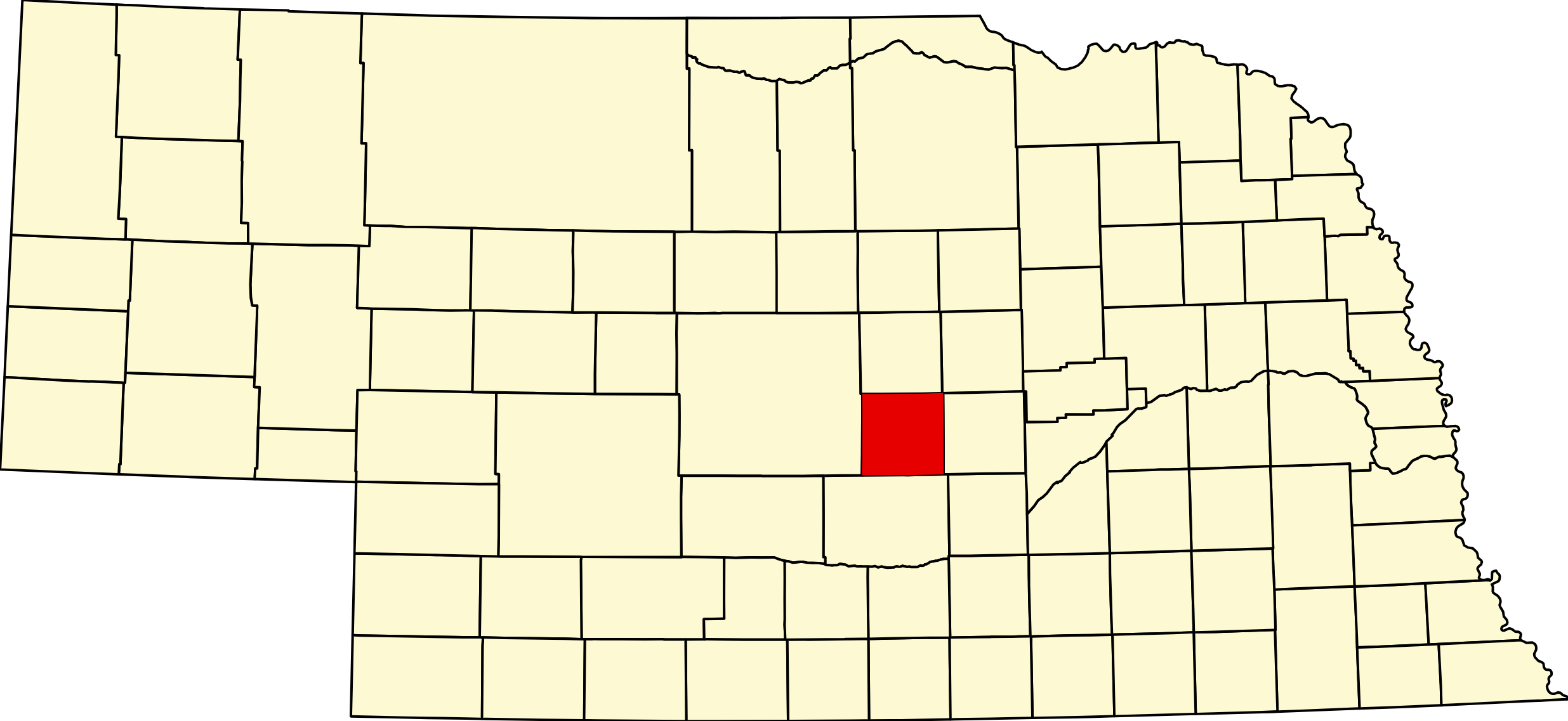
Sherman County, Nebraska
A corridor of hills, heritage, and hometown pride.
Sherman County anchors central Nebraska with scenic valleys, historic communities, and a legacy of Czech and German settlement. From Loup City’s courthouse square to the quiet charm of Ashton and Rockville, every town and trail reflects the state’s rural strength and cultural resilience.
County Seat: Loup City
Founded: 1871
Named For: General William Tecumseh Sherman
License Plate Prefix: 56
Population: 3,152 (2020 census)
Area: 572 sq mi
History
Sherman County was established in 1871 and named after General William Tecumseh Sherman. The region was settled by Czech and German immigrants who built strong farming communities. Loup City became the county seat and remains a hub of civic life and ethnic heritage.
Geography
Location: Central Nebraska
Landscape: Rolling hills, river valleys, and farmland
Major Highways: Nebraska Highways 2, 10, 58
Adjacent Counties:
Valley (N),
Greeley (NE),
Howard (E),
Buffalo (S),
Custer (W)
Culture & Landmarks
- Sherman County Courthouse (Loup City) – Historic courthouse built in 1920.
- Czech Heritage Museum – Celebrates ethnic traditions in Loup City.
- Sherman Reservoir State Recreation Area – Fishing, boating, and camping.
Notable Communities
- Loup City – County seat and largest town, known for its Czech heritage and reservoir access.
- Ashton, Rockville, Hazard, Litchfield – Small towns with deep agricultural roots and community pride.
Events & Festivals
- Loup City Polish Days – Parade, music, and ethnic celebration.
- Sherman County Fair – Livestock shows, exhibits, and entertainment.
- Fishing Tournaments – Held at Sherman Reservoir throughout the year.
Natural Attractions & Recreation
- Sherman Reservoir – Boating, fishing, and scenic views near Loup City.
- Prairie Trails – Hiking, birdwatching, and photography.
- Community Parks – Playgrounds and picnic areas in Ashton, Litchfield, and surrounding towns.
Living in Sherman County
Sherman County offers a peaceful rural lifestyle with strong community ties and a proud ethnic legacy. Loup City anchors the county with services and events, while towns like Ashton and Rockville preserve the region’s agricultural and cultural traditions. With its festivals, trails, and welcoming spirit, Sherman County is a proud part of Nebraska’s central corridor.
Sherman County at a Glance
Sherman County, Nebraska — established in 1870 and organized in 1872, named for General William Tecumseh Sherman. County seat Loup City, platted in 1864. Population peaked at 9,122 in 1930 — the latest peak of any county in central Nebraska — and now stands at 2,959. The county is 100 percent rural, at just over five people per square mile. 126 listings across 5 towns.
Getting there: NE-2, with NE-10, 58, 68 and 92. Central Time.
This is the Polish Capital of Nebraska. At the 2000 census 29.6 percent of Sherman County residents claimed Polish ancestry — one of the largest concentrations in the state — and Loup City holds Polish Days on the first weekend of June. The early-1900s stained glass at St. Josaphat’s Catholic Church commemorates area families, most of them with Polish names. It makes a neat pairing with Dannebrog, the Danish Capital, one county east.
Sherman Reservoir is the county’s headline: 2,845 surface acres, just over four miles long, but with 77 miles of shoreline when full — the second most of any Nebraska lake, thanks to five large bays and a great many coves. Sherman Dam was completed on Oak Creek in 1961, 134 feet high. There are more than 300 basic campsites across nine areas plus about 60 electric pads at West Ridge with 30- and 50-amp service, a dump station and coin-operated showers, three boat ramps and three docks. Unusually for Nebraska, all boat types are permitted with no horsepower or no-wake restriction. It is rated one of the state’s top walleye and crappie lakes, and also holds white bass, channel catfish, northern pike and flatheads — a flathead released here in 2001 measured six inches longer than the state record fish. The surrounding 4,721-acre wildlife management area is open for pheasant, quail, dove, deer, turkey and waterfowl.
A piece of national history in a small town: in June 1934, during the Depression, the Loup City riot pitted leftist organizers — among them the veteran activist Mother Bloor — against local residents after Communist efforts to organize workers at a poultry plant. It is a rare instance of national labour conflict playing out in rural Nebraska.
Born here: Edmund C. Jaeger, born at Loup City in 1887, the naturalist known as the dean of the California deserts and the first person to scientifically document hibernation in a bird — the common poorwill, published in 1948 and later in National Geographic. And Charles H. Mohr, born there in 1929, the war correspondent who resigned from Time when it censored his Vietnam reporting and went to the New York Times.
Sherman County · Central · Highway 2 Corridor · Explore Nebraska
Vehicles registered in Sherman County carry license plate number 56. See what every Nebraska county number means.
Sherman County Businesses & Places
126 listings in Sherman County.
Click a category to see the businesses.
Eat & Drink (3)
- Loup City Diner — Breakfast & Brunch, Loup City
- The Den - Hazard — Bar & Grill, Hazard
- The Golden Husk — American Restaurant, Loup City
Outdoors & Recreation (3)
- Loup City Golf Course — Golf Course, Loup City
- Sherman Reservoir State Recreation Area — Campgrounds & RV Parks, Loup City
- Sherman Reservoir WMA — Public Hunting Areas & WMAs, Nebraska
Places to Visit (4)
- Husker Farms — Attraction, Litchfield
- Polish Heritage Center and Museum — History & Heritage Museums, Ashton
- Sherman County Historical Society and Museum — History & Heritage Museums, Loup City
- Sherman Reservoir State Recreation Area — RV Camping, Loup City
Events & Venues (3)
- Loup City Polish Days — Festivals & Celebrations, Loup City
- Sherman County Fair — County Fair, Loup City
- Sherman County Fairgrounds — Fairground, Loup City
Health & Emergency (2)
- Loup City Rx Shoppe — Pharmacy, Loup City
- Sherman County Medical Clinic — Medical Clinic, Loup City
Shopping & Gifts (2)
- Joe's Market — Grocery, Loup City
- Trotter's Garden Shoppe/Learning Center — Nursery & Garden Center, Litchfield
Community & Faith (34)
- Ashton Cemetery — Ashton — Cemeteries, Ashton
- Austin Cemetery — Loup City — Cemeteries, Loup City
- Balsora Cemetery — Litchfield — Cemeteries, Litchfield
- Cleoria Cemetery — Loup City — Cemeteries, Nebraska
- Evergreen Cemetery — Loup City — Cemeteries, Loup City
- Faith Lutheran Church — Lutheran Church, Hazard
- Gehrke Cemetery — Rockville — Cemeteries, Nebraska
- Gray Cemetery — Litchfield — Cemeteries, Litchfield
- Hayestown Cemetery — Rockville — Cemeteries, Nebraska
- Hazard Cemetery — Hazard — Cemeteries, Hazard
- Hazard UMC — Methodist Church, Hazard
- Horak Cemetery — Loup City — Cemeteries, Loup City
- Immanuel Lutheran Cemetery — Ashton — Cemeteries, Nebraska
- Immanuel Lutheran Church — Lutheran Church, Loup City
- Lewis Burial Plat — Litchfield — Cemeteries, Nebraska
- Litchfield Cemetery — Litchfield — Cemeteries, Litchfield
- Lone Elm Cemetery — Litchfield — Cemeteries, Litchfield
- Loup City Cemetery — Loup City — Cemeteries, Loup City
- Loup City UMC — Methodist Church, Loup City
- Mizner Cemetery — Loup City — Cemeteries, Nebraska
- Rockville Cemetery — Rockville — Cemeteries, Nebraska
- Saint Francis Cemetery — Ashton — Cemeteries, Nebraska
- Saint Josaphat Cemetery — Ashton — Cemeteries, Ashton
- Saint Marys Cemetery — Rockville — Cemeteries, Nebraska
- Souleville Cemetery — Rockville — Cemeteries, Nebraska
- St. Francis Ashton — Catholic Church, Ashton
- St. Gabriel Hazard — Catholic Church, Hazard
- St. Josaphat Loup City — Catholic Church, Loup City
- Sunny Slope Cemetery — Loup City — Cemeteries, Nebraska
- Sweetwater Cemetery — Sweetwater — Cemeteries, Nebraska
- Trinity Lutheran Church Cemetery — Loup City — Cemeteries, Nebraska
- Union Cemetery — Rockville — Cemeteries, Nebraska
- Verdurette Cemetery — Rockville — Cemeteries, Nebraska
- Zeller Burial Site — Rockville — Cemeteries, Nebraska
Government & Resources (25)
- Ashton Village Office — City Hall, Ashton
- Central Nebraska Jt Housing Authority — Housing Authority, Loup City
- Hazard Post Office — Post Office, Hazard
- Hazard Village Office — City Hall, Hazard
- Litchfield Post Office — Post Office, Litchfield
- Litchfield Public Library — Libraries, Litchfield
- Loup City Chamber of Commerce — Chamber of Commerce, Loup City
- Loup City City Hall — City Hall, Loup City
- Loup City Housing Authority — Housing Authority, Loup City
- Loup City Police Department — Police Station, Loup City
- Loup City Post Office — Post Office, Loup City
- Loup City Public Library — Libraries, Loup City
- Rockville City Fire Department — Fire Station, Nebraska
- Rockville Post Office — Post Office, Nebraska
- Sherman County Assessor — County Assessor, Loup City
- Sherman County Attorney's Office — County Attorney, Loup City
- Sherman County Clerk — County Clerk, Loup City
- Sherman County Court — County Court, Loup City
- Sherman County Courthouse — Court House, Loup City
- Sherman County Driver License Office — County Driver License, Loup City
- Sherman County Emergency Management — Emergency Management, Nebraska
- Sherman County Senior Center — Senior Citizen Center, Loup City
- Sherman County Sheriff — County Sheriff, Loup City
- Sherman County Treasurer — County Treasurer, Loup City
- Sherman County Weed Superintendent — County Weed Control, Loup City
Agriculture & Farm (13)
- Ashton Feed & Grain — Animal Feed Store, Ashton
- Aurora Cooperative - Loup City — Farm Coop, Loup City
- Curlo Grinding-Hay — Hay & Forage, Ashton
- Cutting Edge Seed and Chemicals — Seed Dealer, Hazard
- Loup City Greenhouse & Produce — Greenhouse, Loup City
- Mid-States Irrigation & Repair – Loup City — T-L Irrigation Dealer, Loup City
- Nilsen Hay Company — Hay & Forage, Hazard
- NuTech Seed Corn Company — Seed Dealer, Hazard
- Trotter Fertilizer - Litchfield — Fertilizer Dealer, Litchfield
- Trotter Fertilizer & Chemical - Hazard — Fertilizer Dealer, Hazard
- Trotter Grain - Ashton — Grain Elevator, Ashton
- Trotter Grain - Litchfield — Grain Elevator, Litchfield
- VC Howard Hay Co. — Hay & Forage, Litchfield
Professional Services (8)
- Ashton State Bank — Banking, Ashton
- Citizens Bank & Trust — Banking, Loup City
- Day's Auction & Realty — Real Estate Auction, Loup City
- Harrington Financial — Financial Consultant, Ashton
- Hayden Outdoors Real Estate - Mattison Ference — Farm & Land / Ranch Real Estate, Loup City
- Loop Agency — Insurance, Loup City
- R A I of Nebraska — Insurance, Loup City
- Town & Country Bank — Banking, Litchfield
Education (7)
- Litchfield Elementary School — Elementary & Middle School, Litchfield
- Litchfield High School — High School, Litchfield
- Litchfield Public Schools — School District (K-12 / General), Litchfield
- Loup City Elementary School — Elementary & Middle School, Loup City
- Loup City High School — High School, Loup City
- Loup City Public Schools — School District (K-12 / General), Loup City
- Sherman County Extension — County Extension Office, Loup City
Utilities (5)
- City of Loup City — Water Utility / District, Loup City
- Sherman Lake Homes — Water Utility / District, Loup City
- Village of Ashton — Water Utility / District, Ashton
- Village of Litchfield — Water Utility / District, Litchfield
- Village of Rockville — Water Utility / District, Nebraska
Trades & Construction (4)
- Ashton Welding-Irrigation — Welding & Fabrication, Ashton
- Larsen Electric — Electrical, Hazard
- Rasmussen Construction — General Contractor, Hazard
- Ulrich Gravel, Inc. — Sand, Gravel and Aggregate, Loup City
Transportation (3)
- City of Loup City Transit — Public Transportation, Loup City
- Loup City Handi Bus — Public Transportation, Loup City
- Loup City Municipal Airport — Municipal / General Aviation Airport, Loup City
Personal Services (3)
- Golden Touch Beauty Shop — Beauty Salon, Ashton
- Higgins Funeral Home — Funeral Home, Loup City
- Peters Funeral Home — Funeral Home, Loup City
Automotive (3)
- Joe's Motor Company — Used Car Dealer, Hazard
- KS Garage — Auto Repair, Ashton
- Larrys Auto Sales — Used Car Dealer, Loup City
Manufacturing & Industrial (2)
- Spotanski Plastics — Plastics Manufacturing, Hazard
- Zech Trucking — Trucking Company, Nebraska
Land & Property Services (1)
- Burns Tree & Fencing Service — General Fencing Contractor, Hazard
Media (1)
- Sherman County Times — News Paper, Loup City