
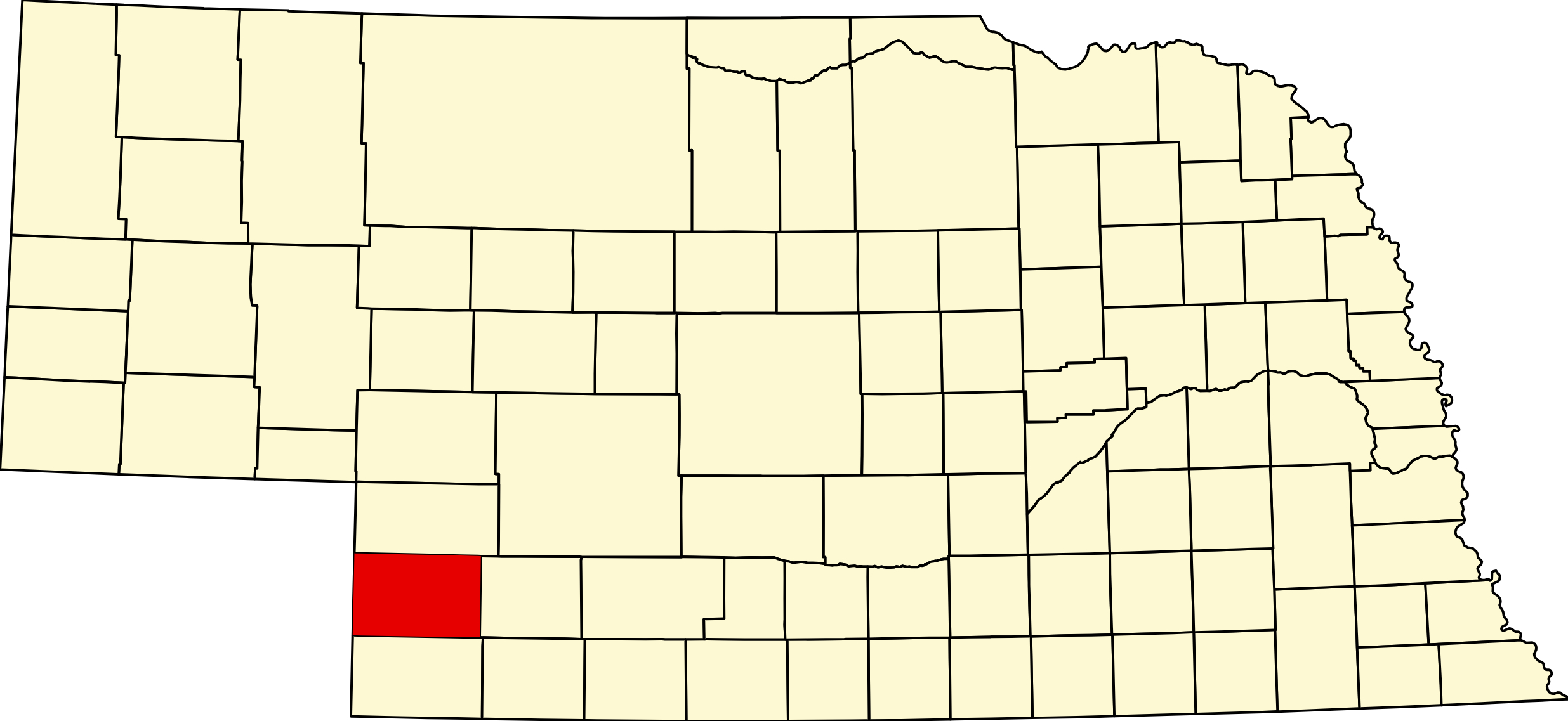
Chase County Cameras
County Seat: Imperial
Founded: 1873 (organized in 1886)
Named For: Champion S. Chase, Nebraska’s first Attorney General
License Plate Prefix: 72
Population: 3,893 (2020 census)
Area: 894 sq mi
History
Chase County was established in 1873 and named after Champion S. Chase, Nebraska’s first Attorney General and a prominent early political figure. The county remained sparsely settled until the mid‑1880s, when homesteaders arrived following the expansion of railroads and the promotion of agricultural opportunities on the High Plains.
Imperial was selected as the county seat after a series of early settlement disputes. Agriculture quickly became the backbone of the county’s economy, with dryland farming, cattle operations, and later irrigation transforming the region. The construction of Enders Reservoir in the 1950s provided a major boost to recreation, water management, and local development.
Geography
Location: Southwestern Nebraska, part of the High Plains region
Landscape: Rolling prairie, agricultural land, canyons, and the Frenchman River valley
Adjacent Counties:
- Perkins County (north)
- Hayes County (east)
- Dundy County (south)
- Yuma County, Colorado (southwest)
- Phillips County, Colorado (west)
Culture & Landmarks
- Enders Reservoir State Recreation Area – Fishing, camping, boating, and wildlife viewing.
- Champion Mill State Historical Park – Nebraska’s last functioning water‑powered mill, preserved as a historic site.
- Frenchman River Valley – Scenic landscapes central to the county’s agricultural heritage.
Notable Communities
- Imperial – County seat and largest community.
- Wauneta – Known for the historic Wauneta Roller Mills.
- Champion – Home to Champion Mill and Enders Reservoir access.
- Lamar – Small rural community in northern Chase County.
- Enders – Community near the reservoir and recreation area.
Events & Attractions
- Chase County Fair & Expo – One of Nebraska’s largest county fairs, featuring concerts, rodeo events, and exhibits.
- Enders Reservoir Recreation – Popular for fishing, boating, birdwatching, and camping.
- Historic Mill Tours – Explore the preserved water‑powered mill at Champion.
Living in Chase County
Chase County offers a rural lifestyle centered around agriculture, outdoor recreation, and small‑town community life. Imperial provides essential services, schools, and businesses, while the county’s natural features — including Enders Reservoir and the Frenchman River — support a strong outdoor culture. Residents value the area’s quiet pace, open landscapes, and deep agricultural roots.
Chase County at a Glance
Chase County, Nebraska — separated from Hayes County by the legislature on 27 February 1873 and organized in 1886. Named for Champion Spalding Chase, Nebraska’s first Attorney General and four times mayor of Omaha — a fourth term that ended in impeachment and removal for drunkenness, which the county histories tend to leave out. County seat Imperial, which beat the older town of Hamilton in an election on 24 June 1886; Hamilton renamed itself Champion and is a hamlet of 115 today. Population peaked at 5,484 in 1930 and stands near 3,700. 128 listings across 5 towns.
Getting there: US-6 runs east and west, NE-61 north and south. Frenchman Creek, spring-fed and entering from Colorado, runs southeast across the county with Stinking Water Creek as its main branch; the Republican River itself is not in Chase County — the Frenchman joins it further downstream in Hitchcock. This is High Plains tableland, irrigated hard from the Ogallala Aquifer and growing wheat, corn, edible beans, soybeans and sugar beets. Imperial sits at 3,284 feet. The Nebraska, Kansas & Colorado short line runs the 48-mile Imperial Subdivision through Wauneta, Enders and Imperial. Mountain Time — the zone line runs a few counties east of here.
The railroad rearranged the county. The grade up the Frenchman valley was finished in 1888 but the rails took four more years, reaching Wauneta on 28 January 1892 and Imperial on 15 August 1892. When they came, the Lincoln Land Company physically moved most of Imperial’s buildings to a new townsite beside the tracks. Enders was moved two miles for the same reason, and “New Enders” was dedicated in 1908.
Champion Mill is the county’s landmark — a water-powered flour mill built in 1888, rebuilt in 1892 after a fire, and grinding commercially until 1968. The town was sited there because Frenchman Creek drops over a natural three-foot rock ledge. The mill, its headrace and its dam were listed on the National Register as a historic district in 1988, and ownership passed from Nebraska Game and Parks to Chase County in 2013 — so hours and fees are set locally now, and worth checking before you drive out. The 11-acre Champion Lake beside it is the old mill pond.
For visitors and the outdoors: the Chase County Courthouse of 1910–12, dark brick with limestone trim in a Jacobethan style unlike any other courthouse in Nebraska, National Register-listed in 1990; the Wauneta Roller Mills; the county historical society at Imperial. Enders Reservoir, two miles east of Enders, is the big water — a Bureau of Reclamation dam built 1947–51 on Frenchman Creek, 134 feet high, holding 34,500 acre-feet and peaking at 1,705 surface acres, with a 4,359-acre wildlife management area around it. Camping runs to four campgrounds with electric sites plus a couple hundred tent sites, showers and a dump station, half the sites reservable in season and the rest first-come by iron ranger. All boating is permitted — no horsepower or wake limit — with ramps at No Name Bay and Area A, and the fishery runs to walleye, white bass, crappie, channel catfish, northern pike and wipers.
Lamar is no longer a village. Platted in 1887 when the Burlington reached it and named for L. Q. C. Lamar, Grover Cleveland’s Secretary of the Interior, it kept a post office from 1887 to 1995 — and on 5 November 2024 its remaining residents voted to unincorporate. It is the most recent village dissolution in Nebraska.
Born here. Lee Edward Travis (born on a Chase County farm, 23 June 1896), one of the founders of speech pathology in the United States and of the organization that became the American Speech-Language-Hearing Association; the Travis Research Institute carries his name. And Dan Hughes (Imperial, 1956), the wheat farmer who served in the Nebraska Legislature and chaired U.S. Wheat Associates — usually filed under Perkins County, where he lives, but a Chase County native.
Vehicles registered in Chase County carry license plate number 72. See what every Nebraska county number means.
Chase County Businesses & Places
128 listings in Chase County.
Click a category to see the businesses.
Eat & Drink (7)
- Good Times Bar & Grill — Bar & Grill, Nebraska
- Long Shots Restaurant — Bar & Grill, Imperial
- Meadowlark Lane Coffee & Floral — Cafe / Coffee Shop, Nebraska
- Mickeys Broadway Bites — American Restaurant, Imperial
- Pizza Hut — Pizza Restaurant, Imperial
- Subway – 430 Broadway St, Imperial — Subway, Imperial
- Sweden Creme — Ice Cream & Dairy Bar, Imperial
Stay (2)
- Northside Motel — Motel, Imperial
- The Balcony House Bed & Breakfast — Hotel, Imperial
Outdoors & Recreation (4)
- Enders State Recreation Area — Campgrounds & RV Parks, Enders
- Imperial Country Club — Country Club, Imperial
- Wanamaker WMA — Public Hunting Areas & WMAs, Nebraska
- Wauneta RV Park — Campgrounds & RV Parks, Nebraska
Places to Visit (4)
- Champion Mill State Historical Park — State Historical Parks, Champion
- Chase County Historical Museum — History & Heritage Museums, Champion
- Chase County Historical Society - 73989 320th Ave. — History & Heritage Museums, Imperial
- Enders Reservoir State Recreation Area — RV Camping, Enders
Events & Venues (1)
- Chase County Fair & Expo — County Fair, Imperial
Health & Emergency (9)
- Chase County Clinic — Medical Clinic, Nebraska
- Chase County Community Hospital & Clinics — Hospital, Imperial
- CHASE COUNTY COMMUNITY HOSPITAL dba CHASE COUNTY CLINI — Medical Clinic, Imperial
- Crosswinds Animal Health — Mixed / General Practice, Imperial
- First Insight Eyecare - Imperial — Optometrist, Imperial
- Imperial Family Dental Center — Dentist & Dental Office, Imperial
- Imperial Pharmacy — Pharmacy, Imperial
- Southwestern Veterinary Services — Mixed / General Practice, Nebraska
- Veterinary Services — Mixed / General Practice, Imperial
Shopping & Gifts (6)
- Bomgaars – Imperial — Hardware & Supply, Imperial
- Broadway Liquor — Liquor Store, Imperial
- Hill's Family Foods — Grocery, Imperial
- Imperial Super Foods — Grocery, Imperial
- Owens True Value Hardware — Hardware Store, Imperial
- Walgren's Supermarket — Grocery, Nebraska
Government & Resources (30)
- ACCESSNebraska Office - Imperial — Developmental & Social Services, Imperial
- Champion Post Office — Post Office, Champion
- Chase County Assessor — County Assessor, Imperial
- Chase County Attorney's Office — County Attorney, Imperial
- Chase County Clerk — County Clerk, Imperial
- Chase County Court — County Court, Imperial
- Chase County Courthouse — Court House, Imperial
- Chase County Driver License Office — County Driver License, Imperial
- Chase County Emergency Management — Emergency Management, Imperial
- Chase County Sheriff — County Sheriff, Imperial
- Chase County Treasurer — County Treasurer, Imperial
- Chase County Veterans Service Office — Veterans Office, Imperial
- Chase County Weed Superintendent — County Weed Control, Imperial
- Enders Post Office — Post Office, Enders
- Imperial Chamber of Commerce — Chamber of Commerce, Imperial
- Imperial Community Senior Center — Senior Citizen Center, Imperial
- Imperial Fire Department — Fire Station, Imperial
- Imperial Housing Authority — Housing Authority, Imperial
- Imperial Police Department — Police Station, Imperial
- Imperial Post Office — Post Office, Imperial
- Imperial USDA Service Center — USDA Service Center (FSA/NRCS), Imperial
- Lamar Village Office — City Hall, Lamar
- Lied Imperial Public Library — Libraries, Imperial
- United States Post Office - Wauneta — Post Office, Nebraska
- Upper Republican Natural Resources District — Natural Resources District (NRD), Imperial
- Wauneta Care & Therapy Center — Assisted Living, Nebraska
- Wauneta Fire Department — Fire Station, Nebraska
- Wauneta Public Library — Libraries, Nebraska
- Wauneta Senior Center — Senior Citizen Center, Nebraska
- Wauneta Village Office — City Hall, Nebraska
Community & Faith (15)
- Blanche Cemetery — Blanche — Cemeteries, Nebraska
- Chase Cemetery — Chase — Cemeteries, Chase
- Crossroads Wesleyan Church — Wesleyan Church, Imperial
- Faith UMC of Chase County — Methodist Church, Imperial
- Greenlawn Cemetery — Lamar — Cemeteries, Lamar
- Lakeview Cemetery — Champion — Cemeteries, Champion
- Mount Hope Cemetery — Imperial — Cemeteries, Imperial
- Redeemer Lutheran Church — Lutheran Church, Nebraska
- Riverside Cemetery — Wauneta — Cemeteries, Nebraska
- St. John Catholic Church Wauneta — Catholic Church, Nebraska
- St. Patrick Catholic Church Imperial — Catholic Church, Imperial
- St. Paul Lutheran Church — Lutheran Church, Nebraska
- Wauneta Church of Christ — Other Denomination, Nebraska
- Westside Church of Christ — Other Denomination, Imperial
- Zion Lutheran Church — Lutheran Church, Imperial
Automotive (11)
- B & D Used Cars — Used Car Dealer, Nebraska
- Bob's Repair LLC — Auto Repair, Imperial
- Frenchman Auto — Used Car Dealer, Nebraska
- Harchelroad Motors Inc. — Car Dealership, Nebraska
- Imperial Auto — Used Car Dealer, Imperial
- Imperial Country Ford — Franchised New Car Dealer, Imperial
- Kwik Stop Food Stores — Kwik Stop, Imperial
- Sinner's Paint & Body Shop — Auto Repair, Nebraska
- The Auto Shop — Auto Repair, Imperial
- Wauneta Crossroads — Fuel & Gas Station, Nebraska
- Wolf Chevrolet of Imperial — Franchised New Car Dealer, Imperial
Education (9)
- Chase County Elementary School — Elementary & Middle School, Imperial
- Chase County Extension — County Extension Office, Imperial
- Chase County High School — High School, Imperial
- Chase County Middle School — Elementary & Middle School, Imperial
- Chase County Schools — School District (K-12 / General), Imperial
- Wauneta Palisade Middle School — Elementary & Middle School, Nebraska
- Wauneta-Palisade Elementary School — Elementary & Middle School, Nebraska
- Wauneta-Palisade High School — High School, Nebraska
- Wauneta-Palisade Schools — School District (K-12 / General), Nebraska
Agriculture & Farm (8)
- 21st Century Equipment - Imperial — Equipment Dealers, Imperial
- Bomgaars – Imperial — Bomgaars, Imperial
- Frenchman Valley Cooperative - Wauneta — Farm Coop, Nebraska
- Pivot Electric Inc. — Lindsay / Zimmatic Dealer, Nebraska
- Scoular Grain - Lamar — Grain Elevator, Lamar
- Titan Machinery - Imperial — Equipment Dealers, Imperial
- Valley Pro Irrigation – Imperial — Valley Irrigation Dealer, Imperial
- Yost Farm Supply — Equipment Dealers, Imperial
Professional Services (8)
- Adams Bank and Trust - Imperial — Banking, Imperial
- Holyoke Community Federal Credit Union - Imperial — Banking, Imperial
- Home Town Agency — Insurance, Nebraska
- Johnston Real Estate — Real Estate Agency, Nebraska
- Northwestern Mutual - Wauneta — Insurance, Nebraska
- Pinnacle Bank - Imperial — Banking, Imperial
- Sandhills State Bank — Banking, Nebraska
- Waypoint Bank — Banking, Imperial
Utilities (4)
- City of Imperial — Water Utility / District, Imperial
- Imperial Municipal Utilities — Electric Power Provider, Imperial
- Village of Wauneta — Water Utility / District, Nebraska
- Wauneta Municipal Utilities — Electric Power Provider, Nebraska
Media (4)
- Imperial Republican — News Paper, Imperial
- K20IJ-D Channel 9 - Wauneta — TV Translator, Nebraska
- KADL 102.9 FM - Imperial — Radio Station, Imperial
- KNKP-LP 104.3 FM - Imperial — Radio Station, Imperial
Personal Services (3)
- Beauty Bar — Beauty Salon, Nebraska
- Liewer Funeral Homes - Imperial — Funeral Home, Imperial
- Nail Day — Beauty Salon, Imperial
Transportation (3)
- Chase County Transit Service — Public Transportation, Imperial
- Chase County Transportation System — Public Transportation, Imperial
- Imperial Municipal Airport — Municipal / General Aviation Airport, Imperial
Trades & Construction (1)
- Adams Lumber Co — Lumber, Imperial