Greeley County, Nebraska
County Seat: Greeley
Founded: 1871
Named For: Horace Greeley, newspaper editor and politician
License Plate Prefix: 62
Population: 2,356 (2020 census)
Area: 570 sq mi
History
Greeley County was established in 1871 and named after Horace Greeley, a prominent newspaper editor and advocate for westward expansion. Early settlers were drawn to the area’s fertile land and the promise of homesteading. Greeley, the county seat, developed as a center of trade and civic life. The county’s history includes farming, railroad development, and strong community traditions.
Geography
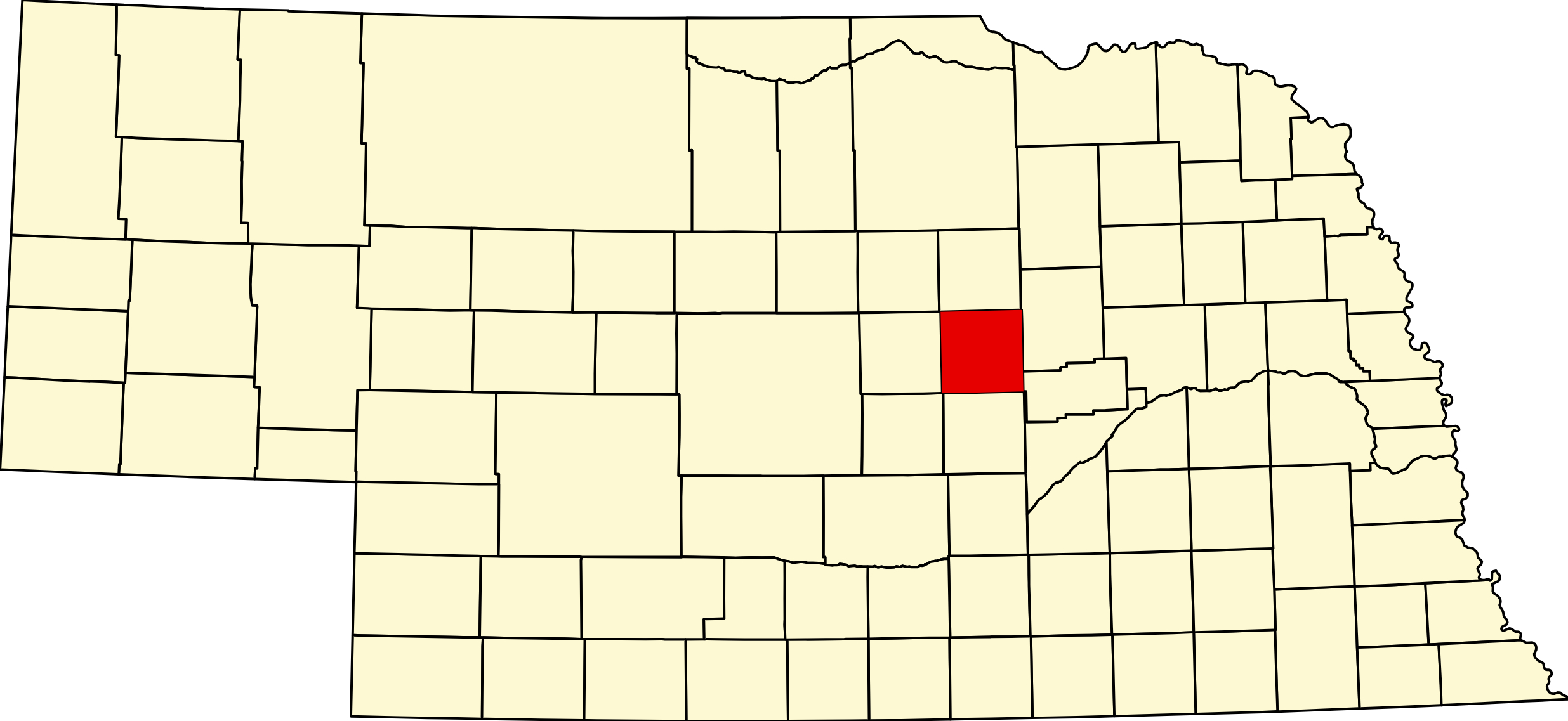
Location: Central Nebraska
Landscape: Rolling plains, farmland, and small creeks
Major Highways: Nebraska Highways 22, 56, 281
Adjacent Counties: Wheeler (N), Boone (E), Howard (S), Valley (W)
Culture & Landmarks
- Greeley County Courthouse (Greeley) – Historic courthouse built in 1913.
- Scotia Chalk Mine – Rare underground mine open for tours.
- Greeley Irish Festival Grounds – Celebrates Irish heritage and local pride.
- Greeley County Historical Museum – Preserves pioneer and agricultural history.
Notable Communities
- Greeley – County seat with historic charm and civic pride.
- Scotia – Known for its chalk mine and community events.
- Spalding – Active town with schools and Irish heritage.
- Wolbach – Small town with deep agricultural roots.
Events & Festivals
- Greeley Irish Festival – Music, food, and cultural celebration.
- Greeley County Fair – Livestock shows, exhibits, and entertainment.
- Spalding Days – Parade, games, and community gatherings.
Natural Attractions & Recreation
- Scotia Chalk Mine – Unique geological site with guided tours.
- Local Parks – Playgrounds and picnic areas in Greeley and Spalding.
- Fishing & Wildlife Areas – Outdoor recreation near Scotia.
Living in Greeley County
Greeley County offers a peaceful rural lifestyle with strong community ties and cultural pride. Greeley provides essential services and hosts major events, while towns like Spalding, Scotia, and Wolbach preserve the county’s agricultural heritage. With its festivals, landmarks, and welcoming spirit, Greeley County is a vibrant part of Nebraska’s heartland.
Greeley County Road Map
Download the printable county road map (PDF, Nebraska Dept. of Transportation)
Greeley County at a Glance
Greeley County, Nebraska — created in 1871 and organized in 1872, named for Horace Greeley, the newspaper editor forever associated with “Go West, young man”. County seat Greeley Center. Two things worth getting right: the county has no incorporated city at all — every municipality is a village, including the seat; and Greeley Center is not the largest of them, Spalding is. Population peaked at 8,685 in 1920 and now stands at 2,188. 136 listings across 4 towns.
Getting there: US-281, with NE-11, 22, 56 and 91. The Loup Rivers Scenic Byway passes through Scotia. Central Time.
This is Irish Catholic country. Spalding was founded in 1875 by a colony of Irish Catholics and was originally called Halifax; it took its present name in 1881 in honour of Bishop John Lancaster Spalding. The unincorporated community of O’Connor marks the same settlement. Where Howard County is Danish and Valley County Czech, Greeley is Irish — the three sit side by side.
Happy Jack Peak and Chalk Mine, two miles south of Scotia on NE-11, is the county’s distinctive stop. Ed Wright began mining the chalk here in 1877; the workings stood idle for years before an Omaha paint company reopened them in the 1930s, when the stone went into paint, whitewash, cement, polishes and chicken feed. The peak is named for Jack Swearengen, a trapper and government scout who lived nearby in a dugout in the white chalk bluffs and used the hill as a lookout. Game and Parks bought the site in 1967 and a local nonprofit runs it now — call ahead, as hours are not published. The Scotia Chalk Building, built from the same locally quarried rock, is on the National Register.
Davis Creek Recreation Area straddles the Greeley–Valley county line south of North Loup — 1,145 acres of water with camping, hookups, a dump station and two boat ramps. See Valley County for the full detail.
Born here: two of the Glaser Brothers — Tompall Glaser (Spalding, 1933) and Jim Glaser (Spalding, 1937). Tompall ran Glaser Sound Studios in Nashville, “Hillbilly Central”, the nerve center of the outlaw country movement, where Waylon Jennings recorded Dreaming My Dreams; Jim was the only brother to top the country chart in his own right. Also Gene Cronin, born at Spalding in 1933, defensive end on the Detroit Lions’ 1957 championship team and one of the original Dallas Cowboys.
Greeley County · Central · Highway 281 Corridor · Explore Nebraska
Vehicles registered in Greeley County carry license plate number 62. See what every Nebraska county number means.
Greeley County Businesses & Places
135 listings in Greeley County.
Click a category to see the businesses.
Eat & Drink (5)
- Kealy's Tavern & Bowl — Restaurant, Nebraska
- Sidewinders Saloon — Bar, Nebraska
- Sweet Tooth — Bakery, Nebraska
- The Greeley Inn — American Restaurant, Greeley
- Whistler's Pub & Grill — American Restaurant, Greeley
Stay (2)
- Dog Town Lodge/Rooster Inn — Hotel, Nebraska
- Spalding Inn — Hotel, Nebraska
Outdoors & Recreation (6)
- Cedar River Runners — Paddling & Float Trips, Nebraska
- Cottonwood Greens Golf Course — Golf Course, Nebraska
- Cottonwood Park — Campgrounds & RV Parks, Nebraska
- Greeley Campground — Campgrounds & RV Parks, Greeley
- Spalding City Park — Campgrounds & RV Parks, Nebraska
- Spalding Dam Site — Campgrounds & RV Parks, Nebraska
Places to Visit (3)
- Greeley County Historical Society Courthouse Museum — History & Heritage Museums, Greeley
- Happy Jack Peak and Chalk Mine — Attraction, Nebraska
- Mini Barnyard Friends — Attraction, Nebraska
Events & Venues (3)
- Greeley County Fair — County Fair, Nebraska
- Greeley County Fairgrounds — Fairground, Nebraska
- Greeley Irish Festival — Festivals & Celebrations, Greeley
Health & Emergency (6)
- Caring Hearts Home Care — Home Health Agency, Nebraska
- Garden Gate Health & Wellness — Health & Wellness, Nebraska
- Howard County Medical Center d/b/a Greeley Medical Clinic — Medical Clinic, Greeley
- Spalding Animal Clinic — Mixed / General Practice, Nebraska
- Spalding Medical Clinic — Medical Clinic, Nebraska
- Spalding Pharmacy — Pharmacy, Nebraska
Shopping & Gifts (5)
- Mid-State Arsenal, LLC — Gun shop, Nebraska
- Pat's Country Market — Grocery, Greeley
- Spelic's Market & Meats — Butcher Shop, Nebraska
- The Pepper Shed — Specialty Foods, Nebraska
- West End Meats — Butcher Shop, Nebraska
Government & Resources (26)
- Greeley Center Village Office — City Hall, Greeley
- Greeley County Assessor — County Assessor, Greeley
- Greeley County Attorney's Office — County Attorney, Greeley
- Greeley County Clerk — County Clerk, Greeley
- Greeley County Court — County Court, Greeley
- Greeley County Courthouse — Court House, Greeley
- Greeley County Driver License Office — County Driver License, Greeley
- Greeley County Emergency Management — Emergency Management, Nebraska
- Greeley County Sheriff — County Sheriff, Greeley
- Greeley County Treasurer — County Treasurer, Greeley
- Greeley County Weed Superintendent — County Weed Control, Greeley
- Greeley Fire Hall — Fire Station, Greeley
- Greeley Housing Authority — Housing Authority, Greeley
- Greeley Post Office — Post Office, Greeley
- Greeley Village Public Library — Libraries, Greeley
- Scotia City Fire Department — Fire Station, Nebraska
- Scotia Police Department — Police Station, Nebraska
- Scotia Post Office — Post Office, Nebraska
- Scotia Public Library & Heritage Center — Libraries, Nebraska
- Spalding Police Department — Police Station, Nebraska
- Spalding Post Office — Post Office, Nebraska
- Spalding Public Library — Libraries, Nebraska
- Spalding Senior Center — Senior Citizen Center, Nebraska
- Spalding USDA Service Center — USDA Service Center (FSA/NRCS), Nebraska
- Spalding Village Office — City Hall, Nebraska
- Stromp's Dump — Trash Collection and Waste Removal Services, Nebraska
Community & Faith (18)
- Berney Cemetery — Wolbach — Cemeteries, Nebraska
- East O’Connor Cemetery — O’Connor — Cemeteries, Nebraska
- Fish Creek Cemetery — Scotia — Cemeteries, Nebraska
- Greeley Cemetery — Greeley — Cemeteries, Greeley
- Greeley, NE UMC — Methodist Church, Greeley
- Hillside Cemetery — Wolbach — Cemeteries, Nebraska
- Mount Hope Cemetery — Scotia — Cemeteries, Nebraska
- O’Connor Cemetery — O’Connor — Cemeteries, Nebraska
- Sacred Heart Catholic Church Greeley — Catholic Church, Greeley
- Sacred Heart Cemetery — Greeley — Cemeteries, Greeley
- Saint Michael Cemetery — Spalding — Cemeteries, Nebraska
- Saint Paul Evangelical Lutheran Cemetery — Scotia — Cemeteries, Nebraska
- Scotia First UMC — Methodist Church, Nebraska
- St. Michael’s Catholic Church Spalding — Catholic Church, Nebraska
- Swedish Cemetery — Greeley — Cemeteries, Greeley
- Trinity Lutheran Church — Lutheran Church, Nebraska
- Wolbach UMC — Methodist Church, Nebraska
- Zion Lutheran Church — Lutheran Church, Nebraska
Agriculture & Farm (12)
- AKRS Equipment Solutions - Spalding — Equipment Dealers, Nebraska
- Carraher Hay Grinding — Hay & Forage, Nebraska
- Commodity Solutions Inc. — Ag Consulting & Custom Services, Nebraska
- Country Partner's Co-Op - Spalding — Farm Coop, Nebraska
- Country Partners Cooperative - Greeley — Farm Coop, Greeley
- Goldenrod Research Corp — Ag Consulting & Custom Services, Nebraska
- Graceful Grain Co. — Grain Elevator, Nebraska
- Spalding Farm & Home — General Farm & Ranch Supply Store, Nebraska
- Spalding Farm Service Supply — General Farm & Ranch Supply Store, Nebraska
- Spalding Irrigation — Irrigation Parts & Service, Nebraska
- Tallgrass Seeds — Seed Dealer, Nebraska
- Trotter Fertilizer — Fertilizer Dealer, Nebraska
Trades & Construction (9)
- Bloom Plumbing & Drain Cleaning — General Plumbing, Nebraska
- Bloom Repair — Repair Services, Nebraska
- Carraher Electric — Electrical, Nebraska
- Don's TV Repair — Repair Services, Nebraska
- Langer Construction — General Contractor, Nebraska
- Leslie Construction — General Contractor, Nebraska
- Roach Lumber & Ready Mix — Lumber, Nebraska
- Sandhills Cabinetry & Design — Cabinet Maker, Nebraska
- Spalding Construction — General Contractor, Nebraska
Automotive (8)
- Bloom Bros Repair — Auto Repair, Nebraska
- Greeley's Rapid Stop — Fuel & Gas Station, Greeley
- Hillbill's Diesel — Truck Repair Shop, Nebraska
- Kleffner's Auto Body — Auto Body Repair, Nebraska
- Mark Carraher Rhino Lining — Auto Body Repair, Nebraska
- Miller's PowerSports — Car Dealership, Nebraska
- People's Service — Fuel & Gas Station, Nebraska
- S & S Truck & Equipment Inc. — Truck Parts Supplier, Nebraska
Education (7)
- Central Valley Elem - Scotia — Elementary & Middle School, Nebraska
- Central Valley High School — High School, Greeley
- Central Valley Public Schools — School District (K-12 / General), Greeley
- Greeley County Extension Corner of O'Neill and Kildare PO Box — County Extension Office, Greeley
- Riverside Elementary - Spalding — Elementary & Middle School, Nebraska
- Riverside Middle School — Elementary & Middle School, Nebraska
- Riverside Public Schools — School District (K-12 / General), Nebraska
Professional Services (6)
- BEP, CPA — Accountant, Nebraska
- Citizens Insurance Group — Insurance, Nebraska
- Citizens State Bank - Spalding — Banking, Nebraska
- Culley Avenue Designs — Web Design, Nebraska
- Grow Venture Insurance — Insurance, Nebraska
- Shamrock Office Solutions — Office Supplies, Nebraska
Personal Services (6)
- Children of Christ Daycare — Day Care Center, Nebraska
- Hair x Trinity K — Beauty Salon, Nebraska
- Jackie's Curl Shack — Beauty Salon, Greeley
- Kelly's Clubhouse Daycare — Day Care Center, Nebraska
- Mane 62 Salon — Beauty Salon, Nebraska
- Spalding's First Steps — Day Care Center, Nebraska
Home Improvement & Repair (4)
- Diamond J Painting — Painting, Nebraska
- Ken's Home Improvement — General Home Improvement / Handyman, Nebraska
- Murphy Brothers Insulation — Insulation & Drywall, Nebraska
- Top Down Roofing & Exteriors — Roofing, Nebraska
Utilities (4)
- Spalding Municipal Utilities — Electric Power Provider, Nebraska
- Village of Greeley — Water Utility / District, Greeley
- Village of Scotia — Water Utility / District, Nebraska
- Village of Wolbach — Water Utility / District, Nebraska
Manufacturing & Industrial (3)
- Joe Diessner Trucking — Trucking Company, Nebraska
- Molt Manufacturing — General / Custom Manufacturing, Nebraska
- Wagner Trucking — Trucking Company, Nebraska
Media (2)
- Greeley Citizen — News Paper, Greeley
- Spalding Enterprise — News Paper, Nebraska