
Village · Dawson County · Population 252 (2020 census) · ZIP 68878 · Founded 1890 · Peak population 345 (1920)
About Sumner
Sumner is a village of 252 people (2020) in the Wood River valley of northeastern Dawson County, at 2,369 feet, about 17 miles northeast of Lexington. It is home to Sumner-Eddyville-Miller Schools, which serve Sumner, Eddyville and Miller. Sumner is on Central Time.
History
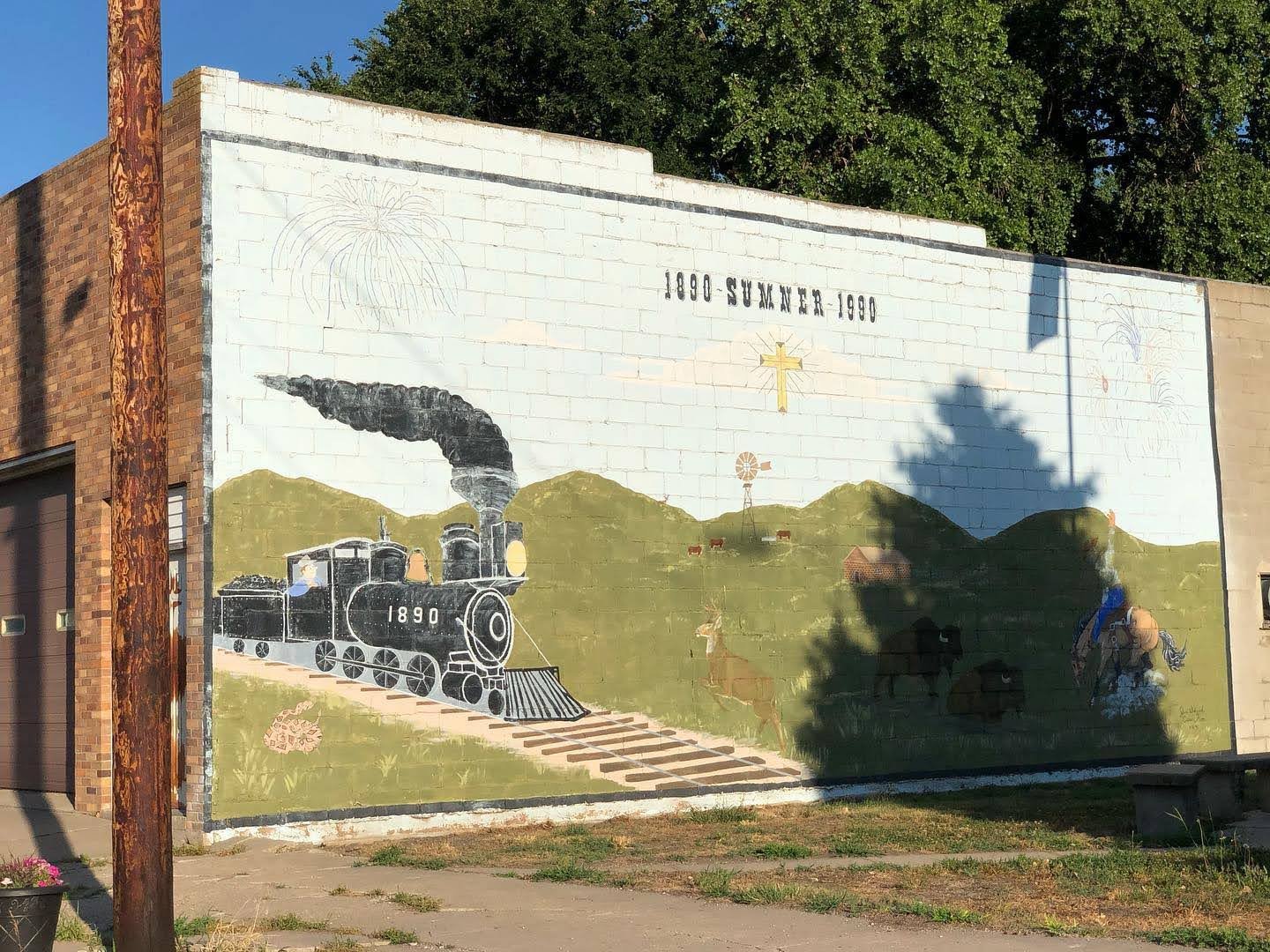
The name, after Senator Charles Sumner of Massachusetts, was chosen in 1888, and the townsite was laid out in 1890 when the Kearney & Black Hills railway, a Union Pacific line, was built up the Wood River valley. The Kearney Hub called it an “instant town”: on July 1, 1890, there was not a house on the site, and by October it had stockyards, a depot nearly finished and the first issue of the Sumner Dispatch. Sumner reached its peak of 345 people in 1920.
Highways and trails through Sumner
| Route | One way | Other way |
|---|---|---|
| NE 40Through the village, up the Wood River valley | East to Miller and toward Kearney | Northwest to Eddyville, Oconto and Callaway |
Nearby towns
| Miller | about 6 mi east-southeast | NE 40 |
| Eddyville | about 7 mi northwest | NE 40 |
| Overton | about 14 mi south | County roads |
| Amherst | about 15 mi east-southeast | NE 40 |
| Lexington | about 17 mi southwest | County roads |
| Cozad | about 26 mi west-southwest | County roads |
| Kearney | about 28 mi southeast | NE 40 and NE 10 |
| Callaway | about 32 mi northwest | NE 40 |
Schools and health care
Schools: Sumner-Eddyville-Miller Schools (Mustangs), 205 E. 5th Ave., (308) 752-2925: Elementary School at Sumner (PK–6) and Junior-Senior High School at Sumner (7–12)
Health care: Nearest hospital: Lexington Regional Health Center, about 17 mi
Sources: U.S. Census; Wikipedia; Dawson County (dawsoncountyne.gov); History Nebraska (markers, "Dawson County's True Namesake," "How a Lexington meatpacking plant changed Nebraska," "The Instant Town"); Andreas, History of the State of Nebraska (1882); Fitzpatrick, Nebraska Place-Names (1925); NEGenWeb Dawson County; National Register; National Park Service (Pony Express NHT); HMdb; Nebraska Game and Parks; KRVN; Rural Radio Network; 1011 Now; Gothenburg Leader; school districts; NE211. Distances marked "about" are straight-line estimates.
Sumner Businesses & Places
16 listings in Sumner.
Click a category to see the businesses.
Eat & Drink (1)
- Tub's Pub — Bar & Grill
Shopping & Gifts (1)
- Sumner Market — Grocery
Automotive (3)
- Dan's Frame & Body — Auto Body Repair
- English Motors — Used Car Dealer
- Sumner Car Care – Country Partners — Auto Repair
Education (3)
- Elementary School at Sumner — Elementary & Middle School
- Junior-Senior High at Sumner — High School
- Sumner-Eddyville-Miller Schools — School District (K-12 / General)
Community & Faith (3)
- Jewell Cemetery — Cemeteries
- Park Valley Cemetery — Cemeteries
- Sumner Cemetery — Cemeteries
Agriculture & Farm (2)
- ApacheAg, LLC — General Farm & Ranch Supply Store
- Sumner Car Care – Country Partners — Farm Coop
Government & Resources (2)
- Sumner Post Office — Post Office
- Sumner Village Office — City Hall
Professional Services (1)
- Five Points Bank — Banking
Utilities (1)
- Village of Sumner — Water Utility / District