
Hitchcock County Cameras
Towns in Hithcock County Nebraska
County Seat: Trenton
Founded: 1873 (organized in 1874)
Named For: Phineas W. Hitchcock, U.S. Senator from Nebraska
License Plate Prefix: 67
Population: 2,616 (2020 census)
Area: 718 sq mi
History
Hitchcock County was established in 1873 and named after U.S. Senator Phineas W. Hitchcock, a key figure in Nebraska’s early political development. The county was organized the following year, with settlement driven by homesteaders along the Republican River and the arrival of the railroad.
Trenton became the county seat and an important agricultural and transportation hub. The construction of the Trenton Dam and Swanson Reservoir in the mid‑20th century transformed the region by providing irrigation, flood control, and recreation. Agriculture—especially corn, wheat, and cattle—remains central to the county’s identity.
Geography
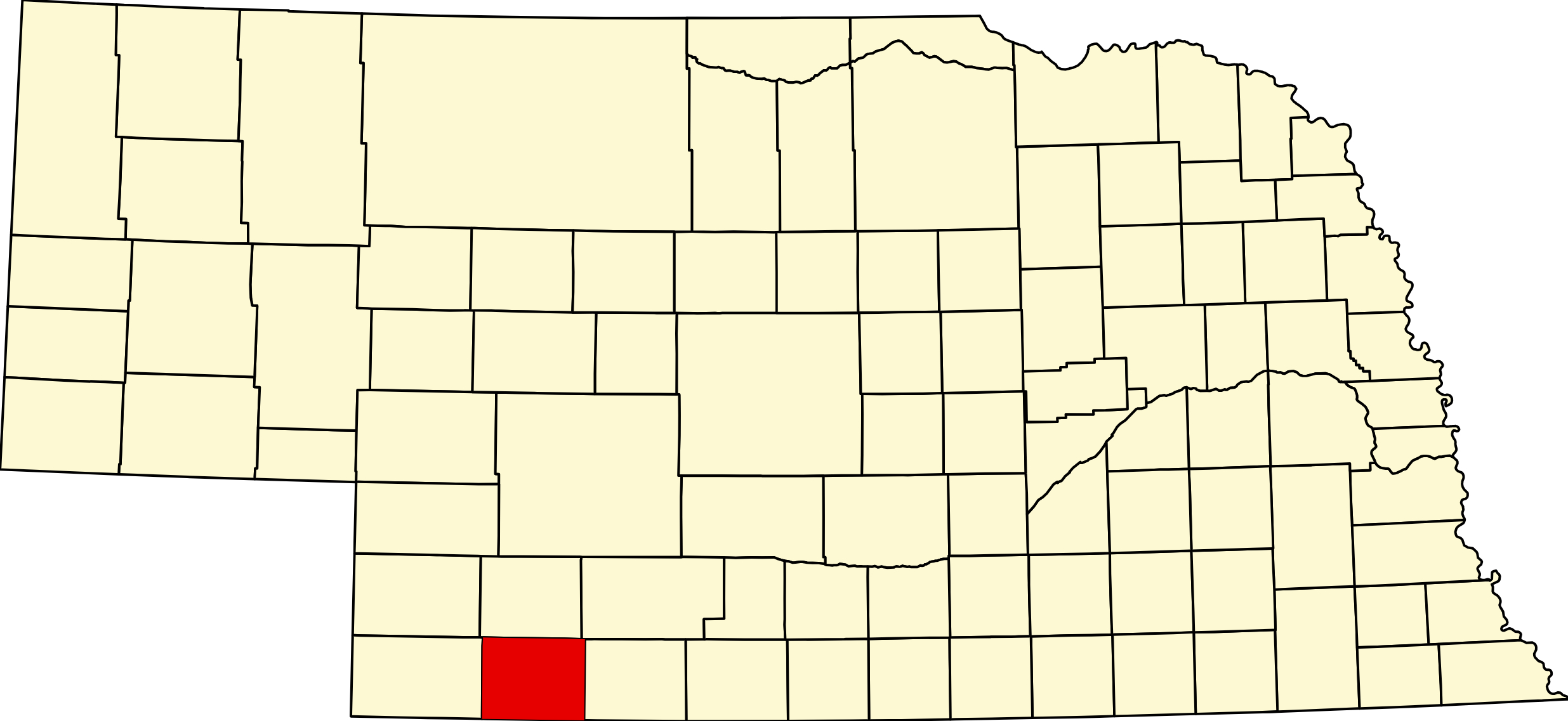
Location: Southwestern Nebraska along the Kansas border
Landscape: Republican River valley, rolling prairie, canyons, and irrigated farmland
Adjacent Counties:
- Hayes County (north)
- Frontier County (northeast)
- Red Willow County (east)
- Rawlins County, Kansas (south)
- Dundy County (west)
Culture & Landmarks
- Swanson Reservoir State Recreation Area – Boating, fishing, camping, and wildlife viewing.
- Trenton Dam – Major mid‑century water project supporting irrigation and recreation.
- Republican River Valley – Scenic drives, agriculture, and historic settlement sites.
Notable Communities
- Trenton – County seat and home to Swanson Reservoir access.
- Palisade – Community spanning Hitchcock and Hayes Counties.
- Culbertson – Historic town along U.S. Highway 6.
Events & Attractions
- Hitchcock County Fair – Rodeo events, livestock shows, and community celebrations.
- Swanson Reservoir Recreation – Popular for boating, fishing, and camping.
- Historic Republican River Sites – Markers and locations tied to early settlement and agriculture.
Living in Hitchcock County
Hitchcock County offers a rural lifestyle centered around agriculture, outdoor recreation, and small‑town community life. Trenton and Culbertson provide essential services, while Swanson Reservoir supports a strong outdoor culture. Residents value the area’s quiet pace, open landscapes, and close‑knit communities.
Hitchcock County at a Glance
Hitchcock County, Nebraska — created on 27 February 1873 alongside Chase and Dundy, but unlike them it organized at once, on 30 August 1873, and is the senior county of this tier by eleven years. Named for Phineas W. Hitchcock, United States Senator from Nebraska 1871–77 — and, in the same year the county was created, the author of the Timber Culture Act, which let a homesteader claim 160 acres by planting forty in trees. County seat Trenton. Population peaked at 7,269 in 1930, the largest figure any county in this corner of the state ever reached, and stands near 2,570. 98 listings across 4 towns.
Getting there: US-6 and US-34 both cross the county, with NE-17, 25 and 25A — two U.S. routes make Hitchcock the best-connected county out here. The Republican River runs west to east and is impounded at Trenton Dam; Frenchman Creek ends here, joining the Republican at Culbertson. Driftwood, Blackwood and Beaver creeks feed in. Trenton sits at 2,674 feet, the lowest county seat in this tier. BNSF’s Republican Valley line runs through Culbertson, Stratton and Trenton. Central Time — and the Mountain/Central line runs along the county’s western boundary with Dundy, so driving west on US-34 from Trenton to Benkelman you lose an hour at the county line.
The county seat was taken by convoy. Culbertson was founded as a trading post in July 1873 by W. Z. Taylor, named for the Upper Missouri fur trader Alexander Culbertson, and held the seat for twenty years. Trenton, platted in 1885 when the railroad reached it, pressed its claim on being more central and on the tracks. Three elections ran through the early 1890s — one polling day, 16 November 1887, was hit by one of the worst blizzards in the county’s history — but the thing was settled out of court and then in the road. On 1 October 1893, holding a district court order, men from Trenton drove lumber wagons to Culbertson, took the county records and hauled them home, escorted by the sheriff, the town marshal and the Trenton Town Band. Eighty-odd men are named in the accounts. Culbertson’s own historical marker concedes the point. And Culbertson is still the larger town.
Massacre Canyon, three miles east of Trenton off US-34, marks the fight of 5 August 1873, when roughly a thousand Brulé, Oglala and Sihasapa Sioux under Two Strike, Little Wound and Spotted Tail struck a Pawnee hunting party of about four hundred led by Sky Chief. Reported Pawnee deaths run from fifty to more than a hundred and fifty, most of them women and children; Sioux losses were slight. The fight effectively ended intertribal warfare in the region and hastened the Pawnee’s removal from Nebraska altogether. The 35-foot obelisk of Minnesota pink granite, ninety-one tons, was dedicated on 26 September 1930 — the first historical monument in Nebraska raised with a federal grant. There is a visitor center with exhibits on Pawnee and Sioux custom and on the settlers who came after.
For visitors: the Massacre Canyon monument and visitor center; the Hitchcock County Historical Society museum complex on East 1st Street in Trenton; the Weyl Service Station of 1921, on the National Register since 2002 and run as a museum; the Culbertson marker on Arizona Street; and the 1906 brick courthouse.
Outdoors: Swanson Reservoir behind Trenton Dam, two and a half miles west of town, is the big water of southwest Nebraska — 4,974 surface acres, nearly three times Enders, inside an 8,059-acre recreation and wildlife area with 3,000 acres open to public hunting. The dam was built 1949–53, 144 feet high and 8,600 feet along the crest. Camping runs to 64 pads across two campgrounds — Macklin Bay with 17 and Spring Canyon with 47 — with 20-, 30- and 50-amp service, modern showers at both, two dump stations, firewood provided, and reservations taken up to 180 days out; on top of that there are roughly 150 primitive sites on the sand beach. All boating is permitted, with five ramps and five docks plus direct river access, and the fishery runs to walleye, northern pike, black bass, crappie and white bass. Add 130-odd picnic tables, sixteen shelters, a sand volleyball court and an unguarded swimming beach.
Born here. Jim Lankas (Stratton, 1918), a fullback for St. Mary’s of California and then the Brooklyn Dodgers, Philadelphia Eagles and Green Bay Packers — and afterwards, in order, a professional wrestler, a professional boxer, a Kansas farmer, a boxing referee and promoter, a candidate for sheriff, and the owner of a café in Trenton. And Ralph A. Bohlmann (born 1932 at Palisade, which straddles the Hitchcock–Hayes line), President of Concordia Seminary and President of the Lutheran Church–Missouri Synod from 1981 to 1992.
Vehicles registered in Hitchcock County carry license plate number 67. See what every Nebraska county number means.
Hitchcock County Businesses & Places
98 listings in Hitchcock County.
Click a category to see the businesses.
Eat & Drink (2)
- Bears Cave Cafe — Bar & Grill, Culbertson
- Hillside Perk — American Restaurant, Culbertson
Stay (1)
- Payton's Place — Motel, Nebraska
Outdoors & Recreation (1)
- Swanson State Recreation Area — Campgrounds & RV Parks, Nebraska
Places to Visit (3)
- Hitchcock County Museum — History & Heritage Museums, Nebraska
- Little House Museum — Specialty Museums, Nebraska
- Swanson Reservoir State Recreation Area — RV Camping, Nebraska
Events & Venues (2)
- Hitchcock County Fair — County Fair, Culbertson
- Hitchcock County Fairgrounds — Fairground, Nebraska
Health & Emergency (2)
- Stratton Medical Clinic — Medical Clinic, Nebraska
- Trenton Regional Medical Center — Medical Clinic, Nebraska
Travel Services (1)
- Massacre Canyon Rest Area — Rest Areas & Travel Plazas, Nebraska
Shopping & Gifts (3)
- Grandma's Treasure Chest — Variety Store, Nebraska
- Paul's Market — Grocery, Nebraska
- Stratton Country Market — Grocery, Nebraska
Community & Faith (25)
- Christian Union Church - Stratton — Non-Denominational Church, Nebraska
- Church of Christ - Stratton — Churches, Nebraska
- Congregational UCC — Trenton — Congregational Church, Nebraska
- Cornell Cemetery — Trenton — Cemeteries, Nebraska
- Culbertson Cemetery — Culbertson — Cemeteries, Culbertson
- Eden Cemetery — Palisade — Cemeteries, Nebraska
- Fair Plains Cemetery — Trenton — Cemeteries, Nebraska
- German Cemetery — Trenton — Cemeteries, Nebraska
- Grove Cemetery — Culbertson — Cemeteries, Culbertson
- Holy Family Catholic Church Palisade — Catholic Church, Nebraska
- McCabe Cemetery — Stratton — Cemeteries, Nebraska
- Palisade Cemetery — Palisade — Cemeteries, Nebraska
- Pleasant Ridge Cemetery — Stratton — Cemeteries, Nebraska
- Rest Haven Cemetery — Palisade — Cemeteries, Nebraska
- Rising Sun Cemetery — Palisade — Cemeteries, Nebraska
- Rose Hill Cemetery — Stratton — Cemeteries, Nebraska
- Rosefield Cemetery — Trenton — Cemeteries, Nebraska
- Saint James Catholic Church — Catholic Church, Nebraska
- Saint James Cemetery — Trenton — Cemeteries, Nebraska
- Saint Joseph's Catholic Church - Stratton — Catholic Church, Nebraska
- Skinner Cemetery — Trenton — Cemeteries, Nebraska
- St. John Lutheran Church — Lutheran Church, Culbertson
- Trenton Cemetery — Trenton — Cemeteries, Nebraska
- United Methodist Church - Stratton — Methodist Church, Nebraska
- West Union Cemetery — Stratton — Cemeteries, Nebraska
Government & Resources (25)
- Culbertson Police Department — Police Station, Culbertson
- Culbertson Post Office — Post Office, Culbertson
- Culbertson Public Library — Libraries, Culbertson
- Hitchcock County Assessor — County Assessor, Nebraska
- Hitchcock County Attorney's Office — County Attorney, Nebraska
- Hitchcock County Clerk — County Clerk, Nebraska
- Hitchcock County Court — County Court, Nebraska
- Hitchcock County Courthouse — Court House, Nebraska
- Hitchcock County Driver License Office — County Driver License, Nebraska
- Hitchcock County Emergency Management — Emergency Management, Nebraska
- Hitchcock County Pantry — Food Pantry, Culbertson
- Hitchcock County Sheriff — County Sheriff, Nebraska
- Hitchcock County Treasurer — County Treasurer, Nebraska
- Hitchcock County Veterans Service Office — Veterans Office, Nebraska
- Hitchcock County Weed Superintendent — County Weed Control, Nebraska
- Palisade Community Service Club Food Pantry — Food Pantry, Nebraska
- Palisade Fire Department — Fire Station, Nebraska
- Palisade Public Library — Libraries, Nebraska
- Palisade Village Office — City Hall, Nebraska
- Stratton Public Library — Libraries, Nebraska
- Trenton Post Office — Post Office, Nebraska
- Trenton Public Library — Libraries, Nebraska
- Trenton USDA Service Center — USDA Service Center (FSA/NRCS), Nebraska
- United States Post Office - Palisade — Post Office, Nebraska
- United States Post Office - Stratton — Post Office, Nebraska
Automotive (9)
- J A Automotive & Repair — Auto Repair, Nebraska
- JA Automotive & Repair — Auto Repair, Nebraska
- Jay Bird Express LLC — Fuel & Gas Station, Nebraska
- Marvins Used Trucks — Truck Dealership, Nebraska
- Scotts Old Trucks — Truck Dealership, Nebraska
- Sinclair Gas Station — Sinclair, Nebraska
- Sodtown Sundries — Fuel & Gas Station, Nebraska
- Stratton Auto Parts — Auto Parts, Nebraska
- TLR Radiator & Repair Inc — Auto Repair, Culbertson
Education (5)
- Educational Service Unit 15 — Educational Service Unit, Nebraska
- Hitchcock Co Elementary — Elementary & Middle School, Culbertson
- Hitchcock Co Jr/Sr High School — High School, Nebraska
- Hitchcock County Extension — County Extension Office, Nebraska
- Hitchcock County School System — School District (K-12 / General), Nebraska
Utilities (5)
- Stratton Municipal Utilities — Electric Power Provider, Nebraska
- Trenton Municipal Utilities — Electric Power Provider, Nebraska
- Village of Culbertson — Water Utility / District, Culbertson
- Village of Stratton — Water Utility / District, Nebraska
- Village of Trenton — Water Utility / District, Nebraska
Professional Services (4)
- MNB Bank - Stratton Branch — Banking, Nebraska
- MNB Insurance Services – Stratton — Insurance, Nebraska
- Nebraska Auction Service — Auction Service, Nebraska
- The Culbertson Bank — Banking, Culbertson
Agriculture & Farm (3)
- Farmers Co-Op Grain & Supply — Farm Coop, Nebraska
- Farmers Cooperative Grain and Supply Company – Trenton — Grain Elevator / Cooperative, Nebraska
- Forch's Channel Hybrids — Seed Dealer, Nebraska
Land & Property Services (2)
- JC Renovations & Tree Service — General Tree Service, Nebraska
- Richardson Industries Inc. — Excavating Contractor, Nebraska
Transportation (1)
- Hitchcock County Senior Transportation — Public Transportation, Nebraska
Personal Services (1)
- House of Hair — Beauty Salon, Nebraska
Manufacturing & Industrial (1)
- Seeker Transport LLC — Trucking Company, Nebraska
Trades & Construction (1)
- Stewart Construction — General Contractor, Nebraska
Media (1)
- The Hitchcock County News — Nebraska