Franklin County Cameras
Towns in Franklin County Nebraska
County Seat: Franklin
Founded: 1867
Named For: Benjamin Franklin
License Plate Prefix: 50
Population: 2,889 (2020 census)
Area: 576 sq mi
History
Franklin County was established in 1867 and named after Benjamin Franklin. Early settlement centered on the Republican River, where fertile bottomlands supported farming, milling, and frontier communities. Franklin, founded in the 1870s, became the county seat and developed into a regional hub for trade, education, and civic life. Bloomington, once a major early settlement, served briefly as the county seat before Franklin’s rise. Hildreth, Upland, Naponee, and Campbell grew as agricultural and rail‑supported towns, each contributing to the county’s rural identity.
The county’s history reflects pioneer migration, river‑valley development, and the growth of small towns that supported farming, livestock, and early transportation routes across south‑central Nebraska.
Geography
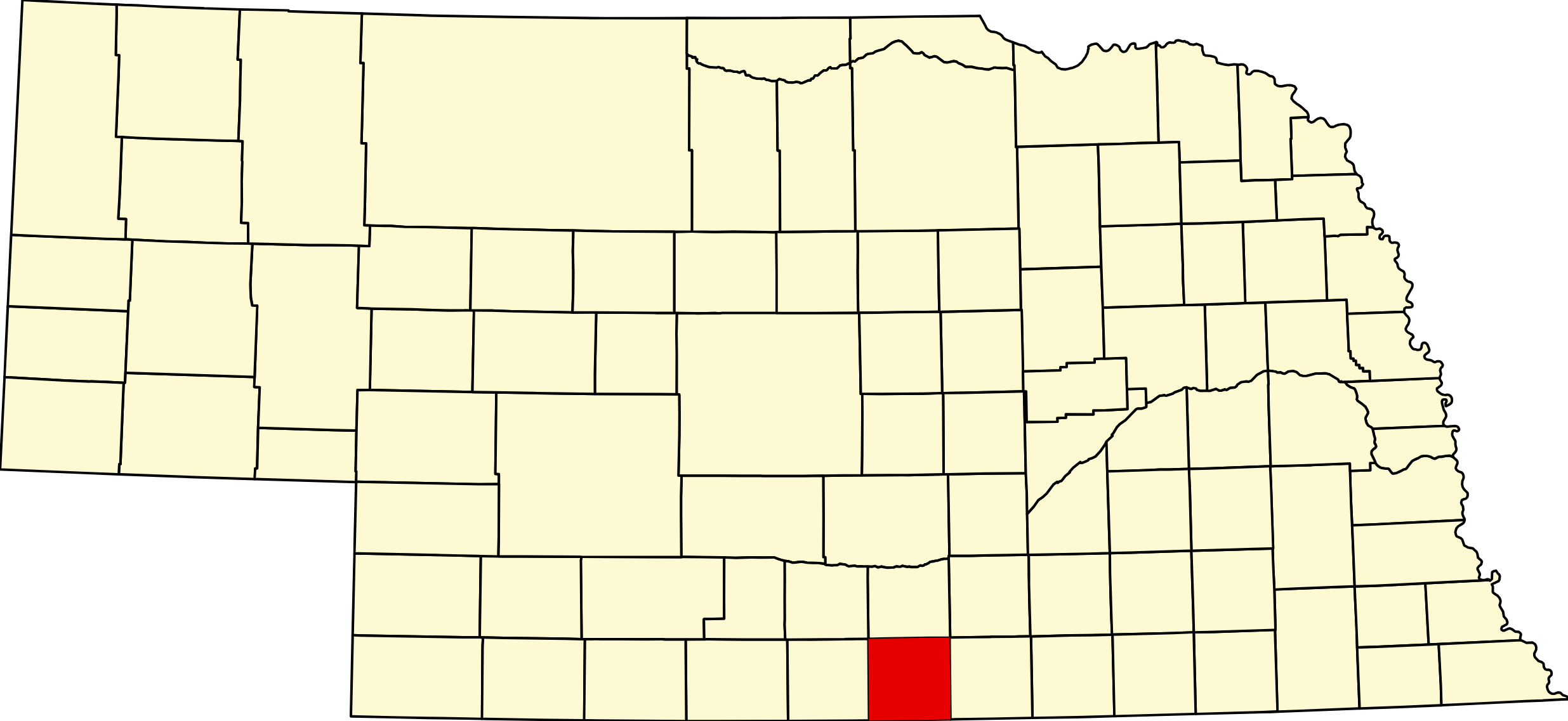
Location: South‑central Nebraska along the Kansas border
Landscape: Rolling prairie, Republican River valleys, fertile farmland, and rural communities
Adjacent Counties:
- Webster County (east)
- Adams County (northeast)
- Kearney County (north)
- Harlan County (west)
- Phillips County, Kansas (south)
Culture & Landmarks
- Franklin County Museum – Exhibits highlighting pioneer life, agriculture, and local heritage.
- Republican River Valley – Scenic landscapes with wildlife, trails, and historic significance.
- Historic Bloomington – Former county seat with deep frontier roots.
Notable Communities
- Franklin – County seat and regional service center.
- Hildreth – Community with strong agricultural traditions.
- Upland – Small town with deep farming roots.
- Naponee – Village near the Republican River.
- Campbell – Rural community with close‑knit identity.
Events & Attractions
- Franklin County Fair – Livestock shows, rodeo events, and agricultural exhibits.
- Community Festivals – Local celebrations in Franklin, Hildreth, and Upland.
- Outdoor Recreation – Hunting, fishing, birdwatching, and scenic drives along the Republican River.
Living in Franklin County
Franklin County blends agricultural strength, river‑valley scenery, and small‑town life. Franklin anchors county services and commerce, while Hildreth, Upland, Naponee, Campbell, and rural areas maintain long‑standing farming traditions. Residents value the area’s heritage, open landscapes, and strong community identity.
Franklin County at a Glance
Franklin County, Nebraska — authorised in 1867 and organized on 3 March 1871 by proclamation of Governor David Butler. Named for Benjamin Franklin — for the man himself, not for a place. The first settler, C. J. Van Laningham, arrived at Franklin City on 26 November 1870. County seat Franklin. Population peaked at 10,303 in 1910 and stands at 2,889 — a fall of about seventy-two percent, the steepest in this tier. 135 listings across 8 towns.
The county-seat war ran fifty years and five towns. Waterloo was designated first, in 1871. In 1872 a rival settlement also calling itself Waterloo — later renamed Franklin — claimed the county records after George O’Bannon moved his store there, and Bloomington men rode over and physically took them back — losing some of them in swollen Center Creek on the way home. An election in 1874 put four towns on the ballot — Bloomington, Macon, Riverton and Franklin — and Bloomington won and held the seat for forty-six years. Not until 2 November 1920, after another bitter fight, did a county-wide vote bring it to Franklin, where it has stayed.
Getting there: US-136 crosses the county, with NE-4, 10 and NE-44. The Republican River runs east through the southern part, with Thompson, Center, Turkey and Lovely creeks feeding it; the valley has bluffs and bottomland, the north rises into rolling loess upland, and the northern edge of the county falls inside the Rainwater Basin. Franklin sits at 1,860 feet. The county borders Smith and Phillips counties, Kansas. Central Time.
Franklin Academy stood here from 1881 to 1922 — one of only six Congregational academies in Nebraska — founded by the Reverend C. S. Harrison, whose name went on Harrison Hall. A state marker in the city park tells it. Among the county’s early settlement colonies was Grant, a short-lived Black settlement founded on Lovely Creek in the spring of 1871; it is gone, and it deserves more research than it has had.
For visitors: the Franklin County Museum on H Road, three buildings established in 1932 — war memorabilia, pioneer artefacts, an “Ol’ Towne” replica and District 36, a one-room schoolhouse that taught from 1876 to 1963 — open weekend afternoons for a couple of dollars. The original county museum in the city park is itself a 1939 WPA building of native rock and timber. At Bloomington, the community center keeps a pictorial town history and the Old Rock Jail in the city park took its first prisoners after an 1899 murder. The Rose Bowl Theater in Franklin, 250 seats, reopened in 1992. The county veterans memorial honours seventy-two local people and displays an M60A1 tank, an armoured personnel carrier and an F-80 fighter. The county fair runs the first two weeks of July.
Two corrections worth having. The Dupee Music Hall and the Lincoln Hotel are both still listed as National Register properties on directory sites all over the internet. Both were delisted — the Lincoln Hotel in 2016, Dupee Music Hall in 2017. What remains listed here is the courthouse, the First Congregational Church at Naponee, two 1992 bridges and the Lost Creek archeological site. And the big lake everyone associates with this stretch of the Republican — Harlan County Lake — is one county west, in Harlan County, not here.
Outdoors: no state park and no state recreation area. Franklin runs its own: the South Park RV campground with full hookups at ten dollars a day, a city park with a pool, courts and shelters, a nine-hole public golf course, and the Franklin Hiking Trail along a tree-lined creek — walkers only, no bikes and nothing motorised.
Born here — and this county punches far above 2,889 people. Frank W. Cyr (on a farm near Franklin, 1900) is the father of the yellow school bus: a rural-education specialist at Columbia’s Teachers College, he convened a seven-day conference in April 1939 with transport officials from all forty-eight states and the bus and paint manufacturers, and it produced forty-four standards — including the finding that yellow with black lettering reads best in early-morning and late-afternoon light. Every school bus in America is that color because of a man born on a farm near Franklin, Nebraska. Clarence Mitchell (born in a sod house on Turkey Creek near Naponee, 1891) is the only player ever to hit into an unassisted triple play in a World Series — 10 October 1920, Brooklyn against Cleveland, Bill Wambsganss catching his liner and doubling and tripling off the runners — and then grounded into a double play his next time up, five outs in two plate appearances. He was also the last legal left-handed spitballer in the major leagues, and he doctored the ball with slippery elm off a neighbor’s tree in this county. And Archie Mitchell (Franklin, 1918), the Oregon pastor whose pregnant wife Elsie and five children on a church picnic were killed by a Japanese balloon bomb on 5 May 1945 — the only American civilians killed by enemy action in the continental United States during the war. He later served as a missionary in Vietnam and was captured by Viet Cong forces in 1962; he was never recovered.
Vehicles registered in Franklin County carry license plate number 50. See what every Nebraska county number means.
Franklin County Businesses & Places
135 listings in Franklin County.
Click a category to see the businesses.
Eat & Drink (5)
- Black Powder Bar & Grill — Bar & Grill, Franklin
- Chester's Bloomington — Greek Restaurant, Bloomington
- Frosty Mug Drive In — Drive-In, Franklin
- Hunt Brothers Pizza — Pizza Restaurant, Franklin
- Tipsy Cow — Bar & Grill, Franklin
Stay (1)
- Drop Tyne Lodge — Lodge, Franklin
Outdoors & Recreation (4)
- Alfon C. Haring Memorial WMA — Public Hunting Areas & WMAs, Nebraska
- Ash Grove WMA — Public Hunting Areas & WMAs, Nebraska
- Limestone Bluffs WMA — Public Hunting Areas & WMAs, Nebraska
- South Park Campground — Campgrounds & RV Parks, Franklin
Places to Visit (2)
- Franklin County Museum — History & Heritage Museums, Franklin
- Naponee Historical Society — History & Heritage Museums, Naponee
Events & Venues (3)
- Franklin County Fair — County Fair, Franklin
- Franklin County Fairgrounds — Fairground, Franklin
- Rose Bowl Theater — Movie Theater, Franklin
Health & Emergency (2)
- FCMH Pool Medical Clinic — Medical Clinic, Franklin
- Franklin Dental Clinic — Dentist & Dental Office, Franklin
Shopping & Gifts (4)
- Dollar General Franklin — Dollar Store, Franklin
- Flowers-N-More — Florist, Franklin
- Plank Hardware — Retail, Franklin
- Rightway Grocery — Grocery, Franklin
Community & Faith (42)
- Assumption Catholic Cemetery — Franklin — Cemeteries, Franklin
- Bailey Cemetery — Bloomington — Cemeteries, Bloomington
- Blauvelt Cemetery — Upland — Cemeteries, Nebraska
- Campbell Cemetery — Campbell — Cemeteries, Campbell
- Campbell, Westminster United Presbyterian Church — Presbyterian Church, Campbell
- Christian Fellowship Evangelical Free Church – Franklin — Evangelical Free Church, Franklin
- Congregational Christian UCC — Riverton — Congregational Church, Nebraska
- Emmanuel Lutheran Cemetery — Hildreth — Cemeteries, Hildreth
- First Congregational UCC — Franklin — Congregational Church, Franklin
- First United Methodist Church – Franklin — Methodist Church, Franklin
- Fuller Cemetery — Riverton — Cemeteries, Nebraska
- German Evangelical Lutheran Church Cemetery — Franklin — Cemeteries, Franklin
- Grace Lutheran Church — Lutheran Church, Franklin
- Grace Lutheran Church Cemetery — Franklin — Cemeteries, Franklin
- Greenwood Cemetery — Franklin — Cemeteries, Franklin
- Harmony Cemetery — Campbell — Cemeteries, Campbell
- Hildreth Cemetery — Hildreth — Cemeteries, Hildreth
- John the Baptist Catholic Church Cemetery — Naponee — Cemeteries, Naponee
- Kimball Cemetery — Bloomington — Cemeteries, Bloomington
- Koch-Cook Cemetery — Campbell — Cemeteries, Campbell
- Maple Grove Cemetery — Bloomington — Cemeteries, Bloomington
- Moline Cemetery — Hildreth — Cemeteries, Hildreth
- Morseville Cemetery — Campbell — Cemeteries, Campbell
- Mount Pleasant Cemetery — Macon — Cemeteries, Nebraska
- Naponee Cemetery — Naponee — Cemeteries, Naponee
- Naponee Wesleyan Church — Wesleyan Church, Naponee
- Osco Cemetery — Upland — Cemeteries, Nebraska
- Riverton Cemetery — Riverton — Cemeteries, Nebraska
- Saint Peters Cemetery — Hildreth — Cemeteries, Hildreth
- Shields Cemetery — Franklin — Cemeteries, Franklin
- St. Anne Campbell — Catholic Church, Campbell
- St. Johannes German Evangelical Church Cemetery — Franklin — Cemeteries, Franklin
- Stevens Cemetery — Riverton — Cemeteries, Nebraska
- Trinity Lutheran Cemetery — Campbell — Cemeteries, Campbell
- Trinity Lutheran Church — Lutheran Church, Campbell
- Trinity Lutheran Church — Lutheran Church, Hildreth
- Union Cemetery — Macon — Cemeteries, Nebraska
- Upland Cemetery — Upland — Cemeteries, Nebraska
- West Salem Cemetery — Riverton — Cemeteries, Nebraska
- Zion Lutheran Cemetery — Macon — Cemeteries, Nebraska
- Zion Lutheran Church (Macon) — Lutheran Church, Franklin
- Zions Cemetery — Franklin — Cemeteries, Franklin
Government & Resources (32)
- Arbor Care — Assisted Living, Franklin
- Bloomington Village Office — City Hall, Bloomington
- Campbell Area Chamber of Commerce — Chamber of Commerce, Campbell
- Campbell Post Office — Post Office, Campbell
- Campbell Public Library — Libraries, Campbell
- Campbell Village Office — City Hall, Campbell
- Franklin County Assessor — County Assessor, Franklin
- Franklin County Attorney's Office — County Attorney, Franklin
- Franklin County Clerk — County Clerk, Franklin
- Franklin County Court — County Court, Franklin
- Franklin County Courthouse — Court House, Franklin
- Franklin County Driver License Office — County Driver License, Franklin
- Franklin County Emergency Management — Emergency Management, Franklin
- Franklin County Food Pantry — Food Pantry, Franklin
- Franklin County Sheriff — County Sheriff, Franklin
- Franklin County Treasurer — County Treasurer, Franklin
- Franklin County Veterans Service Office — Veterans Office, Franklin
- Franklin County Weed Superintendent — County Weed Control, Franklin
- Franklin Fire Department — Fire Station, Franklin
- Franklin Police Department — Police Station, Franklin
- Franklin Post Office — Post Office, Franklin
- Franklin Public Library — Libraries, Franklin
- Franklin Senior Center — Senior Citizen Center, Franklin
- Franklin USDA Service Center — USDA Service Center (FSA/NRCS), Franklin
- Golden Years Center — Senior Citizen Center, Hildreth
- Hildreth Police Department — Police Station, Hildreth
- Hildreth Post Office — Post Office, Hildreth
- Hildreth Public Library — Libraries, Hildreth
- Hildreth Village Office — City Hall, Hildreth
- Naponee Village Office — City Hall, Naponee
- Riverton Village Office — City Hall, Nebraska
- Upland Village Office — City Hall, Nebraska
Automotive (9)
- Bob's Auto & Truck Repair — Auto Repair, Franklin
- Casey's General Store Franklin — Casey's, Franklin
- Franklin Auto Parts (Car Quest) — Auto Parts, Franklin
- Jim's OK Tire — Tire Shop, Franklin
- Paulsen Automotive Service — Auto Repair, Franklin
- Pitstop & Shop — Fuel & Gas Station, Franklin
- Premier Stop — Fuel & Gas Station, Franklin
- Rosendahl Repair — Auto Repair, Hildreth
- Sweets Garage — Auto Repair, Franklin
Utilities (8)
- City of Franklin — Water Utility / District, Franklin
- Franklin Municipal Utilities — Electric Power Provider, Franklin
- Hildreth Municipal Utilities — Electric Power Provider, Hildreth
- Village of Bloomington — Water Utility / District, Bloomington
- Village of Campbell — Water Utility / District, Campbell
- Village of Hildreth — Water Utility / District, Hildreth
- Village of Riverton — Water Utility / District, Nebraska
- Village of Upland — Water Utility / District, Nebraska
Professional Services (6)
- Cornerstone Bank Franklin — Banking, Franklin
- Duncan, Duncan, Walker & Schenker — Attorney, Franklin
- GTA Insurance — Insurance, Franklin
- Siel & Associates, PC — Attorney, Franklin
- South Central State Bank — Banking, Franklin
- State Farm Insurance - Kim Snavely — Insurance, Franklin
Education (5)
- Franklin County Extension — County Extension Office, Franklin
- Franklin Elementary School — Elementary & Middle School, Franklin
- Franklin High School — High School, Franklin
- Franklin Middle School — Elementary & Middle School, Franklin
- Franklin Public Schools — School District (K-12 / General), Franklin
Transportation (3)
- Franklin County Memorial Hospital — Medical Transportation, Franklin
- Franklin County Public Transportation — Public Transportation, Franklin
- RYDE Franklin County — Public Transportation, Franklin
Personal Services (3)
- His N Her Hair Affair — Beauty Salon, Franklin
- Holy Snip Hair Salon — Beauty Salon, Franklin
- Hutchins Funeral Home — Funeral Home, Franklin
Media (2)
- County Chronicle — News Paper, Franklin
- KNEF 90.1 FM - Franklin — Radio Station, Franklin
Agriculture & Farm (1)
- Franklin Locker — Custom Meat Locker / Processing, Franklin
Land & Property Services (1)
- Heartland Valor LLC — Land Clearing & Brush Removal, Hildreth
Trades & Construction (1)
- S.E. Smith & Sons Lumber — Lumber, Franklin
Home Improvement & Repair (1)
- Wilson Flooring — Flooring, Franklin