
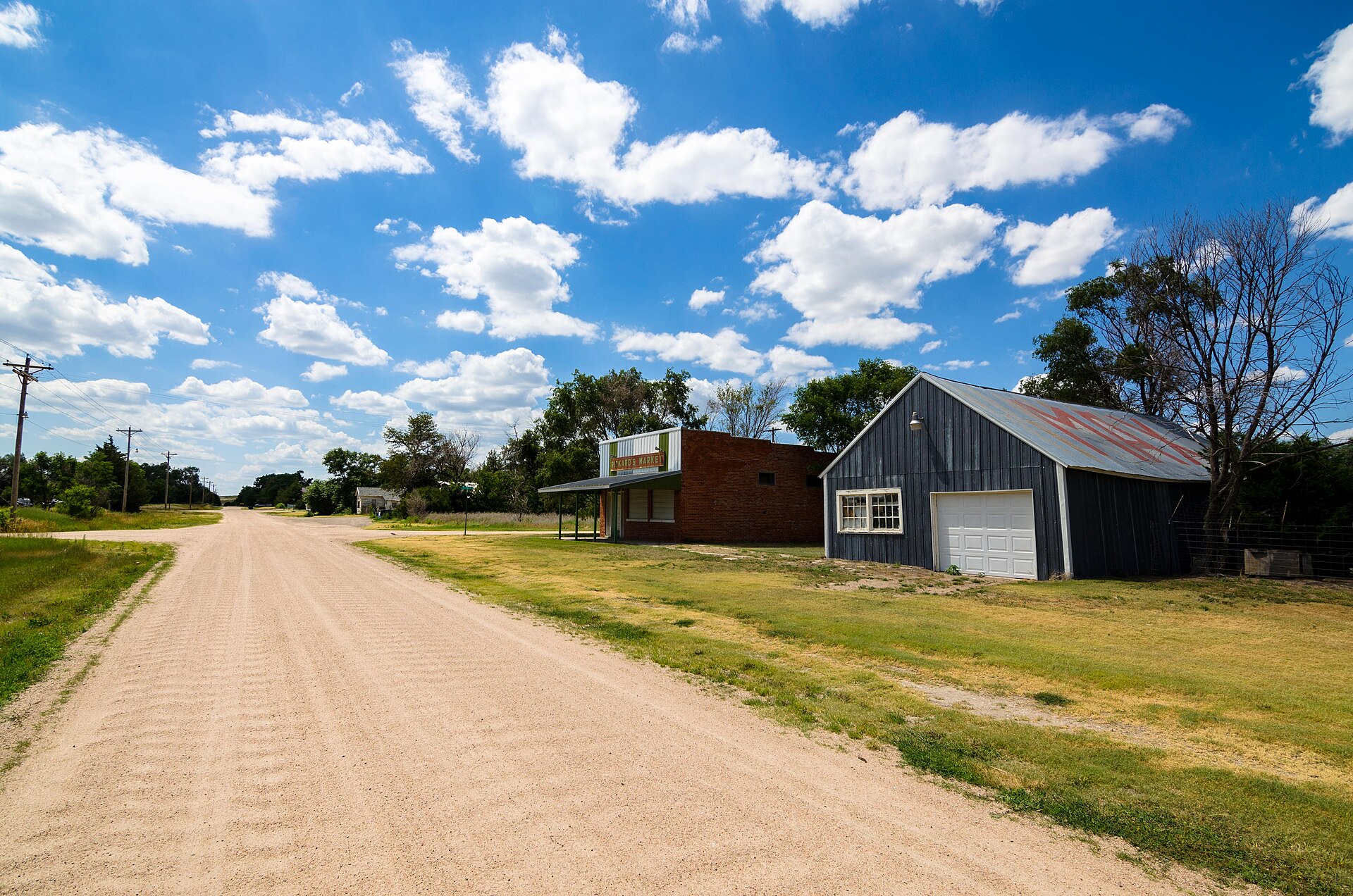
Unincorporated community · Dundy County · Population 50 (2020 census) · ZIP 69037 · Founded 1880
About Max
Max is an unincorporated community of 50 (a census-designated place) in the Republican River valley in eastern Dundy County, on US 34 about 9 miles east-northeast of Benkelman and 10 miles west-southwest of Stratton.
History
Max Monvoisin, a French-Canadian settler, filed a homestead here on April 3, 1880, said to be the first claim in the county by someone other than a stockman. When the post office opened on March 28, 1881, with Monvoisin as postmaster, his surname was turned down and the office was named Max; local historian Stanley Johnson notes it is the only post office in the county that has never changed its name. The Burlington built through in 1882, and by 1885 Max had a general store, a livery barn, a three-story hotel and a school, drawing business away from the nearby town of Sandwich. In 1888 it was one of the towns that challenged Benkelman for the county seat.
In 1890 Max was "a flourishing town" of about 100 on the railroad, nine miles from Benkelman, with two general stores, a druggist, a blacksmith and Monvoisin's hardware store. During the flood of May 31, 1935, Orie Davis of Benkelman drowned near Max. The Max Methodist church, the elevator and the cemetery remain.
Highways and trails through Max
| Route | One way | Other way |
|---|---|---|
| US 34East–west through Max | East to Stratton (about 10 mi) and Trenton | West to Benkelman (about 9 mi) |
Nearby towns
| Benkelman | about 9 mi west-southwest | US 34 |
| Stratton | about 10 mi east-northeast | US 34 |
| Parks | about 18 mi west-southwest | US 34 |
| Wauneta | about 21 mi north | County roads and NE 61 |
| Trenton | about 21 mi east-northeast | US 34 |
Things to see
Max United Methodist Church · Max Cemetery, about a mile from town · Benkelman, about 9 mi west-southwest
Schools and health care
Schools: Max is in Dundy County-Stratton Public Schools; its schools are in Benkelman
Health care: Nearest hospital: Dundy County Hospital, 1313 N. Cheyenne St., Benkelman, (308) 423-2204, a 12-bed critical access hospital, about 9 mi
Sources: U.S. Census; Wikipedia; Andreas, History of the State of Nebraska (1882); Nebraska State Gazetteer (1890); Who's Who in Nebraska, Dundy County (1940); Stanley T. Johnson's Dundy County history series (Benkelman Post & News-Chronicle, 1981–82); Southwest Nebraska Genealogical Society and NEGenWeb Dundy County; National Register of Historic Places (Dundy County Courthouse and Zorn Theatre nominations); History Nebraska and its historical markers; Federal Judicial Center; Nebraska Game and Parks; Nebraska Department of Transportation; Nebraska Department of Revenue; Haigler Community Foundation; school, hospital and library websites. Distances marked "about" are straight-line estimates.
Max Businesses & Places
13 listings in Max.
Click a category to see the businesses.
Community & Faith (13)
- Ash Grove Cemetery — Cemeteries
- Boston Cemetery — Cemeteries
- Hiawatha Cemetery — Cemeteries
- Highland Cemetery — Cemeteries
- Hughes Cemetery — Cemeteries
- Kerst Cemetery — Cemeteries
- Max Cemetery — Cemeteries
- Mount Zion Cemetery — Cemeteries
- Ough Cemetery — Cemeteries
- Rollwitz Cemetery — Cemeteries
- Sandwich Cemetery — Cemeteries
- Sleepy Hollow Cemetery — Cemeteries
- St. Paul Cemetery — Cemeteries